“High fiber” and “low FODMAP” get grouped a lot, as if any food that’s good for fiber is automatically gentle on a sensitive gut. That’s not quite accurate. Plenty of high-fiber foods — beans, apples, wheat bran — are also high in FODMAPs, which means they can trigger bloating or discomfort for people who need to keep FODMAP intake low. The real question isn’t “which foods are high in fiber”; it’s “which foods manage to be both.”
This article is for general information only and isn’t intended as medical advice. If you’re managing IBS or another digestive condition, it’s worth working with a doctor or registered dietitian to tailor this to your specific needs.
Why This Combination Is Trickier Than It Sounds
Fiber and FODMAPs aren’t the same category of carbohydrate, but they frequently show up in the same foods. A food can be genuinely high in fiber while also containing enough fermentable carbohydrates to cause issues for someone sensitive to them. This is why simply searching for “high fiber foods” and assuming they’re all gut-friendly can backfire for people managing FODMAP sensitivity.
It’s also worth noting that FODMAP tolerance is portion-dependent for many foods — something can be low FODMAP in a small serving and higher FODMAP in a larger one. Dried apricots are a good example of this: they’re often assumed to be a simple high-fiber snack, but their natural sorbitol content puts them on the higher-FODMAP side, which is worth knowing if you’re specifically trying to stay low FODMAP. You can see the fuller nutritional picture in our dried apricot nutrition guide.
Foods That Genuinely Fit Both Categories
Fruits
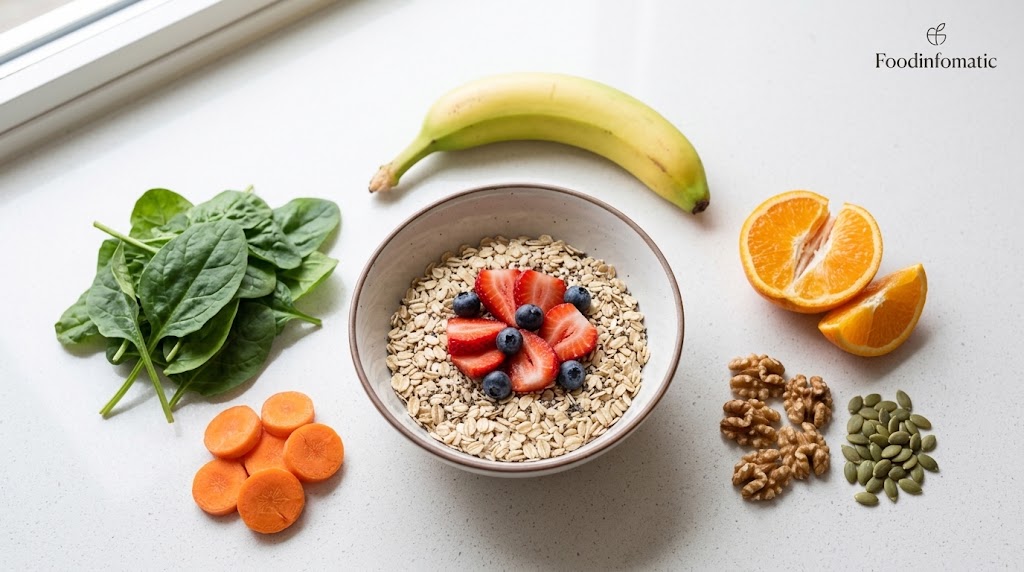
Firm bananas, strawberries, kiwi, oranges, and blueberries tend to offer meaningful fiber while staying low FODMAP at typical serving sizes.
Vegetables
Carrots, zucchini, spinach, green beans, and bell peppers are reliable options that bring fiber without the fermentable carbohydrate load found in foods like onions or garlic.
Grains and Seeds
Oats, quinoa, and ground flaxseed are among the more fiber-dense options that generally stay low FODMAP at reasonable portions. Chia seeds fall into this category as well.
Nuts
Small portions of walnuts, macadamia nuts, and pumpkin seeds add fiber without tipping into high-FODMAP territory — though portion size matters more here than with most other foods on this list.
A Practical Way to Approach It
Rather than trying to memorize a long list, it helps to think in terms of pairing: build a plate or snack around a few of the foods above rather than relying on one large portion of any single item. Since FODMAP tolerance often comes down to serving size, spreading fiber intake across smaller portions of several different foods tends to work better than loading up on one.
Frequently Asked Questions
Can you get enough fiber on a low FODMAP diet?
Yes, though it takes more intentional food choices, since many classic high-fiber foods like beans and wheat bran are also high FODMAP. Focusing on the fruits, vegetables, grains, and nuts listed above makes it more manageable.
Are oats high fiber and low FODMAP?
Generally yes, at typical serving sizes, oats are considered both a good fiber source and low FODMAP, which is part of why they show up so often in gut-friendly meal plans.
Why do low FODMAP diets sometimes cause constipation?
This usually happens when fiber intake drops as a side effect of cutting out high-FODMAP foods, many of which also happen to be fiber-rich. Deliberately including low-FODMAP, high-fiber alternatives helps offset this.
Is fruit generally low FODMAP?
Not all of it — it varies significantly by fruit and by portion size. Some fruits, like dried apricots, are higher in FODMAPs due to their natural sugar alcohol content, while others like firm bananas or strawberries are considered low FODMAP at normal servings.
Explore More
For more on fiber-focused eating, see our guide on high-volume, low-calorie foods, or browse our Fruits and Vegetables category for more produce-specific nutrition breakdowns.