Stand in the cooking oil aisle long enough, and you’ll start second-guessing everything you thought you knew — olive oil is good, then it’s bad for frying; coconut oil is a superfood, then it’s basically butter in disguise. The truth is less dramatic than the headlines suggest: there isn’t one single “healthiest” oil for every situation, but some choices are genuinely better or worse depending on how you use them.
This article is for general information only and isn’t medical advice. If you have specific heart health or dietary concerns, it’s worth speaking with a doctor or dietitian about what’s right for you.
The Basic Rule Worth Knowing First
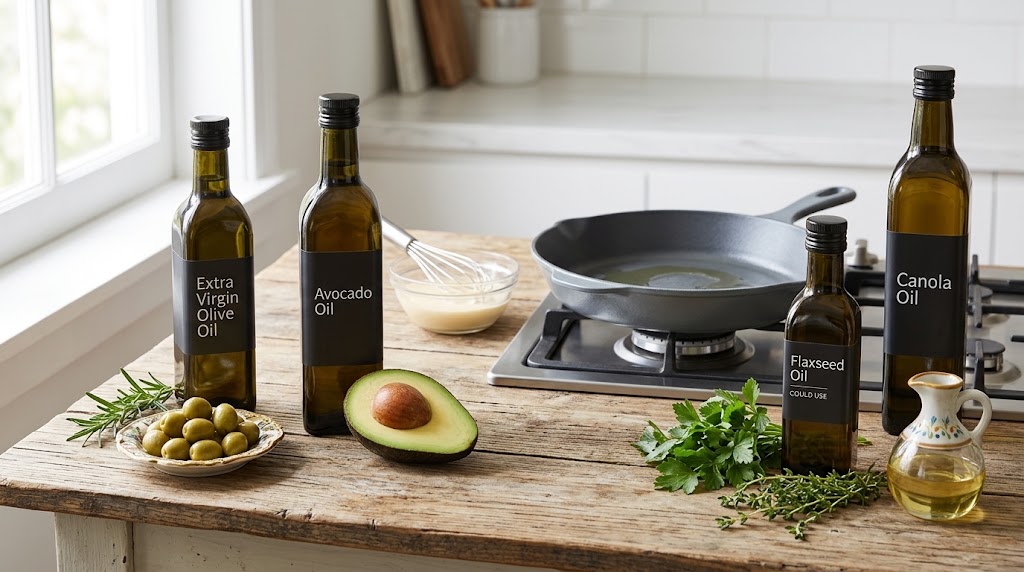
Fats fall broadly into two categories: unsaturated (liquid at room temperature) and saturated (solid at room temperature). Unsaturated fats — found in oils like olive, avocado, and canola — are generally considered better for heart health when they replace saturated fat in your diet. Saturated fats, found in oils like coconut and palm, are fine in moderation but aren’t the best choice as your everyday go-to oil.
It’s Not Just About Smoke Point
A lot of advice focuses heavily on “smoke point” — the temperature at which an oil starts to break down and smoke. It matters, but it’s not the whole picture. How stable an oil’s fat structure is when heated (its oxidation resistance) plays just as big a role in whether it holds up well during cooking, and a high smoke point doesn’t automatically mean an oil is more stable at high heat. This is part of why some oils with a moderate smoke point still perform well for everyday cooking.
Matching the Oil to the Job
- Everyday cooking and sautéing: A good extra virgin olive oil works well for most low-to-medium heat cooking and has a solid reputation for both flavour and heart-healthy fat content.
- High-heat cooking, searing, or stir-frying: Avocado oil generally handles higher temperatures well while still offering a favourable unsaturated fat profile.
- Baking: A neutral oil like canola or a light olive oil tends to work well without overpowering other flavours.
- Salad dressings and finishing dishes: Oils not meant for heating at all, like flaxseed or walnut oil, are better saved for cold use, where their nutritional benefits stay intact.
What to Generally Limit
Oils high in saturated fat, like coconut and palm oil, aren’t inherently dangerous in small amounts, but they’re not the best choice as a primary, everyday cooking fat if heart health is a priority. Trans fats — found in some partially hydrogenated oils — are a separate concern and are generally best avoided altogether, regardless of how you’re cooking.
Do You Need Just One “Best” Oil?
Not really. Many people keep two or three oils in rotation rather than relying on a single bottle for everything — one neutral, high-heat option for cooking, and one flavourful option like olive oil for dressings, drizzling, or lower-heat dishes. This tends to be a more practical approach than searching for a single “perfect” oil that does everything well.
Frequently Asked Questions
Is olive oil bad for cooking at high heat?
Extra virgin olive oil holds up reasonably well for most home cooking, including sautéing, though for very high-heat methods like deep frying, an oil with a higher smoke point, like avocado oil, is generally a better fit.
Is coconut oil healthy?
It can be used occasionally, but its high saturated fat content means it’s not typically recommended as an everyday primary cooking oil, particularly for those focused on heart health.
What’s the healthiest oil for everyday cooking?
Olive oil and avocado oil are both widely regarded as strong everyday choices thanks to their favourable unsaturated fat content, though the “best” one often depends on the specific cooking method.
Should I avoid all saturated fat in cooking oils?
Not necessarily avoid it entirely, but most general dietary guidance suggests limiting saturated fat and prioritising unsaturated oils as your everyday choice.
Explore More
Looking for more everyday nutrition guidance? Check out our article on whether peanut butter is good for you every day, browse our Fruits and Vegetables category, or head back to our homepage for more food facts.