
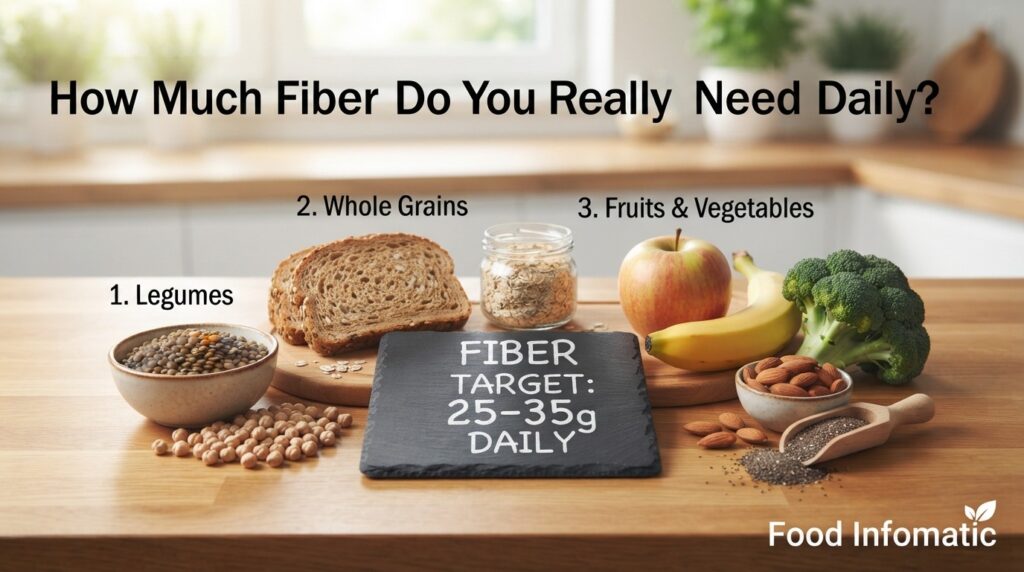
Fiber gets mentioned constantly in nutrition advice, but the actual daily target tends to get lost in vague phrases like “eat more fiber.” The general guidance most health organisations point to is somewhere in the range of 25 to 35 grams a day for adults — and most people, without realising it, fall well short of that.
This article is for general information only and isn’t medical advice. If you have digestive issues or a specific health condition, it’s worth speaking with a doctor or dietitian before making significant changes to your fiber intake.
Why the Gap Between Recommendation and Reality Is So Common
Most everyday diets lean heavily on refined grains, processed snacks, and convenience meals — foods that are often stripped of much of their natural fiber during processing. Unless meals are built specifically around whole foods, it’s genuinely easy to land closer to half the recommended amount without noticing, since fiber deficiency doesn’t come with an obvious, immediate symptom the way some other nutrient gaps do.
Two Types of Fiber, and Why the Difference Matters
Not all fiber behaves the same way once it’s in your system:
- Soluble fiber dissolves in water and forms a gel-like substance during digestion. It’s commonly associated with helping manage blood sugar levels and supporting healthy cholesterol. Oats, beans, and apples are good examples.
- Insoluble fiber doesn’t dissolve and instead adds bulk to stool, helping food move through the digestive system more efficiently. Whole wheat, nuts, and vegetable skins are typical sources.
Most fiber-rich foods contain a mix of both, so the practical goal isn’t picking one type over the other — it’s simply eating a varied enough diet that both are naturally covered.
Where Fiber Actually Comes From
- Legumes — lentils, chickpeas, and beans are among the most concentrated everyday sources
- Whole grains — oats, brown rice, and whole wheat bread contribute meaningfully more than their refined counterparts
- Fruits and vegetables — particularly when eaten with the skin on, where a lot of the fiber is concentrated
- Nuts and seeds — chia seeds and almonds are commonly cited as fiber-dense options
Why Increasing Fiber Too Quickly Can Backfire
A sudden jump from a low-fiber diet to a high-fiber one is a common reason people abandon the effort within a week — bloating, gas, and general digestive discomfort are common when fiber intake increases faster than the gut has time to adjust. Gradually increasing intake over a couple of weeks, alongside drinking enough water, tends to make the transition far more comfortable.
Do Fiber Supplements Count the Same as Food?
Fiber supplements can help close a gap, but they generally don’t replace the wider nutritional benefits that come from whole, fiber-rich foods — vitamins, minerals, and other plant compounds that supplements don’t fully replicate. They’re best treated as a backup option rather than a primary strategy.
Frequently Asked Questions
How much fiber should I eat per day?
Most general guidance points to roughly 25 to 35 grams a day for adults, though individual needs can vary based on age, sex, and overall diet.
What happens if I don’t get enough fiber?
Low fiber intake is commonly associated with digestive issues like constipation, and over time, it’s linked to less stable blood sugar and cholesterol levels compared to a higher-fiber diet.
Can I get too much fiber?
Very high intake, especially increased suddenly, can cause bloating, gas, or digestive discomfort. Gradual increases paired with adequate water intake tend to prevent this.
Are fiber supplements as good as fiber from food?
They can help increase overall intake, but whole foods provide additional nutrients that supplements typically don’t replicate, so food sources are generally the better primary approach.
Explore More
Curious about other everyday nutrition targets? Check out our guide on foods naturally high in iron, browse our Health Tips category, or head back to our homepage for more food facts.