Feeling tired more often than usual, or noticing you get out of breath faster than you used to? Iron often gets overlooked until it becomes a problem, even though it plays a genuinely important role in how your body carries oxygen and produces energy. The good news is that getting more of it into your diet doesn’t require anything complicated — just knowing which everyday foods actually contain it.
This article is for general information only and isn’t medical advice. If you suspect you have an iron deficiency, it’s best to speak with a doctor rather than self-diagnosing based on symptoms alone.
Iron Comes in Two Different Forms
Not all dietary iron behaves the same way once it’s in your system. There are two types found in food, and understanding the difference helps explain why some diets need a bit more planning than others.
The first type comes from animal sources — meat, poultry, and seafood — and tends to be absorbed by the body fairly efficiently. The second type comes from plant-based foods, and while it’s still a valuable source of iron, the body generally absorbs it less efficiently on its own, which is where a few smart food pairings can make a real difference.
Animal-Based Sources
If you eat meat, fish, or poultry, these are some of the more concentrated sources available:
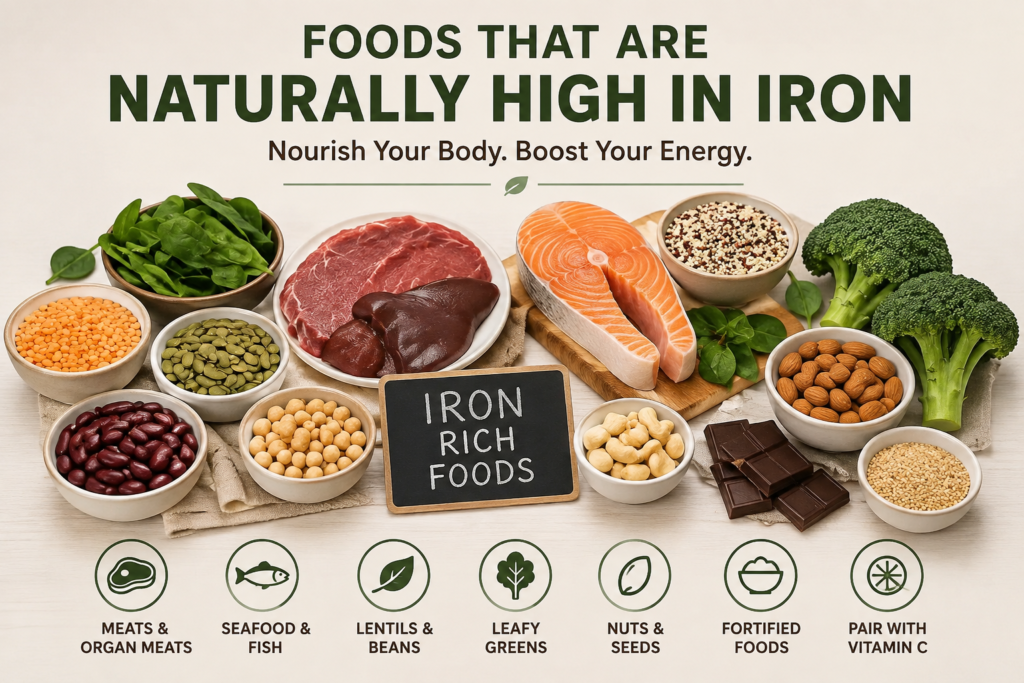
- Red meat — beef and lamb are commonly cited among the richer sources
- Organ meats — liver in particular is known for its iron content
- Poultry — dark meat tends to contain more than white meat
- Shellfish — oysters, clams, and mussels are all solid options
- Fish — varieties like tuna and sardines contribute a reasonable amount
Plant-Based Sources
For anyone eating a vegetarian, vegan, or simply more plant-focused diet, there are still plenty of solid options:
- Lentils and beans — kidney beans, chickpeas, and lentils are among the most commonly recommended
- Leafy greens — spinach and kale are frequently mentioned, though cooking them can make the iron easier to access
- Nuts and seeds — pumpkin seeds in particular stand out
- Tofu and tempeh — popular staples in plant-based diets that also happen to be reasonable iron sources
- Fortified cereals and grains — many breakfast cereals and breads have iron added during processing
Why Pairing Matters More Than People Realise
Plant-based iron doesn’t work in isolation — what you eat alongside it genuinely affects how much your body actually absorbs. Foods rich in vitamin C, like citrus fruits, peppers, or tomatoes, can noticeably improve how well plant-based iron is taken up. On the flip side, drinking tea or coffee too close to an iron-rich meal can work against you, since compounds in both can interfere with absorption.
A simple, practical habit is to build meals where a plant-based iron source sits alongside something vitamin C-rich — think lentils with a squeeze of lemon, or spinach paired with bell peppers — rather than treating iron intake as something that happens in isolation from the rest of the plate.
Do You Need a Supplement?
For most people eating a reasonably varied diet, food alone covers daily iron needs without any extra help. Supplements are generally something to consider only when a genuine deficiency has been identified, since taking more iron than your body needs isn’t automatically beneficial and can cause its own issues over time. If you’re concerned about your levels, a simple blood test through a healthcare provider is the most reliable way to know for sure, rather than guessing based on diet alone.
Frequently Asked Questions
What foods are highest in iron?
Organ meats like liver and shellfish such as oysters are among the most concentrated animal sources, while lentils, spinach, and pumpkin seeds are commonly cited plant-based options.
Is plant-based iron as good as iron from meat?
It’s absorbed less efficiently on its own, but pairing plant-based iron sources with vitamin C-rich foods can meaningfully improve how much your body actually takes in.
Can you get enough iron on a vegetarian or vegan diet?
Yes, with some planning. Including a variety of iron-rich plant foods and pairing them with vitamin C sources can help meet daily needs without animal products.
Should I take an iron supplement just to be safe?
Not without reason to believe you’re deficient. Taking iron supplements unnecessarily isn’t automatically helpful and can cause issues, so it’s best to confirm with a healthcare provider before starting one.
Explore More
Curious about other nutrients worth paying attention to in your diet? Browse our full Dairy category for related nutrition breakdowns, or check out our guide on kefir vs yogurt for gut health if fermented foods and absorption interest you. You can also head back to our homepage for more food facts and nutrition guides.