
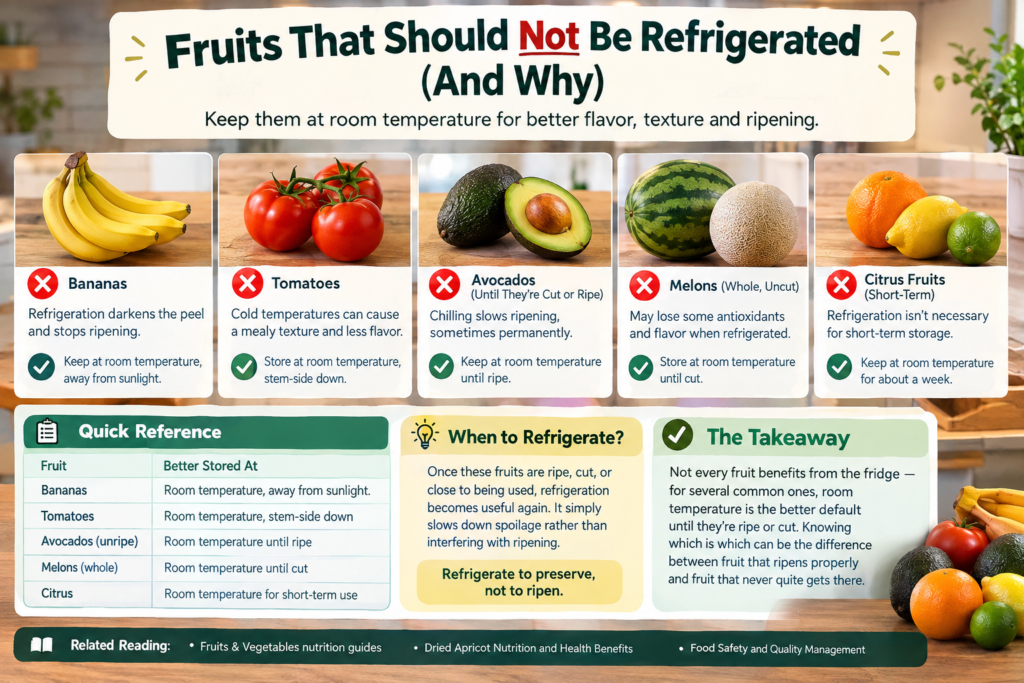
It feels like the safe move: buy fruit, put it straight in the fridge. But for a surprising number of fruits, that instinct actually works against you — dulling flavor, ruining texture, or stopping ripening altogether. The fridge isn’t a universal “freshness button.” For some fruits, it’s closer to the opposite.
This article is for general informational purposes only and reflects commonly recommended storage practices rather than a guaranteed outcome for every fruit or household.
Why Cold Isn’t Always Better
Refrigeration slows down the natural ripening process by lowering temperature, which is helpful for fruit that’s already ripe and needs to last longer. But for fruit that hasn’t finished ripening, cold temperatures can interrupt that process permanently — meaning the fruit stays underripe, or the texture changes in ways that don’t reverse once it’s back at room temperature.
Bananas
Refrigerating bananas darkens the peel almost immediately and halts ripening. Once chilled, unripe bananas generally won’t continue softening properly, even after being brought back to room temperature. They’re best kept on the counter, away from direct sunlight, until ripe.
Tomatoes
Cold temperatures affect the membranes inside tomatoes, which is commonly linked to a mealy, less flavorful texture after refrigeration. Tomatoes are typically better stored at room temperature, stem-side down, and only moved to the fridge briefly if they’re overripe and need a short delay before use.
Avocados (Until They’re Cut or Ripe)
An unripe avocado in the fridge tends to ripen far more slowly, sometimes not at all. It’s generally better kept at room temperature until it softens to the desired ripeness — refrigeration is more useful afterward, mainly to slow down over-ripening for a day or two.
Melons (Whole, Uncut)
Whole melons like watermelon and cantaloupe are usually fine, and arguably better, stored at room temperature until cut. Some general research has suggested that whole melons kept at room temperature may retain slightly more antioxidant content compared to refrigerated storage, though this shouldn’t be treated as a strict rule for every variety. Once cut, refrigeration becomes necessary to slow spoilage.
Citrus Fruits (Short-Term)
Oranges, lemons, and limes generally hold up fine at room temperature for about a week, and refrigeration isn’t strictly necessary unless you’re storing them for a longer period. Room-temperature citrus is often considered easier to juice, since chilling can make the fruit slightly firmer.
A Quick Reference
| Fruit | Better Stored At |
|---|---|
| Bananas | Room temperature, away from sunlight |
| Tomatoes | Room temperature, stem-side down |
| Avocados (unripe) | Room temperature until ripe |
| Melons (whole) | Room temperature until cut |
| Citrus | Room temperature for short-term use |
When These Fruits Should Move to the Fridge
Once any of these fruits are ripe, cut, or close to being used, refrigeration becomes useful again — it simply slows down spoilage at that stage rather than interfering with ripening. The general rule of thumb: refrigerate to preserve, not to ripen.
Frequently Asked Questions
Does refrigerating unripe fruit ruin it permanently?
In many cases, yes — fruits like bananas and avocados often don’t resume normal ripening once chilled while still unripe, even after being moved back to room temperature.
Is it fine to refrigerate these fruits once they’re ripe?
Generally, yes. Refrigeration at that stage mainly slows down spoilage rather than affecting ripening, which has already finished.
Why do tomatoes taste different after refrigeration?
Cold storage is commonly associated with changes in tomato texture and aroma compounds, which is why room-temperature storage is usually recommended until they’re ready to eat.
The Takeaway
Not every fruit benefits from the fridge — for several common ones, room temperature is the better default until they’re ripe or cut. Knowing which is which can be the difference between fruit that ripens properly and fruit that never quite gets there.
Related Reading
- For a full breakdown of fruit and vegetable storage, see our Fruits & Vegetables nutrition guides.
- Curious about a specific fruit’s nutrition profile? Check out our guide on Dried Apricot Nutrition and Health Benefits.
- General food storage rules also apply here — browse our Food Safety and Quality Management guides.