
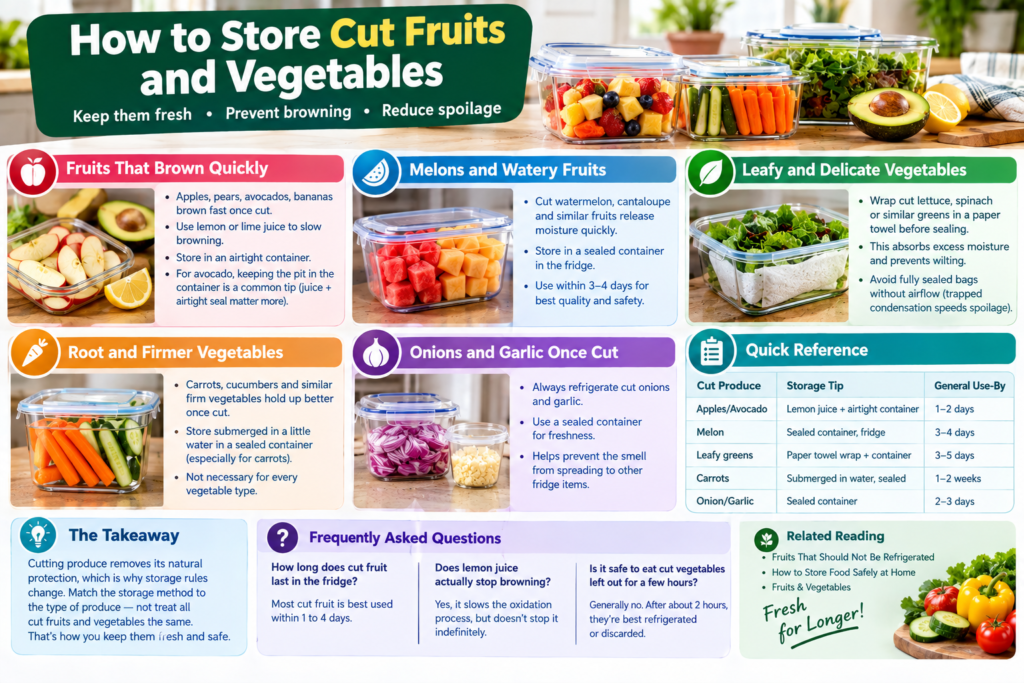
The moment a fruit or vegetable is cut, its natural protective layer — the skin or peel — is gone, and that changes everything about how it should be stored. Whole produce can often sit on a counter for days without issue; cut produce usually can’t. The right approach isn’t one-size-fits-all, though — it depends heavily on what you’ve cut.
The General Rule Once Produce Is Cut
As soon as fruits or vegetables are cut, refrigeration in an airtight container is generally recommended, regardless of whether the whole version needed it. This limits exposure to air and bacteria, both of which act much faster once the protective skin is removed.
Fruits That Brown Quickly Once Cut
- Apples, pears, avocados, bananas: These oxidize and brown fast. A light coating of lemon or lime juice slows this process noticeably, and storing them in an airtight container limits further air exposure.
- Cut avocado specifically: Keeping the pit in the container alongside the flesh is a commonly repeated tip, though the lemon juice and airtight seal generally matter more than the pit itself.
Melons and Watery Fruits
Cut watermelon, cantaloupe, and similar fruits release moisture quickly, which speeds up spoilage. Storing them in a sealed container in the fridge and using them within about 3 to 4 days is generally recommended for both quality and safety.
Leafy and Delicate Vegetables
- Wrap cut lettuce, spinach, or similar greens loosely in a paper towel before sealing — this absorbs excess moisture that would otherwise speed up wilting.
- Avoid storing cut leafy vegetables in a fully sealed, moisture-trapping bag without any airflow, since trapped condensation tends to accelerate spoilage.
Root and Firmer Vegetables
Cut carrots, cucumbers, and similar firm vegetables generally hold up better than leafy greens once cut. Storing them submerged in a small amount of water in a sealed container can help carrots specifically stay crisp for longer, though this isn’t necessary for every vegetable type.
Onions and Garlic Once Cut
Unlike their whole form, cut onions and garlic should always be refrigerated in a sealed container — partly for freshness, and partly because their smell spreads easily to other fridge items if left uncovered.
A Quick Reference
| Cut Produce | Storage Tip | General Use-By |
|---|---|---|
| Apples/Avocado | Lemon juice + airtight container | 1–2 days |
| Melon | Sealed container, fridge | 3–4 days |
| Leafy greens | Paper towel wrap + container | 3–5 days |
| Carrots | Submerged in water, sealed | 1–2 weeks |
| Onion/Garlic | Sealed container | 2–3 days |
Frequently Asked Questions
How long does cut fruit last in the fridge?
It varies by type, but most cut fruit is generally best used within 1 to 4 days for both taste and safety.
Does lemon juice actually stop browning?
Yes, generally — the acidity slows the oxidation process that causes browning, though it doesn’t stop it indefinitely.
Is it safe to eat cut vegetables left out for a few hours?
Cut vegetables left out for more than about 2 hours are generally treated the same as other cut, perishable foods and are best refrigerated or discarded rather than eaten after sitting out too long.
The Takeaway
Cutting produce removes its natural protection, which is why storage rules change the moment a knife is involved. Matching the storage method to the type of produce — rather than treating all cut fruits and vegetables the same — is what generally keeps them fresh and safe for longer.
Related Reading
- Not sure which fruits need refrigeration in the first place? See Fruits That Should Not Be Refrigerated.
- For the bigger picture on kitchen storage, read How to Store Food Safely at Home.
- Browse more in our Fruits & Vegetables category.