Storing food safely at home is one of the simplest ways to protect your family from food poisoning, reduce waste, and make your groceries last longer. Most kitchen illnesses don’t come from bad cooking — they come from food that was stored the wrong way after it was cooked or bought. In this guide, you’ll learn exactly how to store food safely at home, from the fridge and freezer to the pantry, using simple rules anyone can follow.
Why Safe Food Storage Matters
Bacteria that cause food poisoning grow fastest between 4°C and 60°C (40°F–140°F) — this range is often called the “danger zone.” When food sits in this temperature range for too long, harmful bacteria multiply quickly, even if the food still looks and smells normal. Correct storage slows this growth down and keeps your meals safe to eat.
General Rules for Safe Food Storage
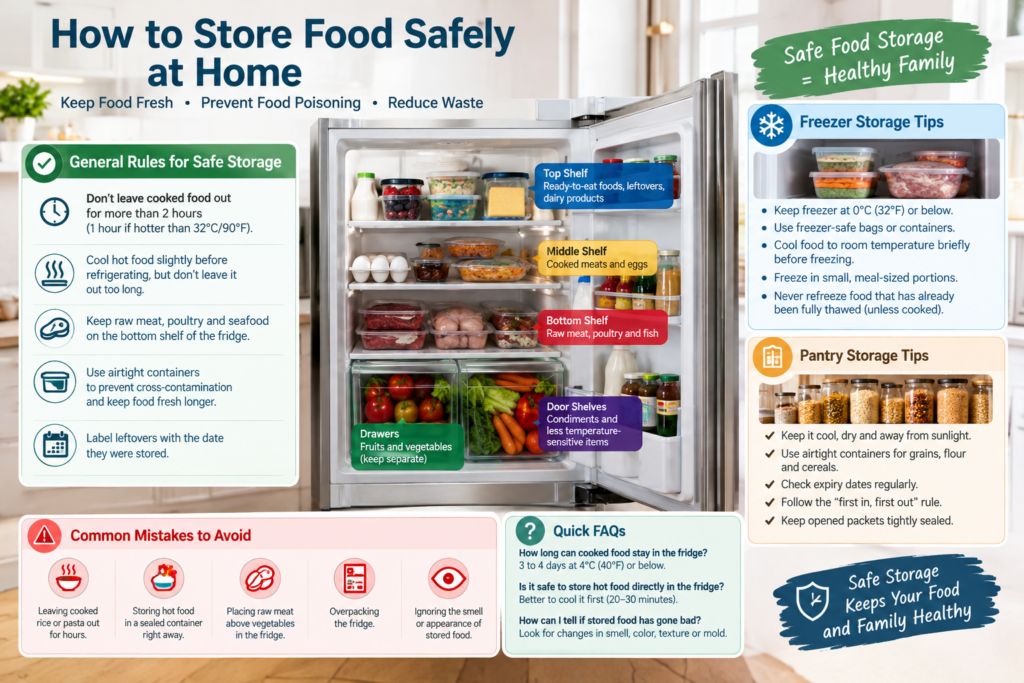
- Never leave cooked food out at room temperature for more than 2 hours (1 hour if the room is hotter than 32°C/90°F).
- Always cool hot food slightly before refrigerating, but don’t leave it out too long while cooling.
- Store raw meat, poultry, and seafood on the bottom shelf of the fridge so juices can’t drip onto other foods.
- Use airtight containers to prevent cross-contamination and keep food fresh longer.
- Label leftovers with the date they were stored so you don’t lose track.
How to Store Food Safely in the Refrigerator
Your refrigerator should be set to 4°C (40°F) or below. Here’s how to organize it for maximum safety:
- Top shelves: Ready-to-eat foods, leftovers, and dairy products.
- Middle shelves: Cooked meats and eggs.
- Bottom shelf: Raw meat, poultry, and fish — always in sealed containers.
- Drawers: Fruits and vegetables, kept separate to avoid faster ripening from ethylene gas.
- Door shelves: Condiments and items that are less temperature-sensitive, since the door is the warmest part of the fridge.
How to Store Food Safely in the Freezer
Freezing pauses bacterial growth almost completely, making it one of the safest long-term storage methods.
- Freeze food at 0°C (32°F) or below.
- Wrap food tightly in freezer-safe bags or containers to prevent freezer burn.
- Cool food to room temperature briefly before freezing — but don’t leave it out too long.
- Freeze in small, meal-sized portions so they thaw evenly and quickly.
- Never refreeze food that has already been fully thawed, unless it was cooked first.
How to Store Food Safely in the Pantry
Dry storage still needs care, even though it doesn’t require refrigeration.
- Keep the pantry cool, dry, and away from direct sunlight.
- Store grains, flour, and cereals in airtight containers to keep out moisture and pests.
- Check expiry dates regularly and follow the “first in, first out” rule — use older items before newer ones.
- Keep opened packets tightly sealed with clips or resealable bags.
Common Food Storage Mistakes to Avoid
- Leaving cooked rice or pasta at room temperature for hours before refrigerating.
- Storing hot food in a sealed container right away, which traps steam and speeds up spoilage.
- Placing raw meat above vegetables in the fridge.
- Overpacking the fridge, which blocks proper air circulation and cooling.
- Ignoring the smell or appearance of food that has been stored for a long time.
Frequently Asked Questions
How long can cooked food stay in the fridge?
Most cooked food stays safe in the refrigerator for 3 to 4 days when stored at 4°C (40°F) or below in an airtight container.
Is it safe to store hot food directly in the fridge?
It’s better to let food cool slightly first (about 20–30 minutes), then refrigerate it. Putting very hot food straight into a packed fridge can raise the internal temperature and put nearby food at risk.
How can I tell if stored food has gone bad?
Watch for changes in smell, color, or texture, along with visible mold. If food has been stored beyond the recommended time, it’s safest to discard it even if it looks fine.
Final Thoughts
Learning how to store food safely at home doesn’t require any special equipment — just consistent habits. Keep your fridge at the right temperature, separate raw and cooked foods, label your leftovers, and follow the simple rules above. These small steps can prevent food poisoning, reduce food waste, and keep every meal in your home safe to eat.