
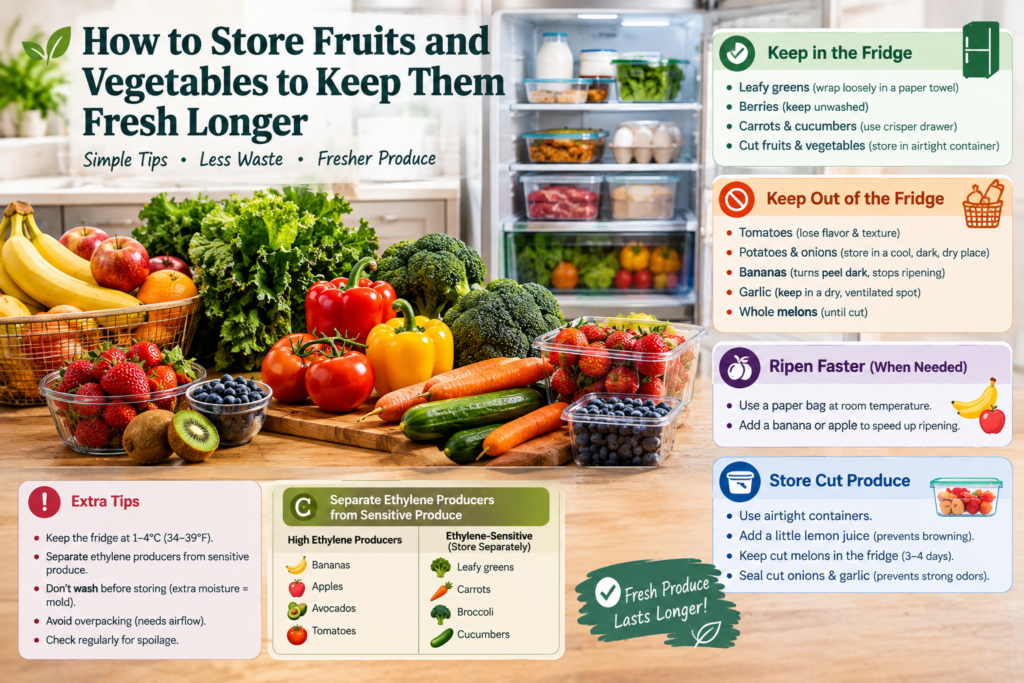
Nothing feels more wasteful than throwing away fruits and vegetables that went bad before you even got a chance to use them. The good news is that most produce spoils early simply because of how it’s stored — not because it was low quality to begin with. This guide explains exactly how to store fruits and vegetables to keep them fresh longer, using easy methods that work in any home kitchen.
Why Storage Method Matters More Than You Think
Fruits and vegetables continue to “breathe” after they’re picked, releasing moisture and a natural gas called ethylene. Some produce is highly sensitive to this gas, while other produce actually produces large amounts of it. Storing the wrong items together, or at the wrong temperature, speeds up spoilage dramatically.
Fruits and Vegetables That Should NOT Be Refrigerated
Not everything belongs in the fridge. Cold temperatures can actually damage the texture and flavor of certain produce.
- Tomatoes — refrigeration makes them mealy and dulls their flavor.
- Potatoes and onions — best kept in a cool, dark, dry place, but not together (onions make potatoes sprout faster).
- Bananas — refrigeration darkens the peel and stops ripening.
- Garlic — needs a dry, ventilated spot away from sunlight.
- Whole melons (until cut) — store at room temperature for the best flavor.
Fruits and Vegetables That Should Be Refrigerated
- Leafy greens (spinach, lettuce) — wrap loosely in a paper towel to absorb extra moisture.
- Berries — keep unwashed until ready to eat, since moisture speeds up mold.
- Carrots and cucumbers — store in the crisper drawer, ideally in a perforated bag.
- Cut fruits and vegetables — always refrigerate in an airtight container once cut.
How to Ripen Fruit Faster When Needed
If you need fruit to ripen quickly, place it in a paper bag at room temperature. This traps the natural ethylene gas the fruit releases, speeding up the ripening process. Adding a banana or apple to the bag speeds this up even further, since both release high amounts of ethylene.
How to Store Cut Fruits and Vegetables
- Store in an airtight container to prevent air exposure and browning.
- A small squeeze of lemon juice on cut fruit like apples or avocado slows down browning naturally.
- Cut watermelon and melons should always be refrigerated and used within 3–4 days.
- Keep cut vegetables like onions and garlic in sealed containers to prevent strong odors from spreading in the fridge.
Separate Ethylene-Sensitive Produce From Ethylene Producers
| High Ethylene Producers | Ethylene-Sensitive (Store Separately) |
|---|---|
| Bananas, apples, avocados, tomatoes | Leafy greens, carrots, broccoli, cucumbers |
Common Mistakes That Cause Fruits and Vegetables to Spoil Faster
- Washing produce before storing it (extra moisture speeds up mold growth).
- Storing all produce in one drawer without separating ethylene producers from sensitive items.
- Leaving cut produce uncovered in the fridge.
- Keeping root vegetables like potatoes in a see-through or well-lit spot.
Frequently Asked Questions
How long do fresh vegetables last in the fridge?
Most fresh vegetables last 5 to 7 days when stored properly in the crisper drawer, though leafy greens are best used within 3 to 5 days.
Should I wash fruits and vegetables before storing them?
No — it’s best to wash produce right before eating or cooking it, not before storage. Excess moisture from washing speeds up spoilage and mold growth.
Why do my vegetables go bad so quickly?
This is usually caused by storing ethylene-sensitive vegetables next to fruits that release high amounts of ethylene gas, or by keeping produce in a container without proper airflow.
Final Thoughts
Knowing how to store fruits and vegetables to keep them fresh longer can significantly cut down on food waste and save money over time. The key is understanding which produce needs refrigeration, which doesn’t, and how ethylene gas affects ripening. With these simple adjustments, your fruits and vegetables will stay fresher for days longer.