Stand in front of a dairy shelf today, and the choice isn’t just “milk” anymore — it’s cow, buffalo, skimmed, full cream, lactose-free, and a growing row of plant-based alternatives. Each one is marketed as the “better” option, which mostly just makes the decision harder. The truth is, none of them is universally best. Each type of milk suits a different body, a different goal, and a different tolerance. Here’s how they actually compare, without the marketing angle.
Start With What Your Body Needs From Milk
Before comparing brands or types, it helps to know what milk is generally expected to provide: protein, calcium, vitamin D (when fortified), and in some cases, healthy fats. Once you know which of these matters most to you — muscle support, bone health, weight management, or simply digestive comfort — the “best” type of milk becomes a lot easier to identify.
Cow’s Milk: The Everyday Default
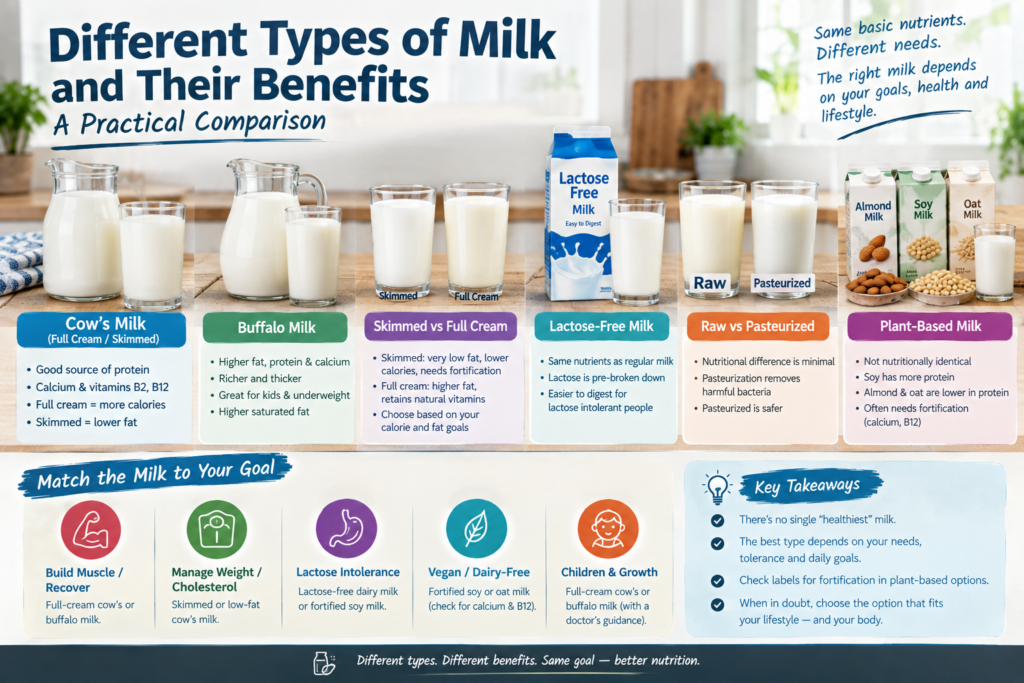
Cow’s milk remains the most widely consumed milk worldwide, and for good reason — it offers a reliable balance of protein, calcium, and vitamins B2 and B12. Full-cream cow’s milk suits people who need more calories or are physically active, while skimmed or low-fat versions suit those managing weight or cholesterol, since most of the saturated fat is removed along with some fat-soluble vitamins.
Buffalo Milk: Richer, Heavier, More Concentrated
Buffalo milk contains noticeably more fat, protein, and calcium per serving than cow’s milk, which is why it’s often preferred for making thicker yogurt, paneer, or ghee. This richness is an advantage for children, underweight individuals, or anyone needing extra calories and calcium — but it’s a drawback for people watching fat intake or managing heart-related conditions, where the higher saturated fat content becomes a genuine concern.
Skimmed vs. Full Cream: The Fat Question
| Full Cream Milk | Skimmed Milk | |
|---|---|---|
| Fat Content | High (~3.5–8%, cow/buffalo) | Very Low (under 0.5%) |
| Calories | Higher | Lower |
| Fat-Soluble Vitamins (A, D) | Retained naturally | Often needs fortification |
| Best For | Growing children, active adults, weight gain | Weight management, cholesterol control |
Neither option is objectively healthier — the right choice depends entirely on your calorie and fat goals, not on which one sounds “cleaner.”
Lactose-Free Milk: Same Nutrients, Different Sugar Handling
Lactose-free milk isn’t a separate type of milk nutritionally — it’s regular milk with the lactase enzyme added, which breaks down lactose in advance so it’s easier to digest. This means the protein, calcium, and vitamin content stay largely the same as regular milk; the only real difference is that people with lactose intolerance can drink it without the bloating, cramping, or discomfort that regular milk might cause them.
Raw Milk vs. Pasteurized Milk: A Safety Trade-Off, Not a Nutrition One
Raw milk advocates often claim better nutrition or flavor, but the nutritional difference between raw and pasteurized milk is minimal. Pasteurization uses controlled heat to eliminate harmful bacteria like E. coli, Salmonella, and Listeria, without meaningfully reducing protein or calcium content. The real difference isn’t nutrition — it’s food safety, and pasteurized milk carries a significantly lower risk of foodborne illness.
Plant-Based Milk Alternatives: Not a Direct Swap
Almond, soy, oat, and coconut milk are often chosen for lactose intolerance, dietary preference, or environmental reasons — but they aren’t nutritionally identical to dairy milk unless fortified. Soy milk comes closest to dairy in protein content, while almond and oat milk are typically much lower in protein and naturally low in calcium unless the label confirms fortification. Reading the nutrition label matters more here than the marketing on the front of the carton.
Matching Milk to Your Goal
- Building muscle or recovering from illness: Full-cream cow’s or buffalo milk, for the extra protein and calories.
- Managing weight or cholesterol: Skimmed or low-fat cow’s milk.
- Lactose intolerance: Lactose-free dairy milk or fortified soy milk.
- Vegan or dairy-free by choice: Fortified soy or oat milk, checked for added calcium and B12.
- Children and growth years: Full-cream cow’s or buffalo milk, under a doctor’s or dietitian’s general guidance.
Frequently Asked Questions
Which type of milk is healthiest overall?
There isn’t a single “healthiest” milk — it depends on your goals. Skimmed milk suits calorie control, while full cream or buffalo milk suits higher energy and calcium needs.
Is buffalo milk better than cow milk for kids?
Buffalo milk’s higher fat and calcium content can benefit growing children who need more calories, but it should be balanced against a child’s overall diet, since it’s also more calorie-dense.
Is lactose-free milk as nutritious as regular milk?
Yes — lactose-free milk retains the same protein, calcium, and vitamin content as regular milk. Only the lactose is pre-broken down for easier digestion.
The Bottom Line
The “best” milk isn’t a fixed answer — it’s the one that matches your nutritional needs, digestive tolerance, and daily goals. Cow’s milk works well as an everyday default, buffalo milk suits higher-calorie needs, lactose-free milk solves a digestion problem without sacrificing nutrition, and plant-based options work best when fortified and chosen deliberately rather than by habit.
Related Reading
- Explore more in our Dairy nutrition guides for milk, cheese, yogurt, and ghee breakdowns.
- Watching your fat or calorie intake? See our Health Tips category for everyday dietary guidance.
- For food safety around dairy storage, check our Food Safety and Quality Management guides.