Losing weight through cutting calories often runs into the same wall: cutting calories usually means cutting portion size too, and smaller portions don’t feel satisfying. High-volume, low-calorie foods offer a way around that. The idea isn’t about eating less — it’s about choosing foods that let you eat a genuinely large amount while keeping the calorie count low.
This article is for general information only and isn’t intended as medical or dietary advice. If you have a history of disordered eating or are managing a specific health condition, it’s worth speaking with a doctor or registered dietitian before making significant changes to how you eat.
Why Volume Actually Matters, Not Just Calories
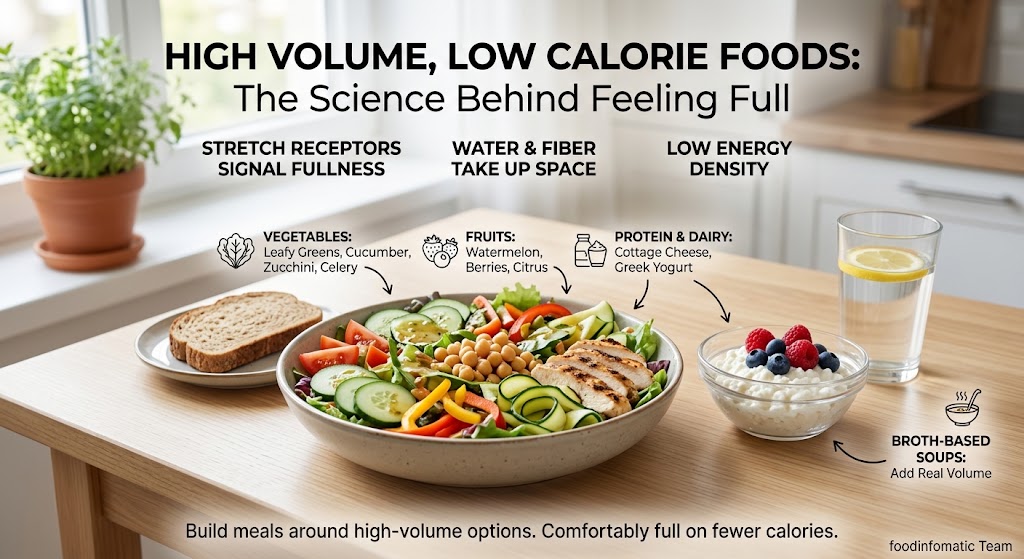
Your stomach has stretch receptors that signal fullness to your brain based on the physical volume of food it’s holding, not directly on how many calories that food contains. This is why a large bowl of leafy greens can feel more satisfying than a small handful of nuts, even if the nuts contain more calories. Foods that are high in water and fiber take up more physical space relative to their calorie content, which is what makes them high-volume, low-calorie foods in the first place — this combination is sometimes referred to as low energy density.
Food Categories That Fit This Approach
Vegetables
Leafy greens, cucumber, zucchini, celery, and cabbage are some of the most reliable options for foods that fill you up, largely because of their high water content. These work well raw, in salads, or cooked into soups and stir-fries without adding much to the overall calorie count.
Fruits
Watermelon, berries, and citrus fruits tend to offer good volume for relatively few calories, thanks to their water content. They also bring natural sweetness, which can help satisfy a craving without needing something more calorie-dense.
Protein and Dairy
Cottage cheese and Greek yogurt stand out among satiety foods for weight loss because they combine protein with volume, which tends to extend fullness longer than vegetables or fruit alone. If you’re looking for more ways to work these into snacks, our no-cook snack guide covers several cottage cheese and yogurt combinations.
Broth-Based Soups
Because they’re mostly water, broth-based soups add real volume to a meal without contributing many calories, especially compared to cream-based alternatives.
How to Actually Use This
The most practical way to apply this low-energy-density approach isn’t to eliminate other foods, but to build meals around these high-volume options first, then add smaller portions of more calorie-dense foods like oils, nuts, or grains on top. A large vegetable-based salad with a modest amount of dressing and protein, for example, uses this principle without requiring a completely different way of eating.
A Word on Balance
It’s worth being honest that this approach isn’t meant to encourage restriction or a mindset of “less is always better.” The goal is comfortable fullness on fewer calories, not filling up on volume while ignoring what your body actually needs in terms of protein, fat, and other nutrients. If tracking or restricting food in this way starts to feel stressful or overly rigid, that’s worth discussing with a healthcare provider rather than pushing through it alone.
Explore More
For more fiber-focused food choices, see our guide on high-fiber, low FODMAP foods, or browse our Fruits and Vegetables category for more produce-based nutrition breakdowns.