
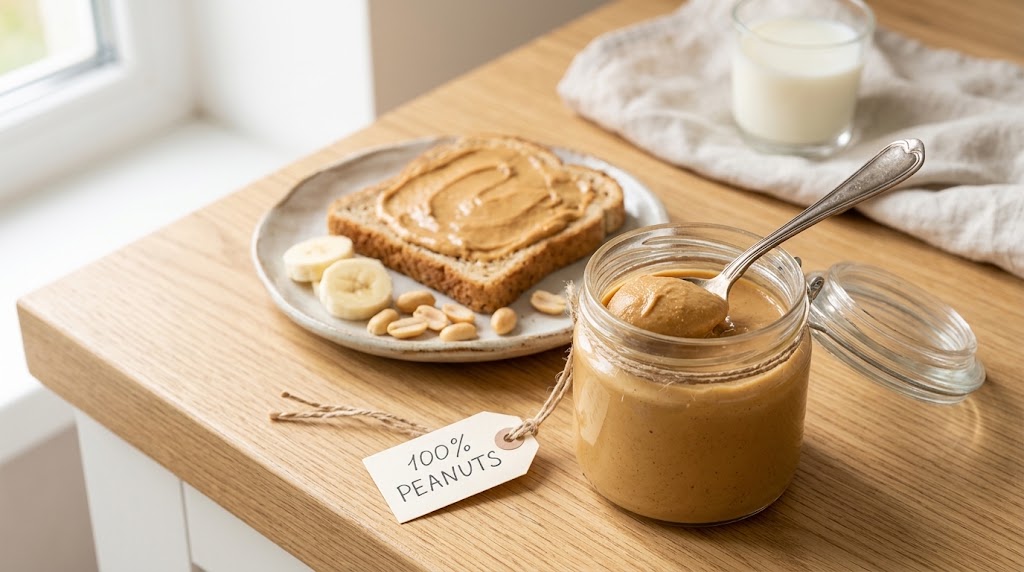
It’s the kind of question that comes up right after you’ve scraped the jar clean for the third time this week: is this actually fine to eat daily, or is it quietly working against you? The short answer is that for most people, a moderate daily amount of peanut butter fits comfortably into a healthy diet — but “moderate” is doing a lot of the work in that sentence.
This article is for general information only and isn’t medical advice. If you have a peanut allergy, existing health conditions, or specific dietary concerns, speak with a doctor or dietitian before making changes to your diet.
What’s Actually in a Serving
A typical serving is around two tablespoons, and within that small amount, peanut butter packs a genuinely useful mix of plant-based protein, fibre, and unsaturated fat. It’s calorie-dense, which is exactly why portion size matters more with peanut butter than with, say, a bowl of vegetables — it’s easy to eat far more than a “serving” without really noticing.
Why It’s Generally Considered a Healthy Choice
Most of the fat in peanut butter is unsaturated rather than saturated, which is generally considered more favourable for heart health when it replaces less healthy fat sources in your diet. It also contains a reasonable amount of protein and fibre for a spread, both of which contribute to feeling fuller for longer — part of why it’s such a popular addition to breakfast or a mid-afternoon snack.
Where It Can Go Wrong
The issues with daily peanut butter usually come down to two things: portion size and product choice. Because it’s calorie-dense, eating it straight from the jar with a spoon (more than once) can add up quickly without you tracking it. On top of that, many commercial brands include added sugar, palm oil, or excess sodium, which can offset some of the nutritional benefit that comes from the peanuts themselves.
Checking the ingredients label is worth the ten seconds it takes — ideally, the list should be short, with peanuts (and maybe a pinch of salt) as the main or only ingredient, rather than a longer list with added sweeteners near the top.
How Much Is a Reasonable Daily Amount?
Roughly one to two tablespoons a day is a commonly suggested range for most adults as part of an otherwise balanced diet. This isn’t a strict rule, and individual needs vary depending on your overall calorie intake and health goals, but it’s a reasonable general benchmark rather than treating peanut butter as something to eat freely without any portion awareness.
What About Peanut Allergies?
Peanut allergies are among the more common food allergies and can range from mild to severe. This article is written for people without a peanut allergy — if you have one, or suspect you might, peanut butter obviously isn’t a food to experiment with, and any concerns should be discussed with an allergist rather than addressed through general nutrition advice.
Frequently Asked Questions
Is it OK to eat peanut butter every day?
For most people without a peanut allergy, yes — a moderate daily amount, generally around one to two tablespoons, fits reasonably well into a balanced diet.
Does peanut butter cause weight gain?
Not inherently. It’s calorie-dense, so overeating it can contribute to a calorie surplus like any food, but eaten in a moderate, tracked portion, it’s not automatically linked to weight gain.
What should I look for when choosing a peanut butter?
A short ingredients list is the simplest indicator — ideally just peanuts, possibly with a small amount of salt, rather than added sugar, palm oil, or other fillers near the top of the label.
Is natural peanut butter healthier than regular peanut butter?
Generally, yes, mainly because natural varieties tend to have fewer added ingredients like sugar and hydrogenated oils, though it’s still worth checking the specific label rather than assuming based on the word “natural” alone.
Explore More
Looking for more everyday nutrition breakdowns? Browse our Fruits and Vegetables category, check out our guide on foods naturally high in iron, or head back to our homepage for more food facts.