Ask most people how to fix sluggish digestion, and you’ll get the same answer: eat more fiber. It’s not wrong, exactly — but it’s incomplete, and it’s why so many people add fiber to their diet and still feel bloated, heavy, or uncomfortable after meals. Digestion isn’t a single switch you flip with one food group. It responds to timing, combinations, and habits throughout the day, not just what’s on your plate.
The “Just Eat More Fiber” Myth
Fiber matters, but adding it too quickly, without enough water, or from the wrong sources can make bloating worse, not better. Soluble fiber (found in oats, bananas, and cooked vegetables) tends to be gentler on digestion than large amounts of raw insoluble fiber added all at once. The real fix isn’t “more fiber” — it’s the right fiber, introduced gradually, alongside enough fluids.
What’s Actually Happening When Digestion Feels “Off”
Most everyday digestive discomfort — bloating, heaviness, irregular bathroom habits — comes down to three things: how fast you eat, how much your gut microbiome is supported, and how consistent your meal timing is. Digestive enzymes and gut bacteria work best with a predictable rhythm, which is why irregular eating patterns often cause more trouble than any single “bad” food.
Morning Choices That Set the Tone
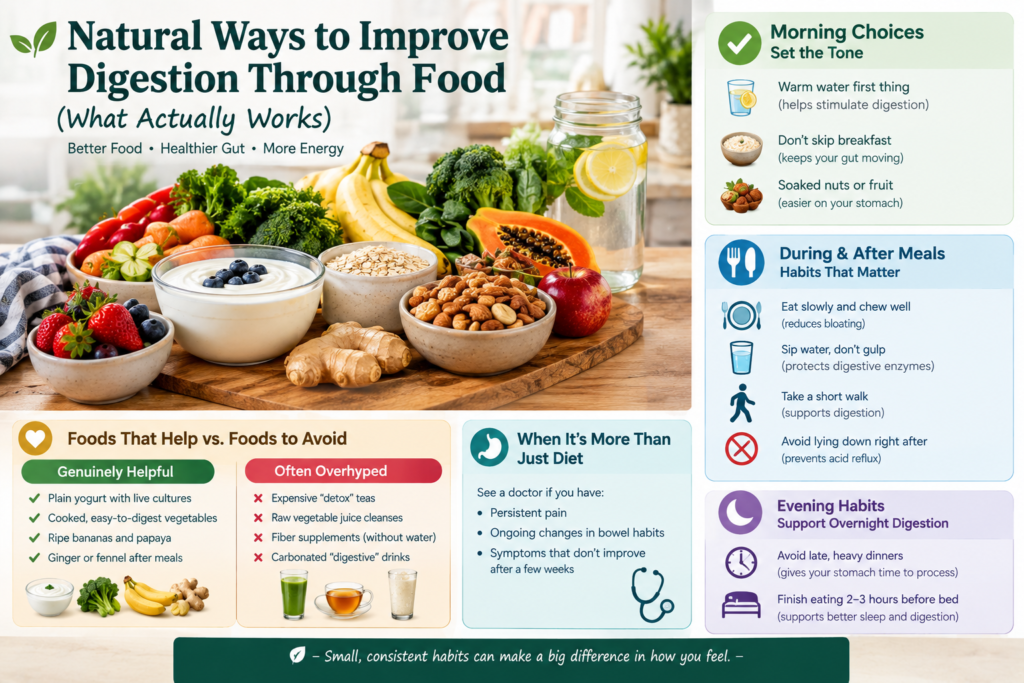
- Warm water first thing: Helps stimulate the digestive tract gently before the first meal, rather than starting cold and sluggish.
- Don’t skip breakfast entirely: Long gaps without food can slow gut motility for some people, though this varies by individual.
- Soaked nuts or fruit over heavy, fried breakfasts: Lighter morning meals are typically easier for the gut to process early in the day.
During and After Meals: The Habits That Matter More Than the Food
- Eating slowly and chewing thoroughly reduces the workload on your stomach and lowers the chance of bloating.
- Drinking large amounts of water immediately with meals can dilute digestive enzymes — sipping is better than gulping.
- A short walk after eating (even 10 minutes) has been shown to support gastric emptying and blood sugar regulation.
- Lying down right after a heavy meal increases the likelihood of acid reflux and discomfort.
Evening Habits That Quietly Work Against Digestion
Late, heavy dinners are one of the most overlooked digestion disruptors. Eating close to bedtime doesn’t give your stomach enough time to process food before your body slows down for sleep, which can lead to poor sleep quality and morning sluggishness. A lighter, earlier dinner — finished at least two to three hours before bed — tends to support smoother overnight digestion.
Foods That Genuinely Help vs. Foods That Are Overhyped
| Genuinely Helpful | Often Overhyped |
|---|---|
| Plain yogurt with live cultures | Expensive “detox” teas |
| Cooked, easy-to-digest vegetables | Raw vegetable juice cleanses |
| Ripe bananas and papaya | Fiber supplements without enough water |
| Ginger or fennel after meals | Carbonated “digestive” drinks |
When It’s More Than Just Diet
Occasional bloating or irregularity usually responds well to these everyday adjustments. But persistent pain, ongoing changes in bowel habits, or symptoms that don’t improve after a few weeks of better habits are signs to see a doctor rather than keep adjusting your diet on your own.
Frequently Asked Questions
What is the fastest natural way to improve digestion?
Slowing down while eating and staying consistent with meal timing tends to show results faster than any single food change, since both directly reduce the workload on your digestive system.
Does drinking water help digestion?
Yes, but timing matters — water sipped between meals supports digestion better than large amounts gulped during a meal, which can dilute digestive enzymes.
Can poor digestion be caused by stress, not food?
Yes. The gut and nervous system are closely connected, and stress can slow or disrupt digestion even when diet is otherwise well-balanced.
The Bottom Line
Improving digestion naturally isn’t about finding one miracle food — it’s about the rhythm of the whole day: what you eat first thing, how you eat during meals, and how early you stop eating at night. Small, consistent habits usually outperform any single dietary fix.
Related Reading
- If digestion issues are tied to fatigue or energy dips, see our guide on Best Foods for Night Shift Workers.
- Explore more in our Health Tips category for everyday, food-based wellness guidance.
- For fruit and vegetable choices that support gut health, browse our Fruits & Vegetables nutrition guides.