
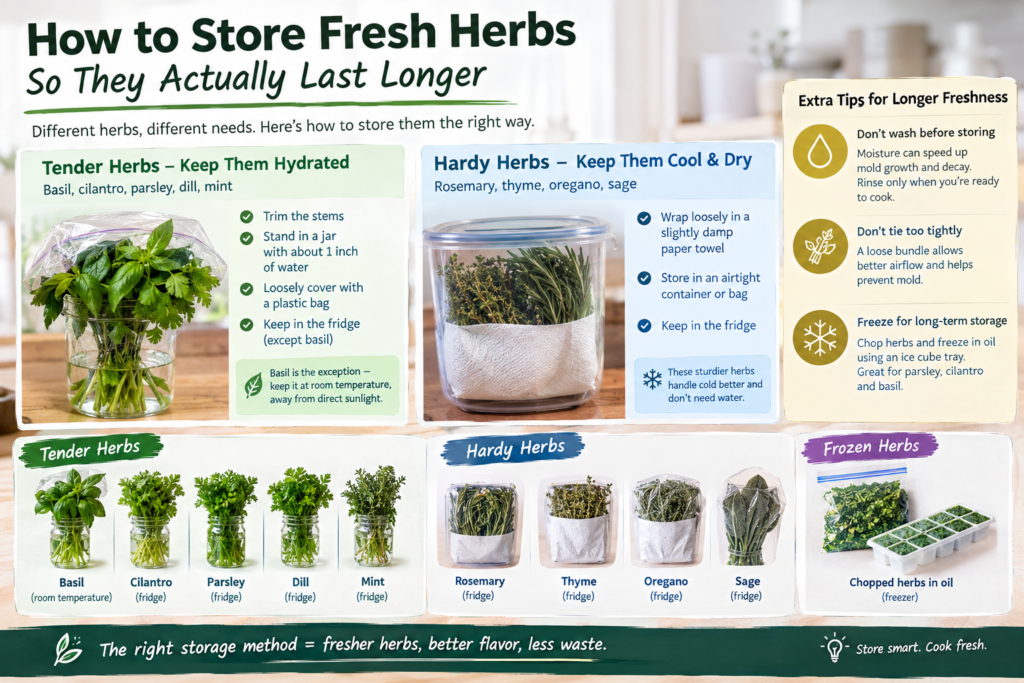
The most commonly repeated advice for storing fresh herbs- rolling them in a damp paper towel and sealing them in a bag- doesn’t work equally well for every herb. In some side-by-side comparisons, this method has actually made delicate herbs wilt faster than simply leaving them alone. The right approach depends heavily on which type of herb you’re dealing with.
Tender Herbs Need Water, Not Wrapping
Basil, cilantro, parsley, dill, and mint fall into the tender herb category, and they generally do better treated like cut flowers than like leftover produce. Trimming the stems and standing them in a jar with about an inch of water, then loosely covering the top with a plastic bag, keeps them hydrated without trapping excess moisture against the leaves.
Basil is the one clear exception here: it shouldn’t go in the refrigerator at all. Cold temperatures cause basil leaves to blacken and turn slimy, so it holds up better in its water jar left out on the counter, away from direct sunlight.
Hardy Herbs Prefer Dry Cold, Not Water
Rosemary, thyme, oregano, and sage behave differently. These sturdier herbs generally last longer wrapped loosely in a slightly damp paper towel and stored in an airtight container or bag in the refrigerator, rather than standing in water. Their tougher leaves and lower moisture content make them more tolerant of cold, unlike their tender counterparts.
A Food Safety Detail Worth Knowing
Washing herbs before storing them, rather than right before use, tends to introduce moisture that speeds up mold growth and decay. It’s generally better to store herbs unwashed and rinse them only when you’re ready to cook. If you’re hanging or bunching herbs to dry, tying them too tightly restricts airflow and can also encourage mold, so a loose bundle works better than a tight one.
Freezing for Longer-Term Storage
For herbs you won’t use within a couple of weeks, freezing chopped herbs in oil, packed into an ice cube tray, is a practical way to extend their usefulness for cooking without needing to dry them. This works particularly well for herbs like parsley, cilantro, and basil, which tend to lose much of their flavor and color when dried compared to frozen.
Why One Method Doesn’t Fit All Herbs
The tendency to treat all fresh herbs the same way, usually with the paper-towel-and-bag method, is likely why so many people find their herbs wilting faster than expected. Matching the storage method to whether an herb is tender or hardy makes a more consistent difference than any single trick applied universally.
Questions Worth Asking
Should all fresh herbs be stored in the refrigerator?
Not all of them. Basil specifically does better at room temperature in a jar of water, while most other herbs, tender or hardy, generally benefit from refrigeration using the appropriate method for their type.
Why do herbs sometimes wilt faster after being wrapped in a paper towel?
Tender herbs can be sensitive to how much moisture surrounds them. A damp paper towel wrapped too tightly, or left too long without checking, can sometimes speed up wilting rather than prevent it.
Is it better to wash herbs before or after storing them?
After. Washing before storage introduces moisture that can accelerate mold growth and spoilage. It’s more effective to store herbs unwashed and rinse them just before cooking.
Can frozen herbs be used the same way as fresh ones?
Not exactly. Frozen herbs work well in cooked dishes like soups and sauces, but they lose the texture needed for uses like garnishing or fresh salads.
Reducing food waste through proper storage ties into the broader practices covered in our Food Safety and Quality Management category, and if you’re looking to build out a more produce-focused kitchen, our Fruits and Vegetables category has more practical guides like this one.