Ask someone for a vitamin C food, and oranges come up almost automatically. But several non-citrus foods actually contain more vitamin C per serving than an orange does, and they rarely get mentioned in the same breath.
This article is for general information only and isn’t intended as medical advice. Vitamin C supports immune function generally, but it isn’t a treatment or prevention method for illness. If you have a specific health concern, talk to a doctor rather than relying on diet alone.
Vegetables That Outrank Citrus
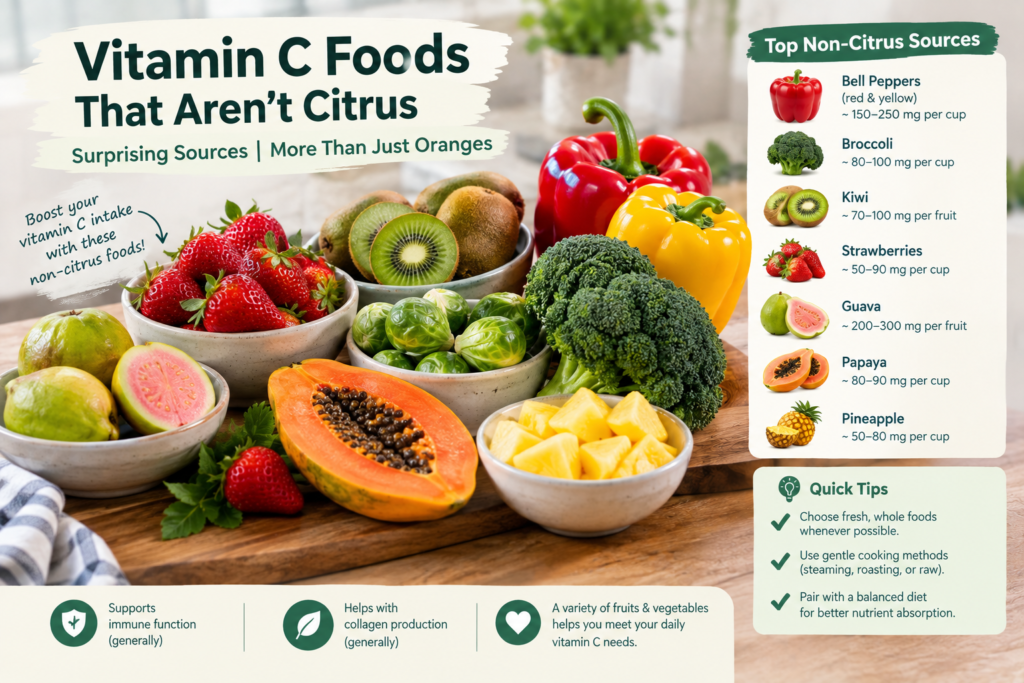
Bell peppers, particularly yellow and red varieties, are consistently among the richest vitamin C sources of any common food, often surpassing oranges by a wide margin. Broccoli, Brussels sprouts, and cauliflower all contain substantial amounts as well, making cruciferous vegetables a reliable, often-overlooked category for this nutrient.
Fruits Beyond the Citrus Family
Kiwi, strawberries, and guava are all strong non-citrus sources, with kiwi in particular frequently cited as comparable to or higher than oranges per serving. Papaya and pineapple also contribute meaningful amounts, giving tropical fruit lovers plenty of citrus-free options.
Why Cooking Method Changes the Picture
Vitamin C is both heat-sensitive and water-soluble, meaning it breaks down with prolonged cooking and can leach into cooking water. Boiling vegetables like broccoli or Brussels sprouts for an extended time can significantly reduce their vitamin C content, while steaming, roasting briefly, or eating them raw preserves considerably more. This is a similar principle to what we cover in our guide to French beans, where preparation method makes a measurable nutritional difference.
The “Prevents Colds” Myth
Vitamin C plays a genuine, well-established role in immune function, but the popular idea that high doses prevent or cure the common cold doesn’t hold up well under research. Most controlled studies have found that regular vitamin C intake may modestly shorten cold duration in some people, but it doesn’t reliably prevent colds from happening in the first place. This is worth knowing before assuming extra vitamin C is a defense strategy during flu season.
A Practical Way to Get Enough
Given how many non-citrus foods contain meaningful vitamin C, meeting daily needs doesn’t require citrus fruit at all. A diet that regularly includes bell peppers, cruciferous vegetables, and a variety of fruit generally covers this nutrient without much extra thought. Dried fruits also contribute some vitamin C, though typically less than their fresh counterparts due to processing — our dried apricot nutrition guide covers this in more detail.
Questions Worth Asking
What non-citrus food has the most vitamin C?
Bell peppers, especially yellow and red varieties, are consistently among the richest non-citrus sources, often exceeding what a typical orange provides.
Does cooking destroy vitamin C completely?
Not completely, but extended boiling significantly reduces it. Steaming, quick roasting, or eating vegetables raw preserves considerably more vitamin C than long boiling.
Can vitamin C actually prevent a cold?
Not reliably. Research generally shows it may modestly shorten a cold’s duration in some people, but consistent evidence for cold prevention through vitamin C supplementation is lacking.
Do I need citrus fruit to get enough vitamin C?
No. A diet including bell peppers, cruciferous vegetables, and a range of other fruit can meet daily vitamin C needs without citrus at all.
For more produce-based nutrition breakdowns like this one, browse our Fruits and Vegetables category.