Most lists of foods for knee cartilage health skip an important detail: cartilage has very little blood supply compared to most other tissue in the body. That matters because it means the real challenge isn’t just eating the right nutrients; it’s how efficiently those nutrients actually reach the cartilage itself. Understanding this changes how you should think about diet’s role here.
This article is for general information only and isn’t intended as medical advice. Diet doesn’t repair or regenerate damaged cartilage on its own. If you’re dealing with knee pain or diagnosed cartilage damage, an orthopedic specialist or physical therapist is the appropriate source of treatment guidance.
What Food Actually Supplies
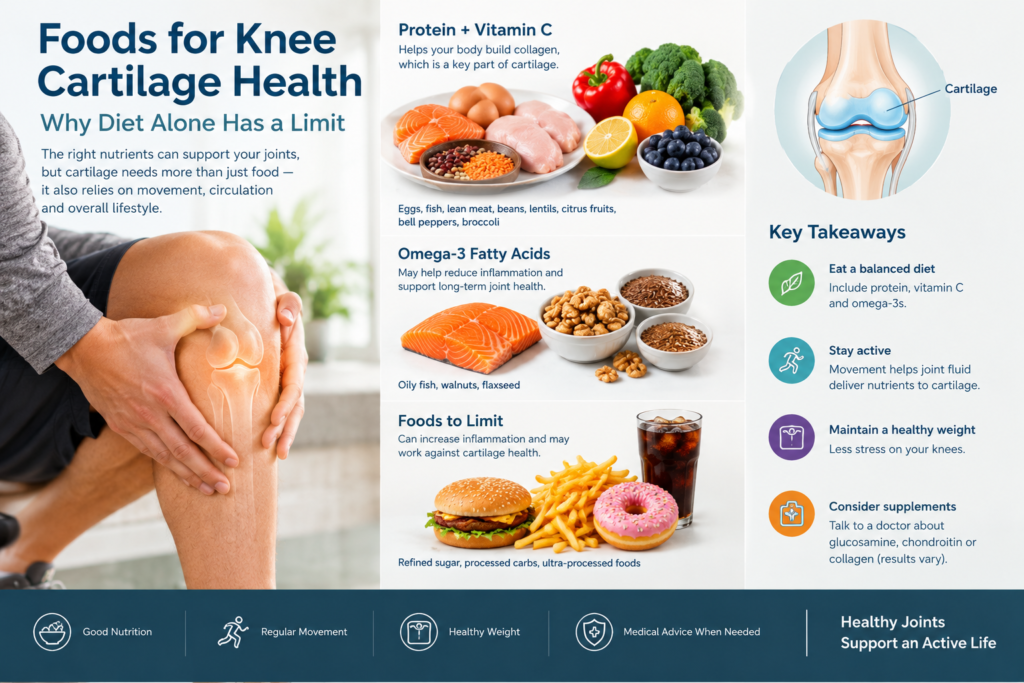
Cartilage is largely made of collagen, a protein your body builds using amino acids from dietary protein and vitamin C as a required cofactor. Eggs, fish, lean meat, beans, and lentils provide the protein building blocks, while citrus fruits, bell peppers, and broccoli supply the vitamin C needed for your body to actually assemble collagen. Without adequate vitamin C, protein alone isn’t enough — the two work together in this specific process.
Omega-3s and Inflammation
Omega-3 fatty acids, found in oily fish, walnuts, and flaxseed, are generally associated with lower inflammation throughout the body. Since inflammation is thought to contribute to cartilage breakdown over time, this is more about slowing further wear than actively rebuilding tissue.
Why “Eating the Nutrients” Isn’t the Whole Story
This is the part most food lists leave out. Cartilage relies mainly on the fluid that surrounds joints, rather than a direct blood supply, to receive nutrients. That fluid moves more effectively with joint movement, which is part of why physical activity and diet are generally considered to work together, rather than diet alone doing the job. Food supplies the raw materials — it doesn’t guarantee they’ll be efficiently delivered where they’re needed.
What About Supplements?
Glucosamine, chondroitin, and collagen supplements are commonly discussed alongside this topic. Current research on their effectiveness is mixed, with some studies showing modest symptom relief and others showing little difference from placebo. They’re reasonable to explore alongside a doctor’s input, but they aren’t established as a reliable way to rebuild cartilage.
Foods and Habits That Work Against Cartilage
Diets high in refined sugar, processed carbohydrates, and ultra-processed foods are generally linked to higher inflammation levels, which may work against the goal of protecting existing cartilage. This is a supporting factor to manage rather than the sole determinant of joint health.
A Realistic Way to Think About This
No single food regenerates cartilage, and it’s worth being skeptical of anything claiming otherwise. A diet that includes adequate protein, vitamin C-rich produce, and omega-3 sources gives your body what it needs to maintain and support cartilage — combined with movement, weight management, and proper medical care where needed.
Questions Worth Asking
Can food actually rebuild damaged knee cartilage?
No single food or diet has been shown to regenerate cartilage. Diet supplies the building blocks your body needs for maintenance, but it works alongside other factors, not as a stand-alone fix.
Why is vitamin C specifically important for joints?
Vitamin C is a required cofactor for collagen synthesis, meaning your body can’t effectively build collagen, cartilage’s main structural protein, without it. Our guide to vitamins for eye health covers another area where vitamin C plays a supporting role.
Do glucosamine and chondroitin supplements actually work?
Research results are mixed. Some people report symptom relief, while controlled studies don’t consistently show a significant benefit over placebo, so results vary by individual.
Does exercise matter more than diet for cartilage health?
They work together rather than competing. Movement helps circulate the joint fluid that delivers nutrients to cartilage, meaning diet alone, without activity, may not deliver its full potential benefit.
Vitamin-C-rich produce plays a role in more than just joints — our Fruits and Vegetables category covers other everyday benefits of these same foods.