The first hours of food poisoning are usually the roughest — and most people just want to know what’s actually safe to eat or drink without making things worse.
This article is for general informational purposes and isn’t medical advice. Severe symptoms, high fever, blood in vomit or stool, or signs of dehydration need medical attention, not home remedies.
Food poisoning is caused by bacteria, viruses, or toxins in contaminated food, and it usually resolves on its own within a few days. The main goal during that time isn’t stopping the illness — it’s staying hydrated and not adding stress to an already upset stomach.
Fluids Come Before Food
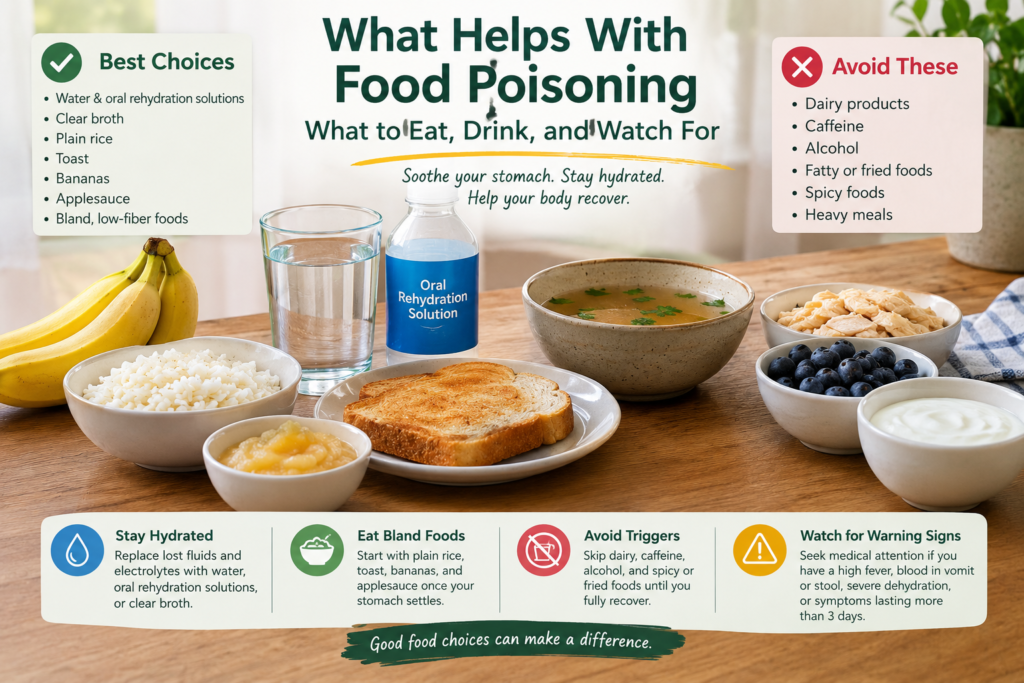
Vomiting and diarrhea both drain the body of water and electrolytes fast, and replacing that loss matters more early on than eating anything at all. Small, frequent sips of water, oral rehydration solutions, or clear broths tend to sit better than large gulps, which can trigger more vomiting.
When Eating Feels Possible Again
Once the stomach settles a bit, bland, low-fiber foods are usually the easiest to tolerate — plain rice, toast, bananas, and applesauce (sometimes called the BRAT diet) are common starting points. The goal isn’t nutrition at this stage, it’s just not upsetting the stomach further.
What to Avoid Until Fully Recovered
Dairy, caffeine, alcohol, fatty or fried foods, and anything heavily spiced tend to irritate a stomach that’s still recovering, and are usually easier to reintroduce gradually a day or two after symptoms ease, rather than all at once.
Warning Signs That Need More Than Rest
Most cases pass within a couple of days without treatment. But a fever over roughly 102°F (39°C), blood in vomit or stool, signs of severe dehydration (dizziness, very dark urine, or no urination), or symptoms lasting more than three days are reasons to see a doctor rather than wait it out.
Preventing the Next One
Most food poisoning traces back to how food was handled before it reached the plate — meat cooked to an unsafe internal temperature, cross-contamination between raw and ready-to-eat foods, or perishables left out at room temperature too long. Our food safety and quality management section covers these handling and storage practices in more detail.
Common Questions
How long does food poisoning usually last?
Most cases clear up within 1 to 3 days, though some bacterial infections can take longer and may need medical treatment.
Is it okay to take anti-diarrhea medicine right away?
Not always — in some infections, letting the body clear the toxin out is preferable, so it’s worth checking with a pharmacist or doctor before using one, especially if fever is present.
Can you go straight back to a normal diet once you feel better?
It’s usually smoother to ease back in over a day or two rather than eating a heavy or spicy meal right after symptoms stop.
Does food poisoning always come from restaurants?
No — it happens just as often at home, usually from improper storage temperatures or cross-contamination during prep.