
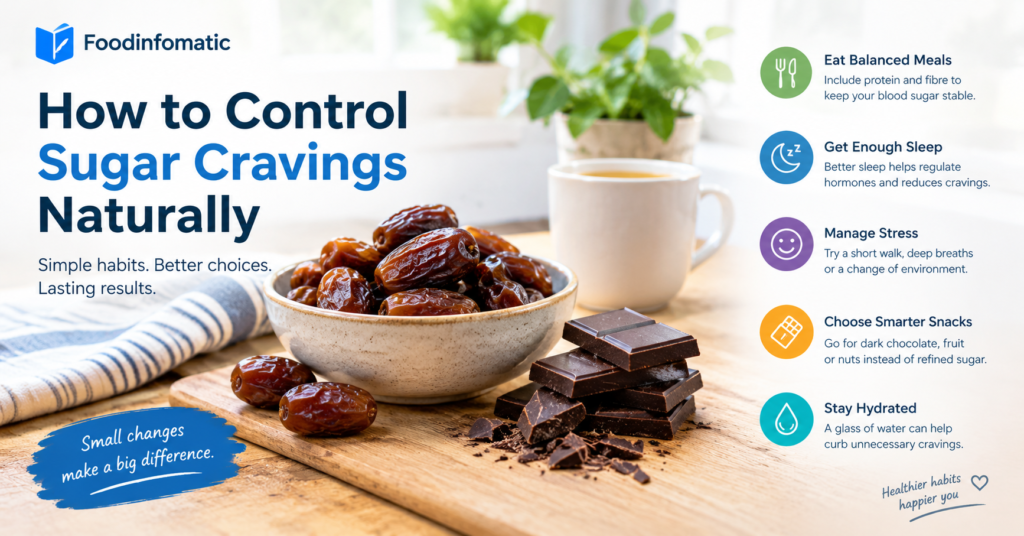
A sugar craving rarely announces its actual cause. Sometimes it’s genuine hunger misread as a craving; sometimes it’s tiredness, stress, or simply habit — the 4 p.m. biscuit that’s more routine than desire at this point.
This article shares general information only and is not medical advice. Frequent or intense cravings tied to mood or other symptoms are worth discussing with a doctor.
Check Whether It’s Actually Hunger First
A craving that shows up a couple of hours after a light or skipped meal is often just hunger wearing a sweeter disguise. Eating a proper, balanced meal first — rather than immediately reaching for something sugary — sometimes resolves the craving entirely.
Sleep’s Underrated Role
Poor or insufficient sleep is commonly linked to stronger cravings for sugary, high-calorie foods the following day, likely tied to how sleep affects appetite-regulating hormones. This is one of the more overlooked factors in managing cravings consistently.
Protein and Fibre at Each Meal
Meals lacking enough protein or fibre tend to leave blood sugar less stable, which can translate into stronger cravings a couple of hours later. Building meals around these two elements is one of the more reliable ways to reduce how often cravings show up in the first place.
Satisfying the Craving Without Fully Giving In
- A small square of dark chocolate rather than a full bar.
- Fruit with a touch of natural sweetness, like dates, rather than refined sugar.
- A warm drink, which can sometimes redirect the urge to eat something specific.
Stress and Emotional Triggers
Cravings tied to stress or boredom rather than hunger tend to respond differently — a short walk, a change of environment, or simply waiting ten minutes before deciding whether the craving is still there can be more effective than trying to out-will it in the moment.
What Rarely Works Long-Term
Cutting sugar out entirely and suddenly tends to intensify cravings for many people rather than eliminating them, often leading to a stronger rebound later. A gradual reduction, alongside the steps above, tends to be more sustainable than an abrupt, all-or-nothing approach.
Cravings aren’t a sign of failed willpower so much as a signal worth decoding — hunger, sleep, stress, or habit each call for a slightly different response, not the same one applied every time.
Keep Reading
Our guide on healthy eating habits for weight loss covers related daily patterns.