Which vitamins actually help eye health? Lutein, zeaxanthin, vitamin C, vitamin E, zinc, and omega-3 fatty acids are the nutrients most consistently linked to protecting vision as you age. Most of the marketing around eye health points straight to supplement bottles, but these same nutrients come from ordinary food, often more reliably absorbed that way.
This article is for general information only and isn’t intended as medical advice. If you’re experiencing vision changes or have a diagnosed eye condition, an eye doctor is the right person to guide treatment, not a food list.
Lutein and Zeaxanthin: The Two Nutrients Eye Research Focuses On Most
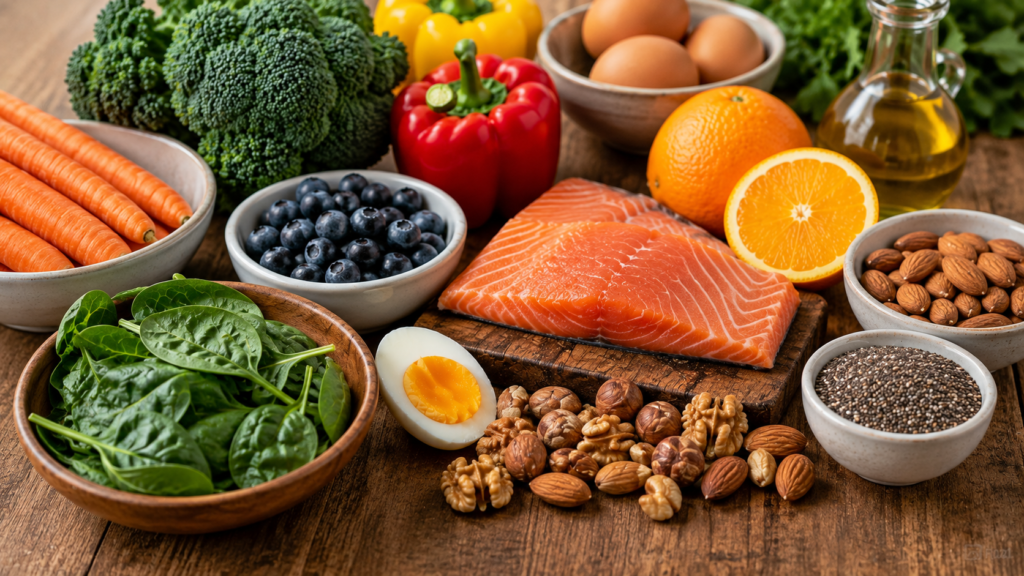
These two compounds sit directly in the retina, which is part of why they get so much attention in eye research. Dark leafy greens carry the highest natural amounts — spinach and kale are the most commonly cited sources. Egg yolks also contain them, and in a form the body tends to absorb well due to the fat content of the yolk.
Vitamin C
Citrus fruits, bell peppers, and broccoli are reliable sources of vitamin C, an antioxidant that plays a general protective role throughout the body, including in eye tissue.
Vitamin E
Nuts, seeds, and vegetable oils are the main food sources of vitamin E, another antioxidant thought to help protect eye cells from everyday oxidative stress.
Zinc
Zinc shows up in a variety of foods, including legumes, nuts, and animal proteins, and is involved in how the eye processes vitamin A.
Omega-3 Fatty Acids
Fatty fish like salmon and tuna are the most concentrated sources of omega-3s, which are linked to supporting tear production and general retinal function.
Why Food Sources Are Worth Prioritizing Over Supplements
Food naturally combines these nutrients with fiber, water, and other compounds that may support how well they’re absorbed. Supplement aisles are full of eye-health products, but a diet that regularly includes leafy greens, citrus, nuts, and fish covers most of the same nutrients without needing to rely on a pill.
A Few Things Worth Knowing
Cooking leafy greens lightly, rather than eating them raw every time, can make lutein and zeaxanthin easier for the body to absorb. Pairing vitamin-C-rich foods with a source of iron, like legumes, also improves how well that iron gets absorbed, which is a useful side benefit worth mentioning. And since egg yolks are one of the more absorbable sources of lutein, they’re also worth a look if you’re building a vegetarian-friendly nutrient list — our guide on vitamin D foods for vegetarians covers egg yolks from a related angle.
What About Carrots?
Carrots are rich in beta-carotene, which the body converts into vitamin A, but they aren’t the strongest source of the nutrients most closely tied to long-term eye protection. Leafy greens and citrus fruits generally carry more of what current research points to.
Frequently Asked Questions
What is the single best food for eye health?
There isn’t one standout food — spinach and kale for lutein and zeaxanthin, citrus for vitamin C, and fatty fish for omega-3s each contribute something different.
Do eye vitamins from food work as well as supplements?
For most people eating a varied diet, food sources are considered a reliable way to get these nutrients, and they come with the added benefit of fiber and other compounds that supplements don’t include.
Can diet actually prevent eye disease?
Diet is one factor among several, alongside genetics, age, and regular eye exams. It isn’t a guarantee against conditions like macular degeneration or cataracts, but it’s considered a meaningful supporting factor.
Are carrots overrated for eye health?
To some extent. Carrots provide beta-carotene, which is genuinely useful, but leafy greens and citrus fruits carry more of the specific nutrients most linked to long-term eye protection.
For more on building a produce-forward diet in general, our Fruits and Vegetables category covers a wide range of foods beyond just this list.
Vitamins for Eye Health: What the Food Sources Actually Are
Which vitamins actually help eye health? Lutein, zeaxanthin, vitamin C, vitamin E, zinc, and omega-3 fatty acids are the nutrients most consistently linked to protecting vision as you age. Most of the marketing around eye health points straight to supplement bottles, but these same nutrients come from ordinary food, often more reliably absorbed that way.
This article is for general information only and isn’t intended as medical advice. If you’re experiencing vision changes or have a diagnosed eye condition, an eye doctor is the right person to guide treatment, not a food list.
Lutein and Zeaxanthin: The Two Nutrients Eye Research Focuses On Most
These two compounds sit directly in the retina, which is part of why they get so much attention in eye research. Dark leafy greens carry the highest natural amounts — spinach and kale are the most commonly cited sources. Egg yolks also contain them, and in a form the body tends to absorb well due to the fat content of the yolk.
Vitamin C
Citrus fruits, bell peppers, and broccoli are reliable sources of vitamin C, an antioxidant that plays a general protective role throughout the body, including in eye tissue.
Vitamin E
Nuts, seeds, and vegetable oils are the main food sources of vitamin E, another antioxidant thought to help protect eye cells from everyday oxidative stress.
Zinc
Zinc shows up in a variety of foods, including legumes, nuts, and animal proteins, and is involved in how the eye processes vitamin A.
Omega-3 Fatty Acids
Fatty fish like salmon and tuna are the most concentrated sources of omega-3s, which are linked to supporting tear production and general retinal function.
Why Food Sources Are Worth Prioritizing Over Supplements
Food naturally combines these nutrients with fiber, water, and other compounds that may support how well they’re absorbed. Supplement aisles are full of eye-health products, but a diet that regularly includes leafy greens, citrus, nuts, and fish covers most of the same nutrients without needing to rely on a pill.
A Few Things Worth Knowing
Cooking leafy greens lightly, rather than eating them raw every time, can make lutein and zeaxanthin easier for the body to absorb. Pairing vitamin-C-rich foods with a source of iron, like legumes, also improves how well that iron gets absorbed, which is a useful side benefit worth mentioning. And since egg yolks are one of the more absorbable sources of lutein, they’re also worth a look if you’re building a vegetarian-friendly nutrient list — our guide on vitamin D foods for vegetarians covers egg yolks from a related angle.
What About Carrots?
Carrots are rich in beta-carotene, which the body converts into vitamin A, but they aren’t the strongest source of the nutrients most closely tied to long-term eye protection. Leafy greens and citrus fruits generally carry more of what current research points to.
Frequently Asked Questions
What is the single best food for eye health?
There isn’t one standout food — spinach and kale for lutein and zeaxanthin, citrus for vitamin C, and fatty fish for omega-3s each contribute something different.
Do eye vitamins from food work as well as supplements?
For most people eating a varied diet, food sources are considered a reliable way to get these nutrients, and they come with the added benefit of fiber and other compounds that supplements don’t include.
Can diet actually prevent eye disease?
Diet is one factor among several, alongside genetics, age, and regular eye exams. It isn’t a guarantee against conditions like macular degeneration or cataracts, but it’s considered a meaningful supporting factor.
Are carrots overrated for eye health?
To some extent. Carrots provide beta-carotene, which is genuinely useful, but leafy greens and citrus fruits carry more of the specific nutrients most linked to long-term eye protection.
For more on building a produce-forward diet in general, our Fruits and Vegetables category covers a wide range of foods beyond just this list.