Oats get called a “superfood” often enough that the label has started to lose meaning. That doesn’t mean the reputation is undeserved — it just means it’s worth separating what’s genuinely well-supported about oats for health benefits from what’s marketing shorthand piled on top of a fairly ordinary grain.
This article is for general information only and isn’t intended as medical advice. If you’re managing cholesterol or blood sugar as part of a diagnosed condition, it’s worth discussing dietary changes with a doctor or dietitian.
What’s Actually in Oats
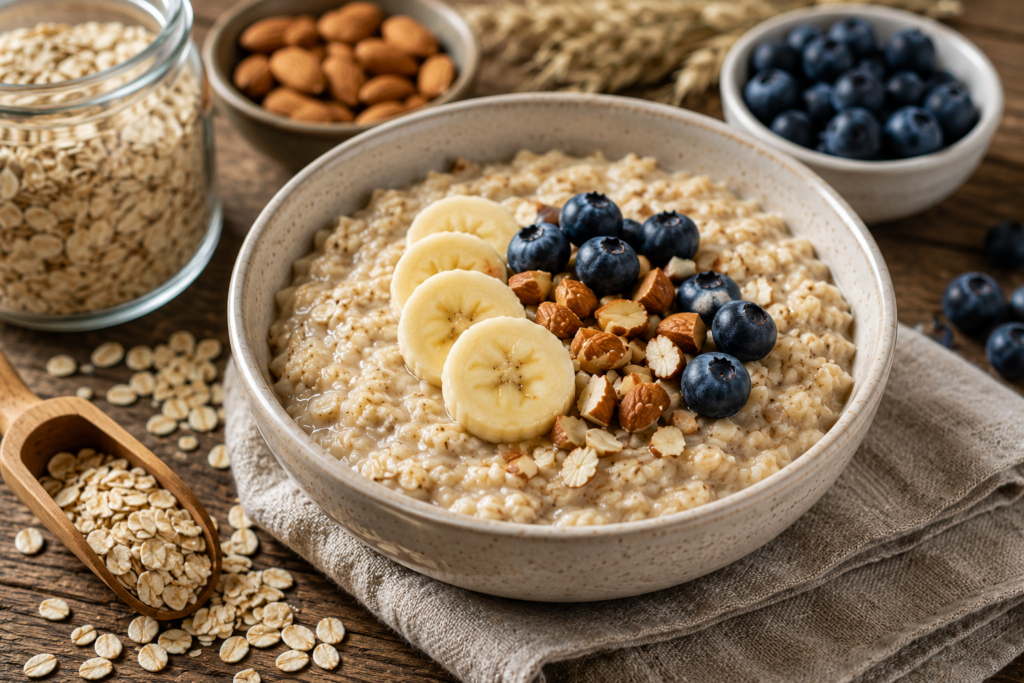
Oats are a whole grain that carries a fairly balanced mix of complex carbohydrates, plant-based protein, and soluble fiber — specifically a type called beta-glucan, which is the component most oat research tends to focus on. Compared to many other grains, oats also bring a modest but real amount of minerals like magnesium and zinc, and they’re naturally gluten-free before any cross-contamination during processing.
Cholesterol and Blood Sugar: What the Evidence Actually Supports
Beta-glucan is the part of oats most consistently linked to lower cholesterol, largely because of how it behaves in the digestive tract — it forms a gel-like substance that appears to interfere with cholesterol absorption. This is well-established enough that food regulators in multiple regions allow oat products to carry cholesterol-related health claims, provided they contain a minimum amount of beta-glucan.
The same fiber also appears to slow how quickly sugar enters the bloodstream after a meal, which is generally considered useful for people managing blood sugar levels, though it works alongside the rest of a meal rather than as a standalone fix.
Not Every Oat Product Delivers the Same Benefit
This is where a lot of the “oats are healthy” messaging breaks down. Flavored instant oat packets, oat-based granola bars, and oat milk products often contain significantly less intact fiber and considerably more added sugar than a bowl of rolled or steel-cut oats. The health benefits associated with oats come largely from the whole grain and its beta-glucan content — not from the word “oat” appearing on a package.
Where Oats Fit Into a Broader Diet
Oats work well as part of a fiber-focused way of eating rather than as an isolated fix for any one issue. If you’re trying to understand how much fiber you actually need day to day, our guide on how much fiber you really need daily puts oats into that bigger picture. They also show up naturally in Mediterranean-style breakfasts, usually alongside fruit and nuts rather than on their own.
Frequently Asked Questions
Are oats really as healthy as they’re made out to be?
For the most part, yes — the beta-glucan fiber in oats has genuine, well-documented effects on cholesterol and blood sugar response. The exaggeration usually comes from marketing around processed oat products, not from oats themselves.
Does steel-cut oats offer more benefit than instant oats?
Less processed forms like steel-cut or rolled oats generally retain more of their natural fiber structure compared to heavily processed instant varieties, which can also come with added sugar that offsets some of the benefit.
Can eating oats replace cholesterol medication?
No. Oats can be a useful part of a cholesterol-conscious diet, but they aren’t a substitute for prescribed treatment, and any changes to medication should go through a doctor.
Is oat milk as beneficial as eating whole oats?
Not typically. Oat milk usually contains only a fraction of the fiber found in whole oats, since much of the grain is filtered out during processing.