It’s 4 PM, you’re hungry, and turning on the stove is the last thing you want to do. Most “healthy snack” lists assume you have twenty minutes to spare or hand you a bag of almonds and call it a day. Neither is particularly useful when you just want something that fills a real gap in your energy without much effort.
The good news is that “no cooking” doesn’t have to mean “no nutrition.” A snack that combines protein, fiber, or healthy fat tends to keep you satisfied far longer than something that’s just carbohydrate on its own — and plenty of no-prep options do exactly that.
Why the Combination Matters More Than the Snack Itself
Before getting into the list, it’s worth understanding what actually makes a snack “hold you over” versus leave you hungry again in 30 minutes. Foods that digest quickly on their own, like crackers or fruit alone, tend to raise and drop your blood sugar fast, which brings hunger back sooner. Pairing that kind of food with protein or fat slows digestion down and stretches out the feeling of fullness. This is the guiding idea behind most of the combinations below.
No-Prep Snack Ideas With Real Staying Power
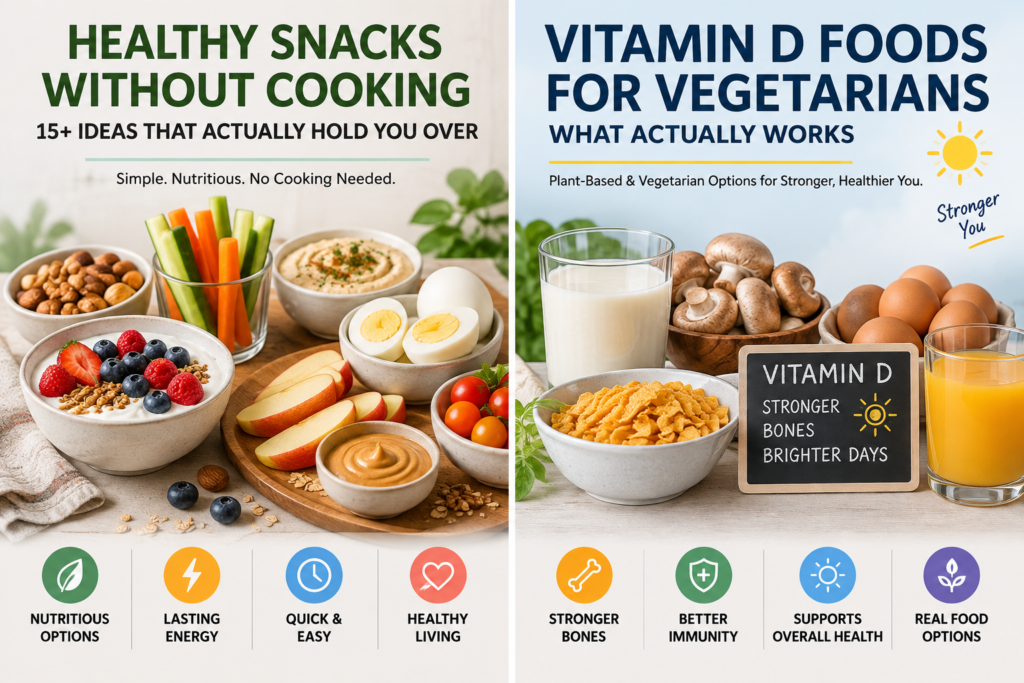
1. Greek Yogurt With Berries
Greek yogurt is naturally higher in protein than regular yogurt, and pairing it with berries adds fiber without much added sugar if you choose plain yogurt. If you’re curious whether yogurt fits other eating patterns too, we’ve broken that down in our keto-friendly yogurt guide.
2. Cottage Cheese With Sliced Fruit
Cottage cheese carries a solid amount of protein per serving, and topping it with fruit like peaches or pineapple balances out its mild, slightly salty flavor. For more on how dairy fits into everyday nutrition, see our Dairy category.
3. Hard-Boiled Eggs
If you keep a batch pre-boiled in the fridge, this becomes one of the fastest protein sources available with zero prep at snack time.
4. Hummus With Raw Vegetables
Hummus is made primarily from chickpeas, which brings both protein and fiber to the table. Pairing it with carrots, cucumber, or bell pepper strips adds volume and crunch. Browse our Fruits and Vegetables category for more produce-based ideas.
5. Nut Butter on Apple Slices
The natural sugars in apple digest more slowly when paired with the fat and protein in nut butter. This is a classic combination for a reason — it genuinely works.
6. Trail Mix With Dried Fruit, Nuts, and Seeds
A homemade mix of nuts, seeds, and dried fruit gives you protein, healthy fats, and natural sweetness. Dried apricot and dried mango both work particularly well here — see our detailed breakdowns of dried apricot nutrition and dried mango benefits if you want to know exactly what you’re adding to the mix.
7. String Cheese
Simple, portable, and a genuine protein source. If lactose is a concern for you, our guide on cheeses that are easier to digest is worth a look before you stock up.
8. Edamame (Pre-Cooked, Chilled)
If you keep a bag of already-cooked edamame in the fridge or freezer, it becomes a no-cook snack that’s unusually high in both protein and fiber for a plant-based option.
9. Canned Tuna or Salmon on Crackers
A small can of tuna or salmon requires no cooking and delivers a substantial protein boost paired with whole-grain crackers.
10. Overnight Oats (Prepared the Night Before)
While oats are usually associated with cooking, overnight oats never touch heat — they’re simply soaked in milk or yogurt overnight, making them a genuinely no-cook, fiber-rich option once prepped.
11. Roasted Chickpeas (Store-Bought or Pre-Made)
If you buy these pre-roasted, they become a crunchy, protein-and-fiber snack you can grab straight from the pantry.
12. Cheese and Whole-Grain Crackers
A straightforward pairing — the protein and fat in cheese slow down the quick-digesting carbohydrates in the crackers. If you’re building this around a keto approach specifically, our best cheese for keto diet guide covers which options fit best.
13. Smoothie With Yogurt or Milk Base
A blender doesn’t require a stove. Combining fruit with yogurt or milk creates a snack with protein, fiber, and natural sweetness in one glass.
14. Avocado on Rice Cakes
Mashed avocado brings healthy fat and some fiber, and rice cakes offer a light, crunchy base without needing any cooking.
15. Dark Chocolate With Almonds
For something that satisfies a sweet craving without falling into ultra-processed territory, a small portion of dark chocolate paired with almonds combines a treat with a genuine protein and fat source.
Building Your Own No-Cook Snack (Without a List)
If none of the above appeal to you, the underlying formula is simple: pick one protein or fat source (yogurt, cheese, nuts, eggs, nut butter) and pair it with one fiber source (fruit, vegetables, whole grains). That combination is what actually determines whether a snack holds you over or leaves you reaching for something else twenty minutes later.
Frequently Asked Questions
What is the healthiest no-cook snack?
There isn’t a single “healthiest” option — it depends on what you need. For protein, options like Greek yogurt, cottage cheese, or hard-boiled eggs stand out. For fiber and volume, raw vegetables with hummus or fruit with nut butter work well.
Can no-cook snacks still be filling?
Yes, as long as they combine protein or fat with fiber rather than relying on carbohydrates alone. A snack like nut butter on apple slices tends to be far more filling than an apple by itself.
Are no-cook snacks less nutritious than cooked ones?
Not inherently. Cooking doesn’t automatically add nutritional value — in some cases, like raw vegetables, it can even reduce certain nutrient levels.
What are good no-cook snacks for work?
Portable options like string cheese, trail mix, hard-boiled eggs prepared at home, or hummus with vegetables travel well for a workday.
Explore More
For more food and nutrition breakdowns like this one, visit the Foodinfomatic homepage, or browse our full blog for everything from dairy science to fruit nutrition.