
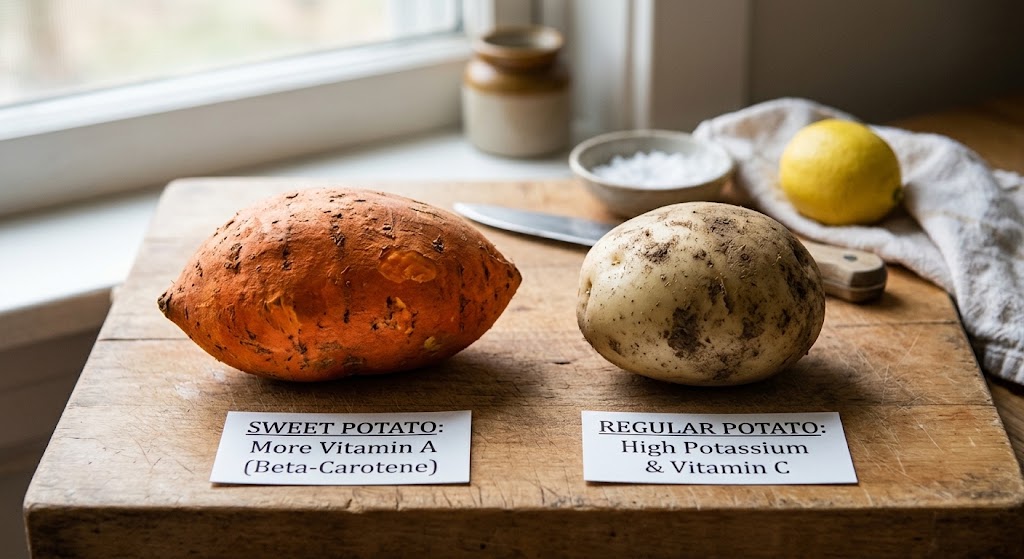
Sweet potatoes get labelled as the “healthy” choice so often that regular potatoes have quietly picked up a bit of an unfair reputation. The truth is more balanced than the health-food marketing suggests — each one brings something genuinely useful to the table, and neither deserves to be written off.
This article is for general information only and isn’t medical advice. Individual dietary needs vary, so speak with a doctor or dietitian for guidance specific to your situation.
The Claim That Needs Unpacking First
The most common reason sweet potatoes get called “healthier” comes down to one standout nutrient: beta-carotene, which the body converts into vitamin A. Sweet potatoes contain a genuinely impressive amount of it, particularly the orange-fleshed varieties, and that single nutrient is often what tips the popular narrative in their favour. But nutrition rarely comes down to just one number.
Where Regular Potatoes Actually Hold Their Own
Regular potatoes tend to be a strong source of potassium, often comparable to or higher than a banana per serving, and they also contribute a solid amount of vitamin C, particularly when eaten with the skin on. They’re not the nutritionally empty food they’re sometimes made out to be — much of that reputation comes from how they’re commonly prepared, not the vegetable itself.
Fiber and Blood Sugar: More Nuanced Than the Headlines Suggest
Both types contain a meaningful amount of fiber, particularly when the skin is left on, and the difference between them tends to be smaller than commonly assumed. As for blood sugar impact, this is one of the most oversimplified comparisons out there — cooking method affects it more than the type of potato itself. A baked potato and a boiled one behave differently in the body, and the same is true across both sweet and regular varieties.
Calories Are Nearly a Tie
Per similar serving size, sweet and regular potatoes land in a very similar calorie range. Neither is meaningfully “lighter” than the other on its own — what actually changes the calorie count dramatically is preparation, not the vegetable itself.
The Preparation Problem That Undoes Both
This is really where the “healthy vs unhealthy” conversation should be focused. A potato baked or boiled with the skin on is a genuinely nutritious, fiber-rich food, whether sweet or regular. The same potato deep-fried and salted, turned into chips, or loaded with butter and toppings, loses much of that nutritional advantage regardless of which variety you started with.
Common Questions
Does sweet potato have less sugar than it seems?
Its natural sweetness comes from its own sugars, but this is a small amount compared to added sugar in processed foods, and it’s balanced by fiber that slows how quickly it’s absorbed.
Can regular potatoes be part of a healthy diet?
Yes, particularly when baked or boiled with the skin left on, since much of the fiber and nutrient content sits close to the skin.
Why do sweet potatoes have a reputation for being lower glycemic index?
This varies significantly depending on the cooking method for both types, so it’s not a consistent rule that applies across every preparation.
Which one should I choose if I want more vitamin A?
Sweet potato is the clear choice here, thanks to its notably higher beta-carotene content compared to regular potato.
Fiber is one of the bigger reasons potatoes come up in this conversation at all — if you’re trying to figure out where your daily intake actually stands, this breakdown lays out the numbers. And if potato-style comparisons are useful to you, there’s more like this tucked into the Fruits and Vegetables section.