Health Tips

Smoothie for eye health made with leafy greens, berries, avocado, nuts, seeds, banana, and milk

Smoothie for Eye Health: What Actually Matters in the Blender

Most smoothie-for-eye-health content is really just a recipe list — spinach here, blueberries there. The more useful question is what happens to eye-supportive nutrients once you actually blend them, since that changes a few things worth knowing before you build your own. This article is for general information only and isn’t intended as medical advice.

Smoothie for Eye Health: What Actually Matters in the Blender Read More »

Omega-3 rich foods including salmon, sardines, flaxseed, chia seeds, and walnuts showing plant and fish sources

Omega-3 in Food: Why Plant Sources Aren’t Quite the Same as Fish

Flaxseed and walnuts get marketed as omega-3 powerhouses right alongside salmon — but the omega-3 in them isn’t actually the same type the body uses most directly. This article is for general informational purposes and isn’t medical advice. It doesn’t cover omega-3 supplementation for specific medical conditions. There are three main types of omega-3: ALA,

Omega-3 in Food: Why Plant Sources Aren’t Quite the Same as Fish Read More »

Magnesium-rich foods including spinach, pumpkin seeds, almonds, cashews, black beans, and dark chocolate for sleep and stress support

Why Magnesium Keeps Coming Up in Conversations About Sleep and Stress

Magnesium doesn’t get the attention that calcium or iron does, but it’s involved in hundreds of processes in the body — including two that people notice almost immediately when they’re off: sleep and stress response. This article is for general informational purposes and isn’t medical advice. Chronic sleep issues or ongoing stress are worth discussing

Why Magnesium Keeps Coming Up in Conversations About Sleep and Stress Read More »

Foods that may help with bloating including yogurt, kefir, oats, bananas, cucumber, ginger, chia seeds, leafy greens, and peppermint tea

Foods That Help With Bloating (and Why It Happens in the First Place)

Bloating rarely has a single cause, which is why a lot of generic “foods for bloating” lists don’t actually help — the right fix depends on what’s causing it. This article is for general informational purposes and isn’t medical advice. Persistent or severe bloating, especially with pain or other symptoms, should be checked by a

Foods That Help With Bloating (and Why It Happens in the First Place) Read More »

An educational infographic on gut health breakfast comparing prebiotics like oats, bananas, and flaxseed with probiotics like yogurt and kefir alongside a bowl of oatmeal topped with fruit, nuts, and chia seeds.

Gut Health Breakfast: The Prebiotic and Probiotic Difference

A lot of “gut health breakfast” advice lumps prebiotics and probiotics together as if they’re the same thing. They’re not, and understanding the difference makes it much easier to actually build a breakfast that supports digestion, rather than just tossing in vaguely “healthy” ingredients. This article is for general information only and isn’t intended as

Gut Health Breakfast: The Prebiotic and Probiotic Difference Read More »

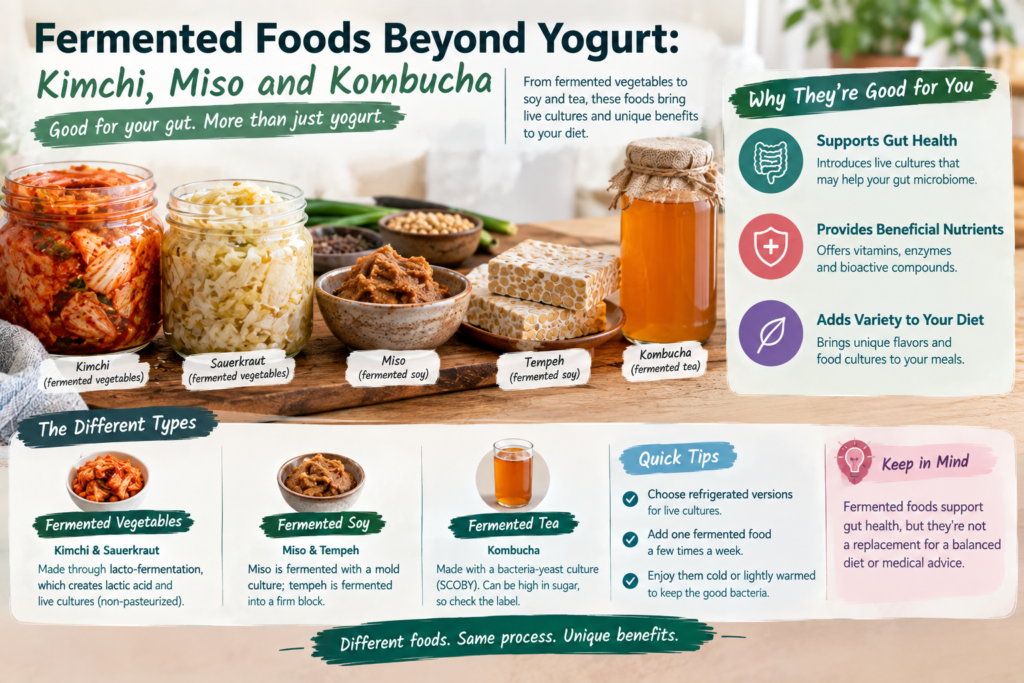
Fermented foods for skin health including kefir, yogurt, kimchi, sauerkraut, and miso

Fermented Foods for Skin Health: What’s Theory and What’s Proven

The idea that fermented foods might benefit your skin sounds appealing, and there’s a real scientific concept behind it — the gut-skin axis. But it’s worth being upfront about something most articles on this topic skip: researchers studying this connection describe the underlying mechanisms as still largely theoretical, not settled science. This article is for

Fermented Foods for Skin Health: What’s Theory and What’s Proven Read More »