
Most “eat healthy at work” advice assumes everyone has a fridge, a microwave, and twenty spare minutes at lunch — which leaves out a lot of actual workdays.
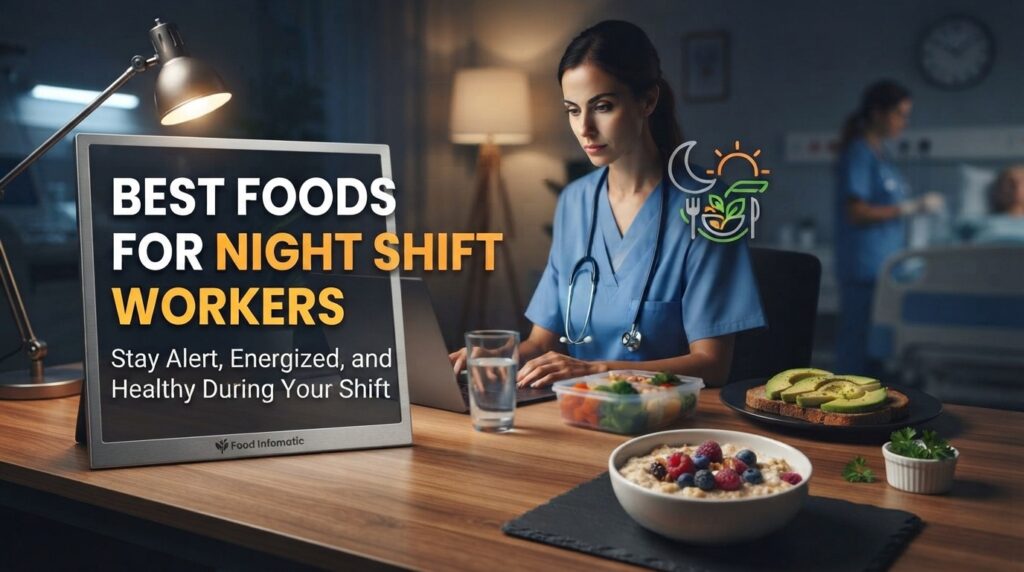
This article is for general informational purposes and isn’t medical advice. It focuses on standard daytime office schedules; our guide on foods for night shift workers covers the very different nutrition needs of rotating or overnight schedules.
What actually works tends to depend less on willpower and more on what’s realistically available during a typical workday — so the habits below are grouped by the kind of day, not a single one-size-fits-all list.
The Desk-All-Day Job
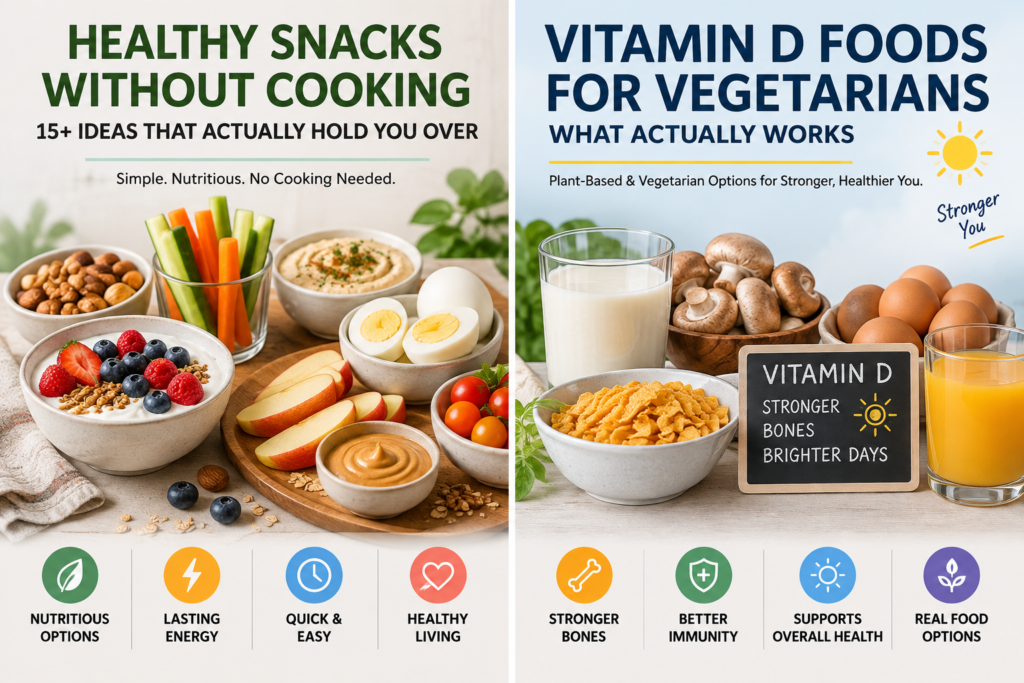
Keeping a stash of shelf-stable options at the desk — nuts, dried fruit, whole-grain crackers — removes the “there’s nothing to eat” excuse that usually leads to the vending machine. Our list of healthy snacks that need no cooking is built exactly for this kind of setup.
The Back-to-Back Meetings Day
On days with no real lunch break, something eaten early that actually holds — a sandwich with protein, not just carbs — matters more than trying to squeeze in a “proper” meal later. Skipping lunch entirely on these days often just shifts the hunger (and the poor choices) to the evening.
The Early Shift or Long Commute Day
When mornings are rushed, a portable breakfast — a boiled egg and fruit, or overnight oats prepared the night before — covers more ground than skipping breakfast and relying on a mid-morning coffee run.
The Team Lunch or Catered Day
Buffet-style or catered meals make portion control harder simply because of how the food is presented. Starting with vegetables or salad on the plate before the heavier options tends to naturally moderate how much of the richer food gets added afterward.
A Habit That Works Across All of Them
The single most useful habit isn’t a specific food — it’s having a fallback option ready before hunger takes over the decision. Whether that’s a stocked drawer, a packed bag, or a saved list of nearby healthier options, the choice made hungry and rushed is rarely the one made calmly in advance.
Common Questions
Is it better to skip lunch or eat something unhealthy when short on time?
Eating something, even imperfect, is usually better than skipping — extreme hunger later in the day tends to lead to bigger, less controlled eating.
Does coffee count as a meal replacement during busy mornings?
No — it can mask hunger and fatigue temporarily, but it doesn’t provide the protein or fiber that actually sustains energy through a busy morning.
How much prep does “healthy eating at work” actually require?
Very little for most of these habits — stocking a drawer or grabbing fruit takes seconds, though a packed lunch does need a bit of planning the night or morning before.
What’s a realistic first change to make?
Starting with just one category — like keeping desk snacks stocked — tends to stick better than trying to overhaul lunch, breakfast, and snacking all at once.