
Flaxseed and walnuts get marketed as omega-3 powerhouses right alongside salmon — but the omega-3 in them isn’t actually the same type the body uses most directly.
This article is for general informational purposes and isn’t medical advice. It doesn’t cover omega-3 supplementation for specific medical conditions.
There are three main types of omega-3: ALA, EPA, and DHA. Only EPA and DHA are used directly by the body in the form they’re needed — ALA has to be converted first.
The Conversion Problem
The body converts ALA into EPA and DHA at a fairly low rate — generally described as somewhere in the low single-digit percentages for most people. That means eating flaxseed provides omega-3, but not in a form the body can use as directly as fish does.
Where EPA and DHA Actually Come From
Fatty fish — salmon, mackerel, sardines, and trout — are the most direct sources of EPA and DHA, since fish accumulate it from marine algae further down the food chain. Fish oil and algae-based supplements are the two most common non-fish sources of preformed EPA/DHA.
Where ALA Comes From
Flaxseed, chia seeds, walnuts, and canola oil are the main plant sources of ALA. They’re still worth including in a diet — ALA has its own value beyond just conversion — but relying on them alone as an “omega-3 strategy” isn’t quite equivalent to eating fish regularly.
A Practical Middle Ground
For people who don’t eat fish, ground flaxseed or walnuts a few times a week, combined with an algae-based supplement if desired, is a reasonable way to cover both ALA and some preformed omega-3 without relying on fish oil.
Common Questions
Is flaxseed oil as good as fish oil?
Not quite — flaxseed oil provides ALA, while fish oil provides EPA and DHA directly, which the body doesn’t have to convert.
How much fatty fish should you eat for omega-3?
General dietary guidance often suggests roughly two servings of fatty fish a week, though individual needs vary.
Do eggs count as an omega-3 source?
Some eggs (often labeled “omega-3 enriched”) do contain small amounts, usually because the hens were fed a flax-supplemented diet.
Can vegetarians get enough omega-3 without fish?
Algae-based DHA/EPA supplements make this possible without fish, since algae is the source fish get it from too.
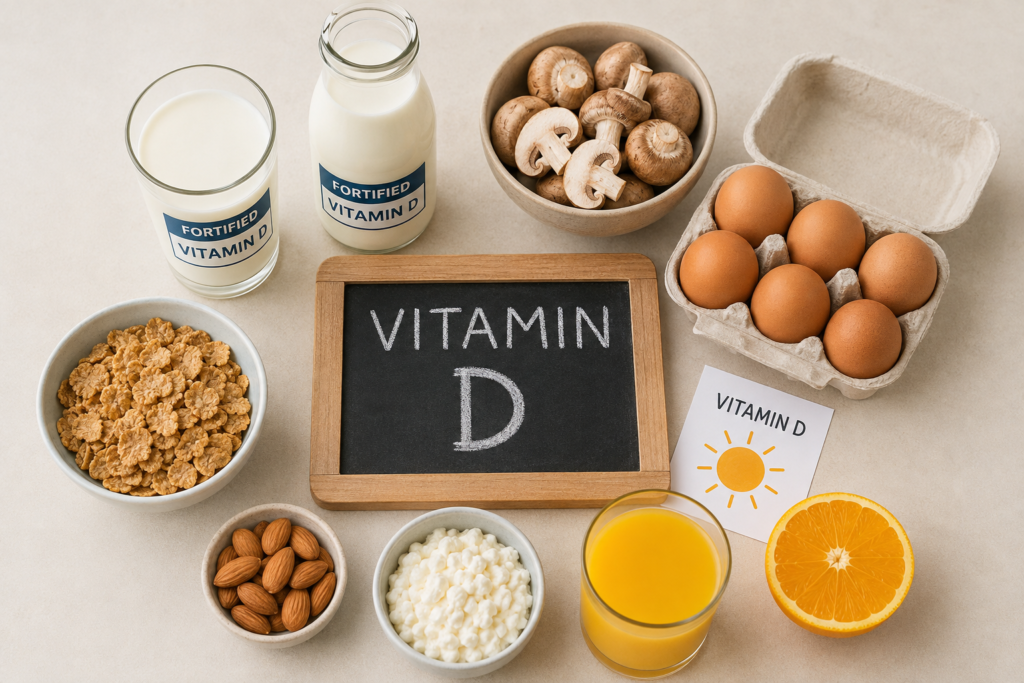
Vegetarians face a similar gap with vitamin D as they do with omega-3 — both need more intentional food choices to reach the same level fish or animal products provide directly. Our guide on vitamin D foods for vegetarians covers that parallel in more detail.