
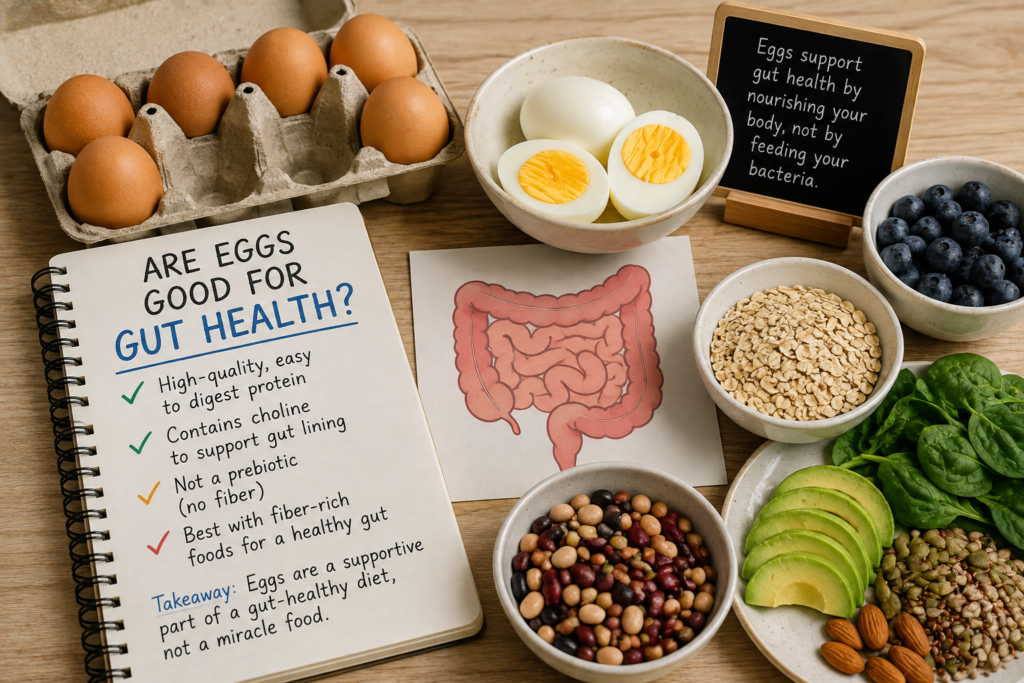
Some wellness sites market eggs as a gut-health superfood, even calling them a source of prebiotics. That claim doesn’t hold up — prebiotics are specifically types of fiber that feed beneficial gut bacteria, and eggs contain no fiber at all. That doesn’t mean eggs are irrelevant to gut health, just that their role is more modest and different from what a lot of marketing suggests.
This article is for general information only and isn’t intended as medical advice. If you have a diagnosed digestive condition or an egg allergy, it’s worth discussing how eggs fit your specific diet with a doctor.
What Eggs Actually Bring to Gut Health
Eggs are a highly digestible source of complete protein, meaning most people break them down easily without much digestive strain. They also contain choline, a nutrient involved in maintaining the cells that make up the gut lining. This is a supportive, structural role rather than an active “feeding the microbiome” role, which is the distinction that gets blurred in a lot of egg marketing.
What the Research Actually Shows
A small study following a handful of participants who ate eggs daily for a couple of weeks found no negative effects on gut bacteria diversity, and some modest shifts that researchers considered generally favorable. This is a genuinely interesting early finding, but it’s based on a very small number of people over a short period, so it’s more accurate to say eggs appear neutral to mildly supportive for gut bacteria, rather than actively transformative.
Why Eggs Aren’t a Substitute for Fiber
If gut health is the main goal, fiber-rich foods remain the more established, well-researched choice, since fiber is what beneficial gut bacteria actually ferment and use for fuel. Eggs can be a reasonable part of a gut-supportive diet, but they work best alongside fiber sources rather than in place of them — something we go into more in our guide to fiber and digestion.
What About People With Sensitive Digestion?
For most people without an egg allergy or intolerance, eggs are generally well tolerated and don’t appear to disrupt digestive comfort. People managing a specific digestive condition should still pay attention to their own response, since individual tolerance varies more than general research can predict.
A Reasonable Way to Think About It
Eggs aren’t a gut-health powerhouse, and they aren’t something to avoid either. They’re a well-tolerated protein source that plays a small, supportive role, best understood as one part of a broader diet that also includes fiber-rich plants.
Questions Worth Asking
Do eggs actually count as a prebiotic food?
No. Prebiotics are specific types of fiber, and eggs contain none. Any gut-related benefit from eggs comes through a different mechanism, mainly supporting the gut lining rather than feeding bacteria directly.
Can eating eggs disrupt the gut microbiome?
Available research, though limited, suggests eggs don’t appear to negatively affect microbiome diversity for most people, though larger and longer studies would help confirm this more firmly.
Are eggs easy to digest?
Generally, yes, for most people without a specific egg allergy or intolerance. Cooked eggs in particular tend to be gentle on digestion.
What should I eat alongside eggs for better gut health?
Fiber-rich vegetables, whole grains, and fermented foods provide what eggs can’t — direct fuel for beneficial gut bacteria. If you’re curious about other egg varieties, our piece on quail eggs covers a related comparison.