
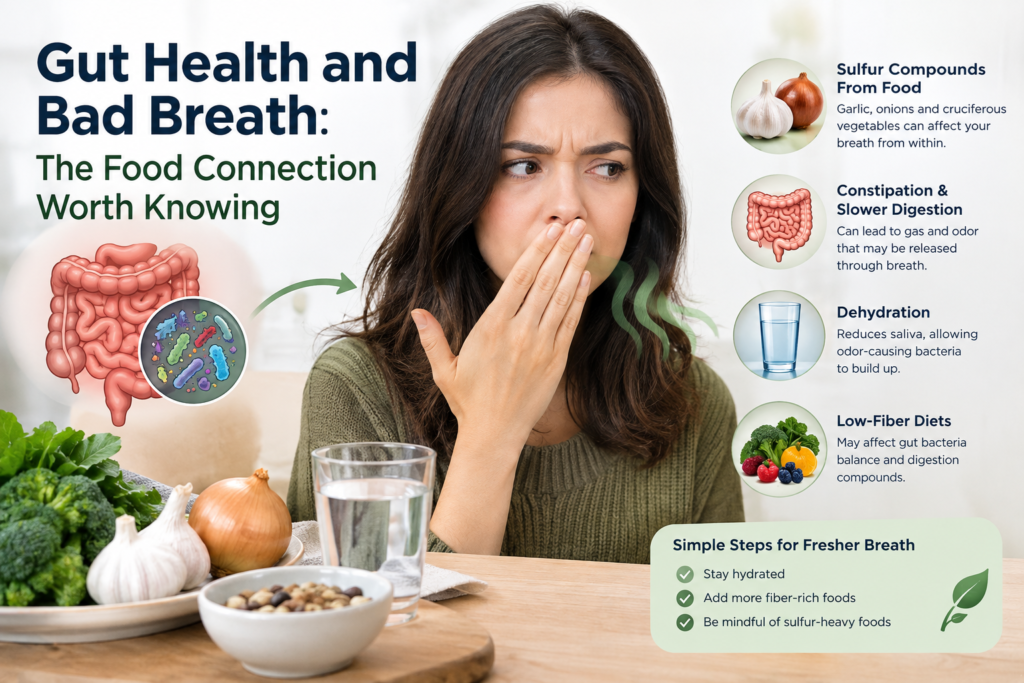
Persistent bad breath usually gets blamed on brushing habits, but sometimes the more useful question is what’s happening further down, in digestion. A few diet-related factors genuinely influence breath odor beyond what’s happening in your mouth, and they’re worth ruling out before assuming it’s purely an oral hygiene issue.
This article is for general information only and isn’t intended as medical advice. Persistent bad breath that doesn’t improve with good oral hygiene and dietary changes is worth discussing with a doctor, since it can occasionally point to an underlying digestive issue that needs proper evaluation.
Sulfur Compounds From Food
Garlic, onions, and certain cruciferous vegetables contain sulfur compounds that get absorbed into the bloodstream during digestion and are eventually released through the lungs, not just left over in the mouth. This is part of why brushing alone doesn’t immediately resolve breath odor after eating these foods — the compound is coming from inside, not just food residue.
Constipation and Slower Digestion
When digestion moves more slowly than usual, food spends more time fermenting in the gut, which can produce gases that are partly released through breath. Adequate fiber and water intake support more regular digestion, which may help reduce this contributing factor over time.
Dehydration’s Role
Reduced saliva production, often linked to not drinking enough water, allows odor-causing bacteria in the mouth to build up more easily. This connects diet and hydration to breath in a more direct way than most people expect, and it’s one of the simpler factors to address.
Low-Fiber Diets and Gut Bacteria Balance
Diets low in fiber are generally associated with less favorable gut bacteria balance over time, which some research links to changes in the compounds produced during digestion. This is an area where the food-breath connection is still being actively studied, so it’s reasonable to view fiber intake as generally supportive rather than a guaranteed fix for breath issues specifically.
What to Try First
Before assuming a deeper issue, increasing water intake, adding more fiber-rich foods, and being mindful of sulfur-heavy foods before social situations are all practical starting points. Our guide to fiber and digestion covers food choices that support this without overdoing fermentable carbohydrates that can cause their own digestive discomfort.
When It’s Worth Seeing a Doctor
If bad breath persists despite good oral hygiene, adequate hydration, and reasonable dietary adjustments, it’s worth a conversation with a doctor rather than continuing to guess at dietary fixes. Persistent, unexplained changes in breath odor are sometimes worth a proper medical evaluation rather than an extended trial-and-error approach at home.
Questions Worth Asking
Can gut health really affect breath, or is it always about the mouth?
Both play a role. Oral hygiene remains the most common cause of bad breath, but digestion-related factors like sulfur compound absorption and slower gut transit time can genuinely contribute as well.
Does drinking more water actually help with bad breath?
Yes, in a meaningful way. Adequate hydration supports saliva production, which helps control odor-causing bacteria in the mouth.
How long after eating garlic or onions does the smell go away?
Since sulfur compounds are released through the lungs as they’re metabolized, the smell can linger for several hours, well beyond what brushing alone can immediately fix.
Should I be worried if dietary changes don’t fix persistent bad breath?
Not immediately worried, but it’s a reasonable signal to see a doctor for a proper evaluation rather than continuing to adjust your diet without more information.