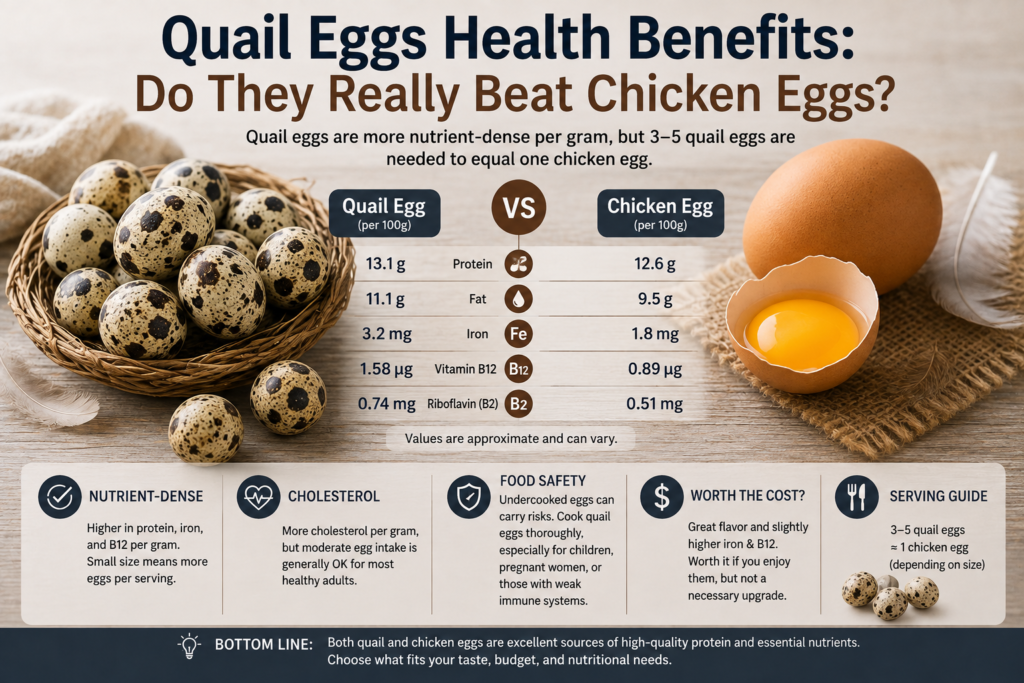
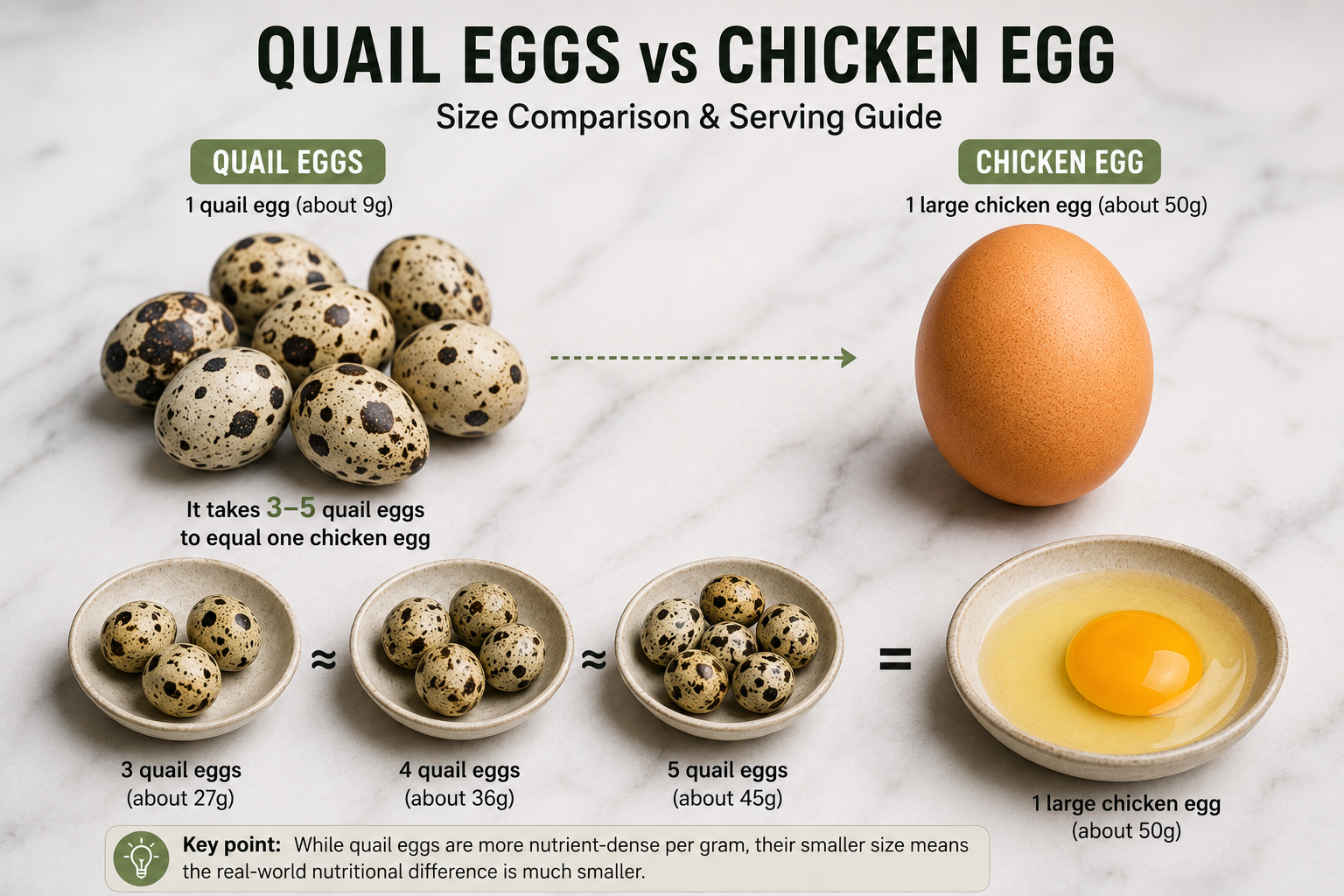
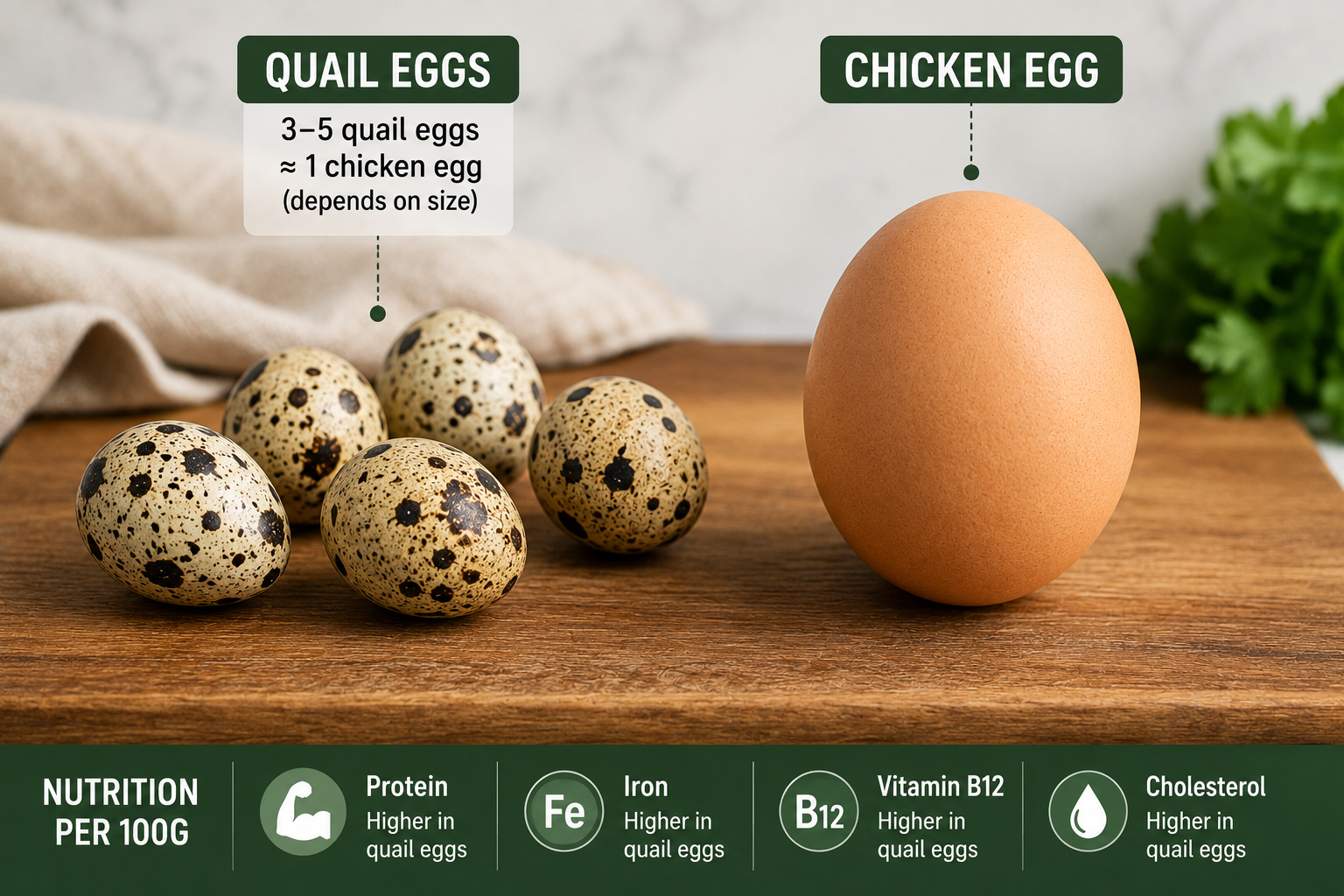
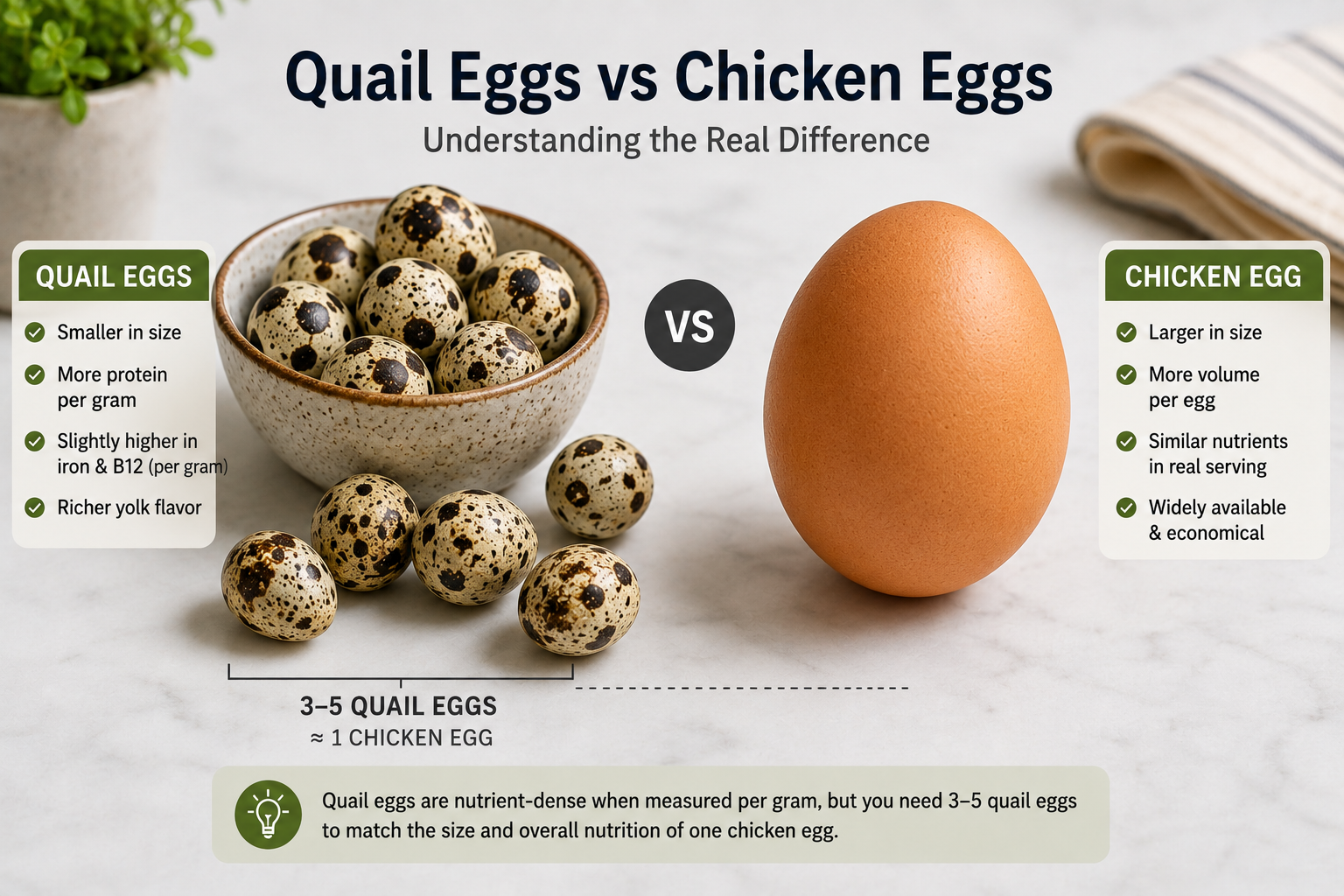
Quail eggs get marketed as a nutritional upgrade over chicken eggs, and per gram, that’s technically true — they carry slightly more protein, iron, and B12 by weight. But that comparison hides something practical: it takes three to five quail eggs to equal the size of one chicken egg, which means the real-world difference on your plate is a lot smaller than the per-gram numbers suggest.
This article is for general information only and isn’t intended as medical advice. If you have an egg allergy, are managing cholesterol, or are pregnant, it’s worth checking with a doctor before adding quail eggs to your diet, particularly raw or undercooked ones.
What “Per Gram” Actually Means Here
Quail eggs are notably smaller than chicken eggs, so any comparison based on weight makes them look more impressive than they are in a real serving. Once you account for the fact that a typical serving involves several quail eggs rather than one, the nutritional gap between the two narrows considerably. Both are genuinely nutrient-dense foods — quail eggs simply pack their nutrients into a smaller package.
Where the Numbers Do Show a Real Difference
Iron and vitamin B12 tend to come out slightly higher in quail eggs per gram, which can matter for people specifically trying to increase intake of those nutrients. Quail eggs also have a higher yolk-to-white ratio, giving them a richer texture, which is more of a culinary difference than a nutritional one.
The Cholesterol Question
Quail eggs do contain more cholesterol per gram than chicken eggs. Current thinking on dietary cholesterol from eggs generally treats moderate egg consumption as reasonable for most healthy adults, since diet quality overall tends to matter more than cholesterol from eggs specifically. This isn’t a blanket reassurance, though — anyone managing cholesterol as part of a health condition should factor quail eggs into that conversation with a doctor rather than assuming they’re automatically fine.
A Food Safety Note Worth Taking Seriously
Quail eggs are often eaten soft-boiled or even raw in some cuisines, but undercooked eggs of any kind carry a risk of foodborne illness. Cooking them thoroughly is the more cautious choice, particularly for anyone pregnant, immunocompromised, or preparing eggs for young children. Our Food Safety and Quality Management category covers general food-handling practices like this in more depth.
Should You Actually Switch to Quail Eggs?
Not necessarily as a wholesale replacement. They’re a reasonable addition if you enjoy the flavor and texture, or if you’re specifically interested in their slightly higher iron and B12 content. But the idea that they’re a dramatically superior protein source doesn’t hold up once you account for portion size — both eggs are solid nutritional choices in their own right.
Questions Worth Asking
How many quail eggs equal one chicken egg?
Roughly three to five quail eggs, depending on their size, are needed to match the volume of one standard chicken egg.
Are quail eggs safer than chicken eggs to eat raw?
Not reliably. While some sources point to thicker shells as a possible protective factor, undercooked eggs of any kind still carry a foodborne illness risk, so thorough cooking remains the safer choice.
Do quail eggs really have less cholesterol impact than people think?
They contain more cholesterol per gram than chicken eggs, but current research generally treats moderate egg consumption from either source as reasonable for most healthy adults, as part of an overall balanced diet.
Are quail eggs worth the higher cost?
That depends on personal preference. If you enjoy their richer flavor or want a slight boost in iron and B12, they can be worth it, but they aren’t a necessary upgrade for most people’s nutrition.
For more on how different egg-based foods fit into a balanced diet, our earlier piece on eggshell powder looks at a very different, more unusual part of the egg worth knowing about.