Yogurt and sourdough tend to dominate the “fermented foods” conversation, but a whole other category — fermented vegetables, soy, and tea — works through a similar process with its own set of benefits worth knowing about.
This article is for general informational purposes and isn’t medical advice. It focuses specifically on non-dairy, non-bread fermented foods; our pieces on kefir vs yogurt and sourdough fermentation cover those two separately.
Fermentation, broadly, is a process where bacteria or yeast break down sugars in food, often producing beneficial byproducts along the way — including, in many cases, live probiotic cultures.
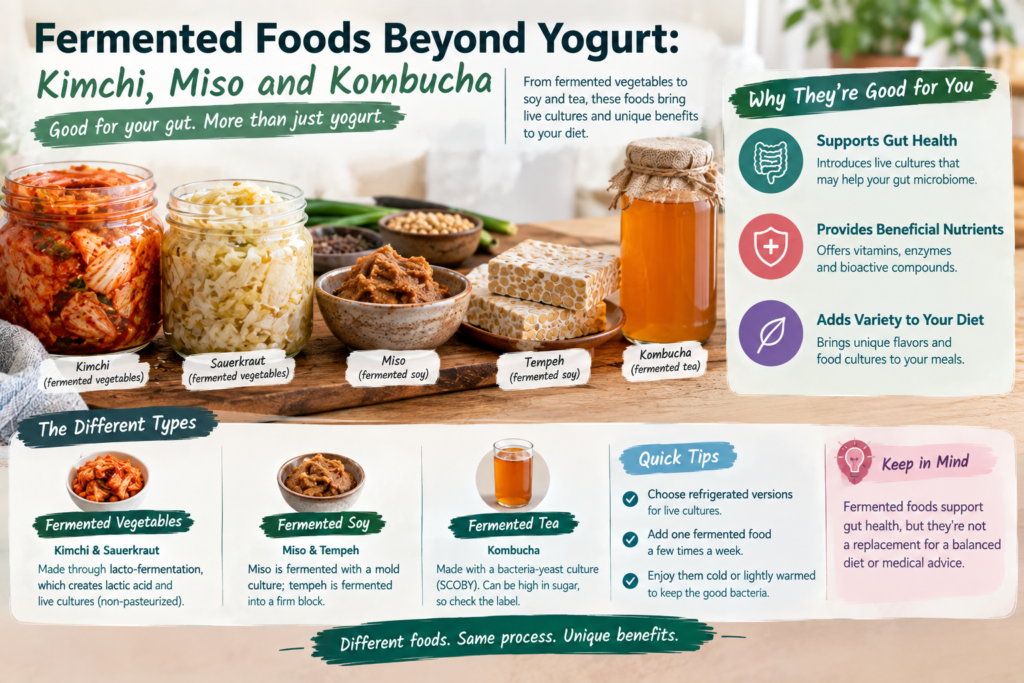
Fermented Vegetables: Kimchi and Sauerkraut
Both are made through lacto-fermentation, where naturally occurring bacteria convert the natural sugars in cabbage into lactic acid. This process is what gives them their tang, and it’s also what produces live cultures — but only in versions that haven’t been pasteurized afterward, since pasteurization kills the bacteria along with anything harmful.
Fermented Soy: Miso and Tempeh
Miso is made by fermenting soybeans with a specific mold culture over weeks or months, resulting in a salty, umami-rich paste used mostly in small amounts rather than as a main dish. Tempeh, also soy-based, is fermented into a firm block and tends to be used more like a meat substitute in cooking.
Fermented Tea: Kombucha
Kombucha starts as sweetened tea fermented with a bacteria-and-yeast culture (often called a SCOBY), which consumes most of the sugar and produces a mildly fizzy, tangy drink. Store-bought kombucha varies a lot in sugar content, so “fermented” doesn’t automatically mean low-sugar.
What the Gut Connection Actually Looks Like
These foods introduce live bacteria that may temporarily add to the gut’s existing microbial community, though the science on how long any specific benefit lasts, and how much is needed, is still developing. Eating them regularly, as part of a varied diet, is generally considered more useful than eating one large amount occasionally.
A Simple Way to Start
Adding one fermented food a few times a week — a spoonful of kimchi with a meal, or a small glass of kombucha instead of a sugary soda — is a more realistic starting point than trying to include all of them at once.
Common Questions
Does cooking kimchi or sauerkraut kill the beneficial bacteria?
Yes, heat generally destroys live cultures, so if the probiotic aspect is the goal, eating them cold or only lightly warmed preserves more of it.
Is kombucha safe to drink every day?
For most healthy adults, moderate daily amounts are generally fine, though checking the sugar content on store-bought bottles is worth doing since it varies widely.
Are canned or shelf-stable sauerkraut and kimchi still fermented?
Many shelf-stable versions are pasteurized for safety and shelf life, which means they no longer contain live cultures — refrigerated versions are more likely to still have them.
Can fermented foods replace a probiotic supplement?
They can be part of the same goal, but supplements offer specific, measured strains, while fermented foods offer a more general, less standardized mix.