As dairy herds transition between seasonal pastures and stored feed, the chemical composition of raw milk shifts continuously. Because natural farm yields fluctuate widely in butterfat and protein content, commercial processing facilities apply rigorous mechanical and mathematical protocols to ensure every carton on the grocery shelf meets uniform labeling requirements. This foundational industrial alignment technique is known globally as milk processing standardisation.
Addressing Natural Compositional Variance in Raw Milk
Fresh milk arrives from agricultural suppliers as a complex, unblended oil-in-water emulsion. Due to differences in livestock breeds, local forage quality, climate shifts, and individual animal lactation stages, raw butterfat percentages can swing drastically from one tanker load to the next. Supermarket shelves and regulatory bodies, however, demand absolute consistency across distinct retail options such as whole milk, low-fat cartons, and skim varieties.
Government regulations mandate strict nutritional and fat-percentage thresholds for every commercial dairy category. Rather than attempting to package naturally irregular farm yields directly—which would result in unpredictable textures and non-compliant labeling—processing plants deconstruct the incoming fluid into workable foundational fractions to achieve exact formulation control before distribution.
The Physics of Mechanical Separation
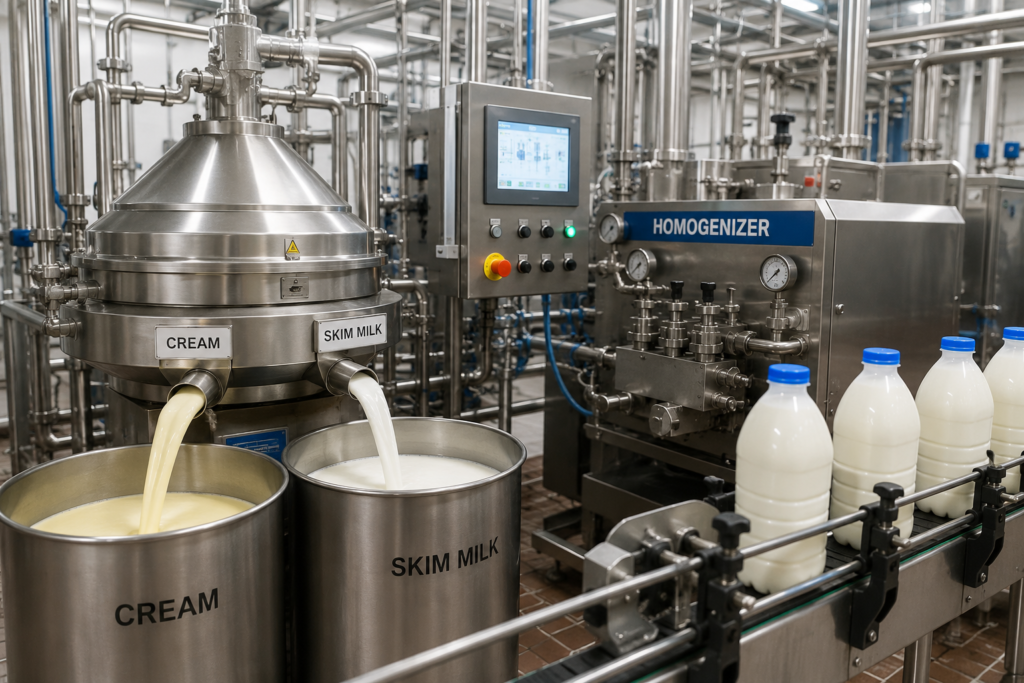
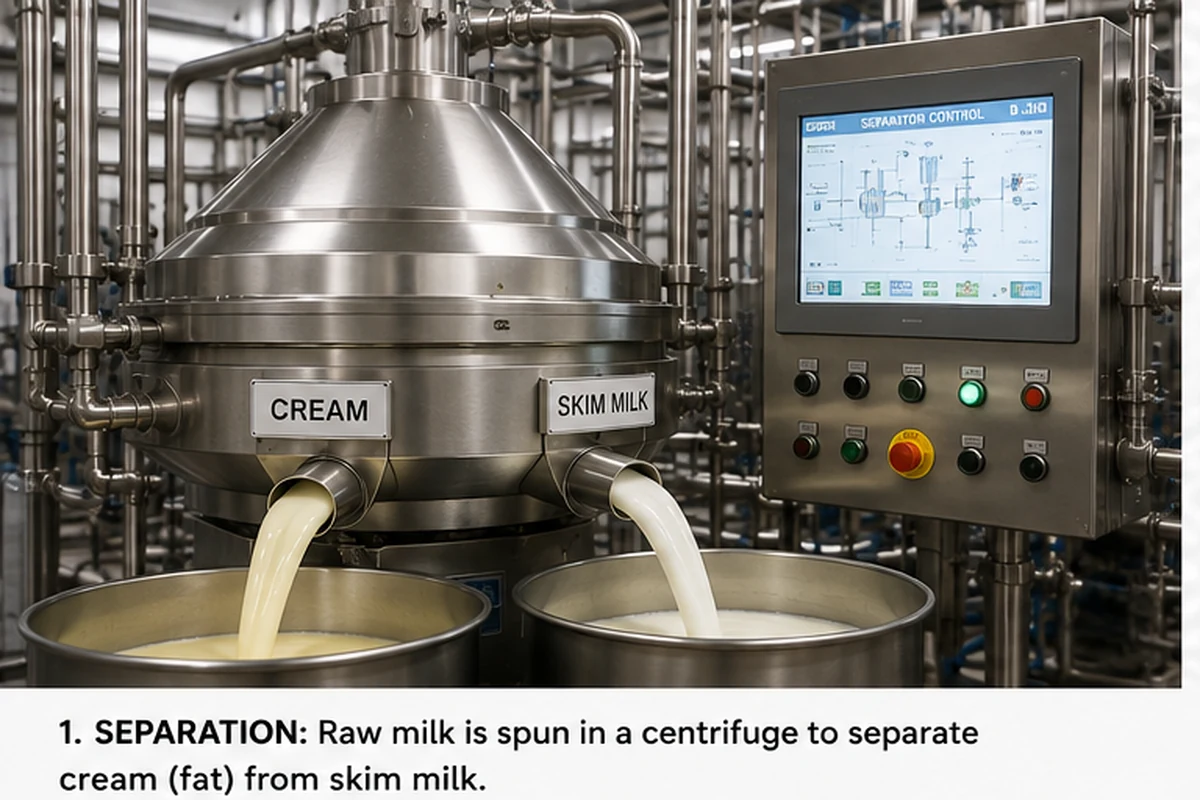
The standardisation workflow begins by pumping raw milk into high-speed centrifugal separators. Inside these sealed stainless-steel chambers, precision disk stacks rotate at thousands of revolutions per minute, utilizing centrifugal acceleration to separate liquids based on molecular weight and density differences.
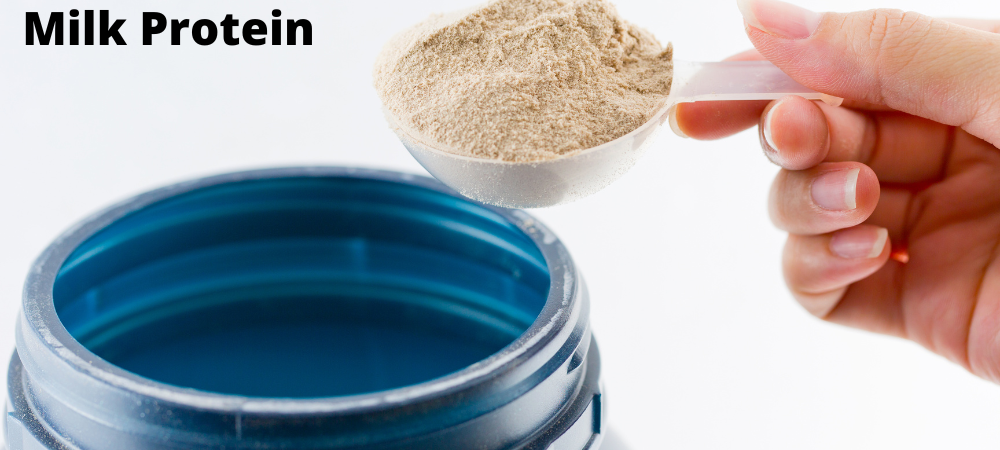
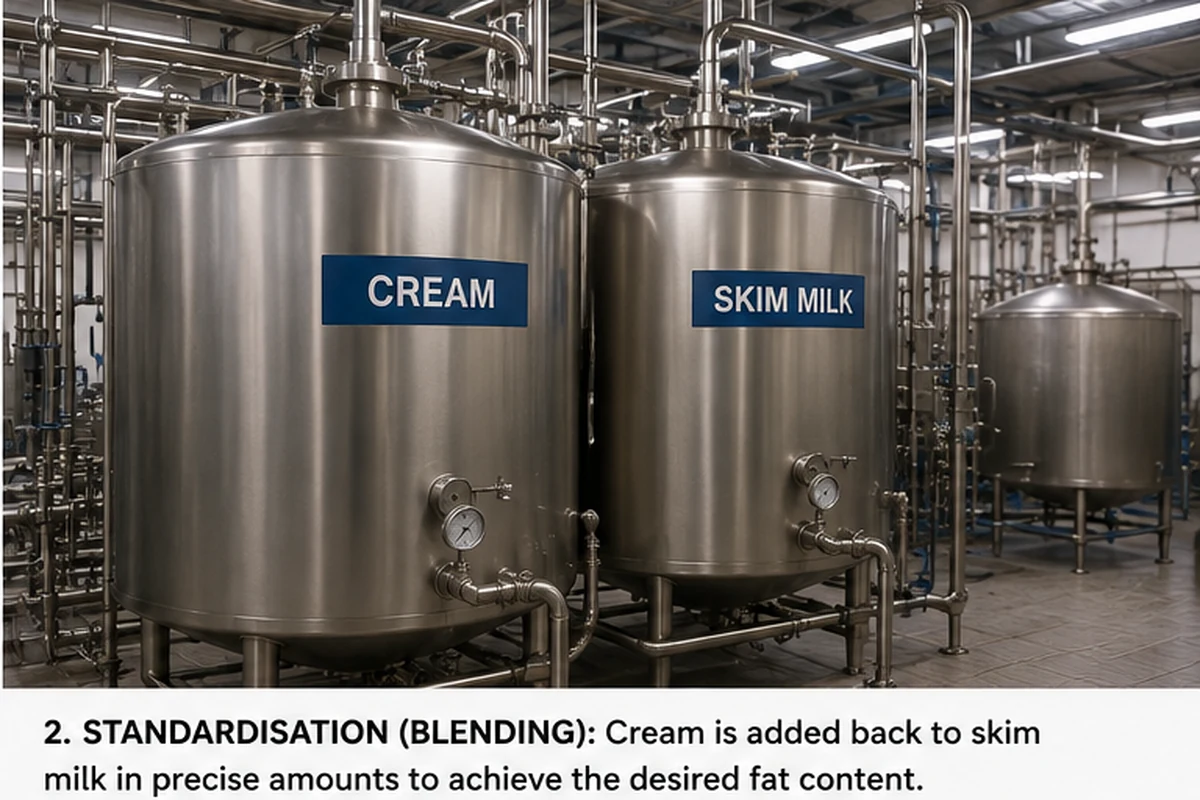
Because butterfat globules possess a lower density than the surrounding aqueous serum, the spinning action drives the heavier skim portion outward toward the perimeter while pulling lighter fat fractions toward the center axis. This mechanical division cleanly isolates heavy cream from fat-stripped skim milk. Operators then execute precise mathematical blending formulas, reintroducing calculated quantities of cream back into the skim base until the entire holding tank matches exact target percentages down to a fraction of a percent. For a broader look at how individual liquid components are isolated and concentrated during related manufacturing procedures, explore our technical review on protein concentration dynamics.
Mathematical Recombination and Formulation Math
Once separation yields isolated fractions of near-zero-fat skim milk and high-fat cream, dairy technicians utilize strict mass-balance calculations to formulate specific retail products. Whether a plant is processing thousands of liters of 2% reduced-fat milk or preparing specialized whole-milk batches, mathematical balancing ensures absolute consistency.
If a batch tests slightly high in native fat content, precise volumes of skim milk are metered back into the stream. Conversely, minor additions of heavy cream correct low-fat batches. This mathematical rigor ensures that every package leaving the facility matches consumer expectations without altering the foundational integrity of the core nutritional matrix.
Emulsion Stabilization via High-Pressure Homogenization
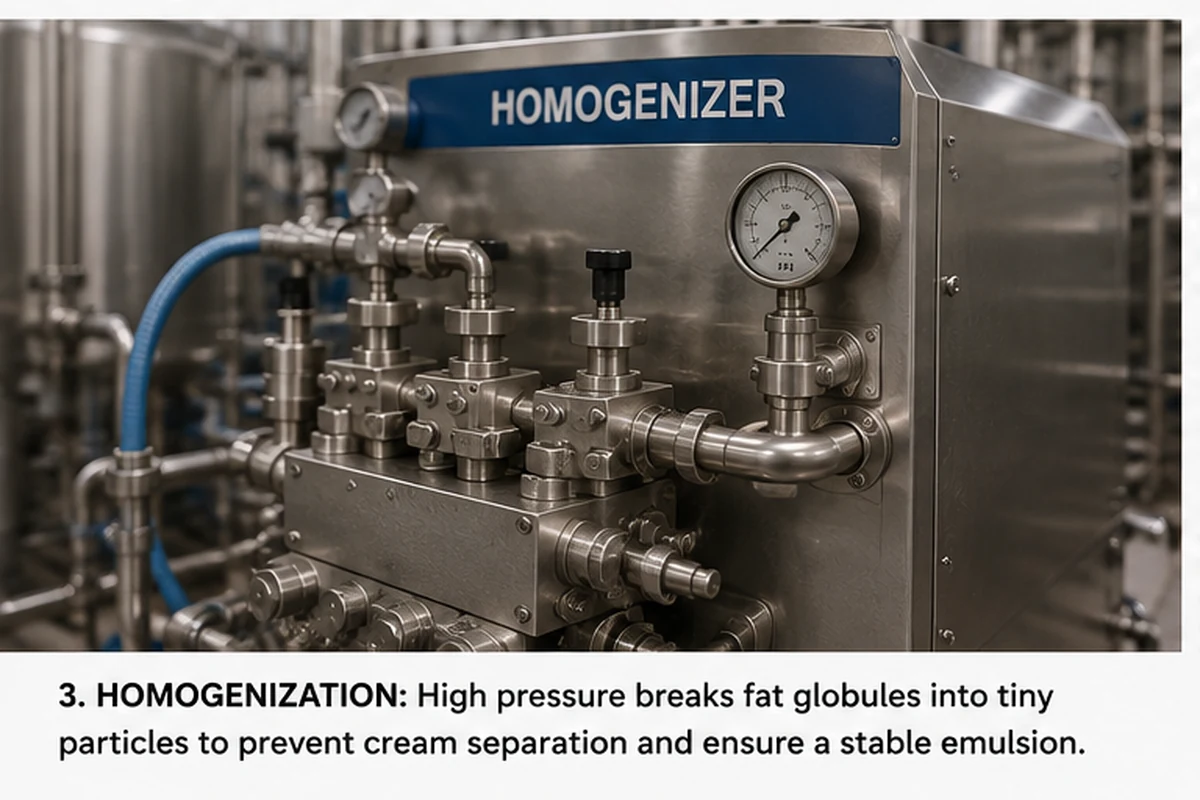
Adjusting the chemical fat ratio satisfies initial distribution and labeling rules, but basic fluid dynamics dictates that separated fat droplets will naturally coalesce and float upward over time due to gravitational buoyancy (commonly known as creaming). To prevent this separation during commercial transit and prolonged shelf storage, the standardized batch is routed through specialized high-pressure homogenizers.
This heavy industrial equipment forces the fluid through narrow valve micro-channels under extreme pressure, mechanically shattering large fat globules into microscopic particles. The resulting exponential increase in total surface area allows free native proteins suspended in the fluid to instantly coat the newly formed droplets, locking them into a permanently stable, uniform emulsion that resists separation.
Thermal Compliance and Final Packaging
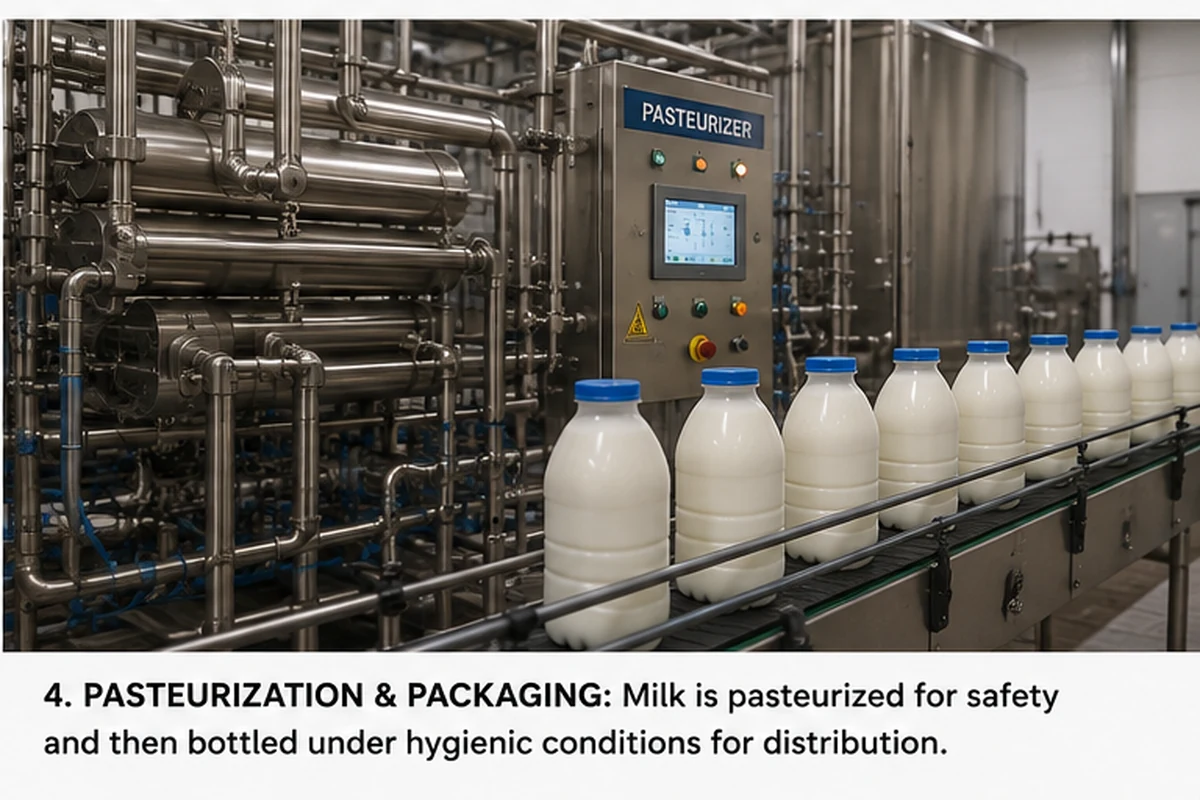
Once structural homogenization and compositional blending are complete, the finalized dairy batch passes through continuous thermal pasteurization loops designed to neutralize potential pathogens safely while preserving commercial shelf-life. By merging centrifugal separation physics with high-pressure engineering and strict mathematical oversight, modern commercial facilities successfully transform variable agricultural output into reliable, uniform dairy staples.