
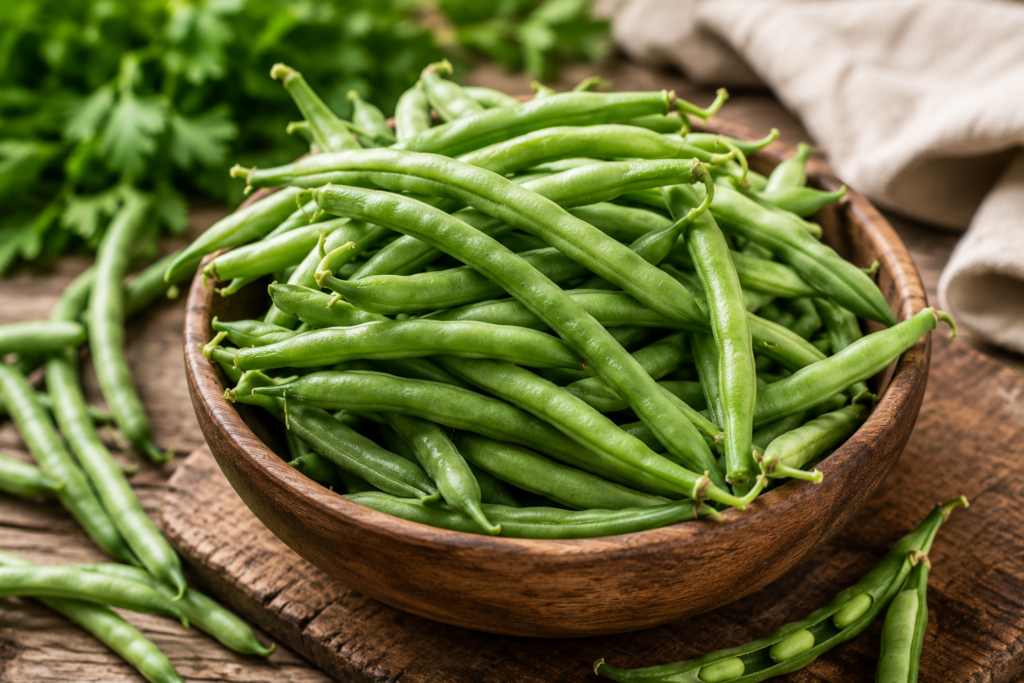
French beans, green beans, and snap beans usually refer to the same vegetable, just under different regional names. That naming overlap causes a fair amount of confusion online, but nutritionally, it’s one plant: a slender green pod that’s low in calories and carries a genuinely useful mix of fiber, vitamins, and minerals.
This article is for general information only and isn’t intended as medical advice. If you’re managing high blood pressure, cholesterol, or another cardiovascular condition, it’s worth discussing dietary changes with a doctor or dietitian rather than relying on any single food.
What’s in a Serving
French beans bring dietary fiber, vitamin C, vitamin K, and a moderate amount of folate to the table, along with small amounts of iron and potassium. None of these show up in dramatic quantities compared to more concentrated sources, but the combination is part of why the vegetable holds up well as a regular addition to meals rather than an occasional treat.
Fiber and Digestion
The fiber content is one of the more consistent things nutrition sources agree on. It supports regular digestion and contributes to the feeling of fullness after a meal, which is part of why green beans show up often in lower-calorie meal planning.
Heart-Related Nutrients
Potassium and fiber both play a supporting role in cardiovascular health — potassium helps balance sodium’s effect on blood pressure, and fiber is associated with healthier cholesterol patterns over time. These are general supportive roles rather than guarantees, and they work best as part of an overall eating pattern rather than a single food doing the work alone.
Vitamin K and Bone-Related Nutrients
Vitamin K, along with smaller amounts of calcium and magnesium, contributes to normal bone metabolism. Green vegetables in general are a common source of this nutrient, and French beans fit that pattern.
Does Cooking Method Change the Nutrition?
Yes, more than most people expect. Boiling green beans for an extended time can leach out some of the water-soluble vitamin C into the cooking water, while steaming or a quick sauté tends to preserve more of it. Raw green beans aren’t recommended either, since they contain a compound that’s more easily broken down through cooking. A short cook — steamed, stir-fried, or blanched — tends to strike the best balance between food safety and nutrient retention.
Where French Beans Fit Into a Broader Diet
Green beans are commonly considered a lower-FODMAP vegetable at typical serving sizes, which makes them a reasonable option for people managing digestive sensitivity — something we go into in more depth in our high fiber, low FODMAP foods guide. Their low calorie density also lines up with the kind of volume-eating approach covered in our high volume, low calorie foods piece.
Questions People Actually Ask
Are French beans and green beans the same thing?
In most everyday use, yes. Both terms typically refer to the same vegetable, sometimes also called snap beans, though naming can vary slightly by region.
Should green beans be eaten raw?
It’s better to cook them first. Raw green beans contain a compound that’s reduced through cooking, and a quick steam or sauté is enough to address this while keeping most of the texture and nutrients intact.
Do French beans help with weight management?
Their low calorie density and fiber content make them a reasonable addition to a calorie-conscious diet, though they work as part of an overall eating pattern rather than a stand-alone solution.
How should French beans be stored to keep them fresh?
Refrigerated in a breathable bag, they typically stay fresh for about a week, though quality and nutrient content gradually decline the longer they’re stored.
Green beans are just one entry point into building a more vegetable-forward plate — our Fruits and Vegetables category covers a wider range of produce if you’re looking to expand from here.