Search “Mediterranean diet breakfast,” and you’ll mostly find recipe roundups — shakshuka, parfaits, frittatas, each with its own ingredient list and cook time. That’s useful if you want a specific dish, but it doesn’t answer a simpler question: what actually makes a breakfast “Mediterranean” in the first place? The answer has less to do with any single recipe and more to do with which food groups show up on the plate.
The Building Blocks, Not the Recipe
Rather than a fixed menu, a Mediterranean-style breakfast is built from a handful of food categories that repeat throughout the day in this eating pattern: whole grains, fruit, dairy, healthy fats, and occasionally protein from eggs or legumes. Any combination of these, prepared simply, tends to fit the pattern — which is part of why it works for so many different routines and schedules.
Whole Grains
Oats, whole-grain bread, or a grain like barley form a common base. The emphasis is on grains that are minimally processed rather than refined, which is more about the type of grain than any particular way of preparing it.
Fruit
Fresh fruit — berries, figs, oranges, or whatever’s in season — shows up regularly, either on its own or layered into something like yogurt. Dried fruit fits in too, in smaller portions; dried apricots, for example, are a traditional addition to this style of eating, and our dried apricot nutrition guide covers what that adds to a plate.
Dairy
Greek yogurt and cheeses like feta appear often, usually in modest portions rather than as the centerpiece. Our Dairy category has more on how different dairy options fit into everyday meals like this one.
Healthy Fats
Olive oil and nuts are the two most common fat sources, whether drizzled over toast, mixed into yogurt, or eaten on their own as a topping.
Eggs and Legumes (Occasionally)
Eggs show up in various forms, and legumes like chickpeas make an appearance in some regional variations, though neither is a daily requirement the way grains, fruit, and dairy tend to be.
What a Morning Actually Looks Like
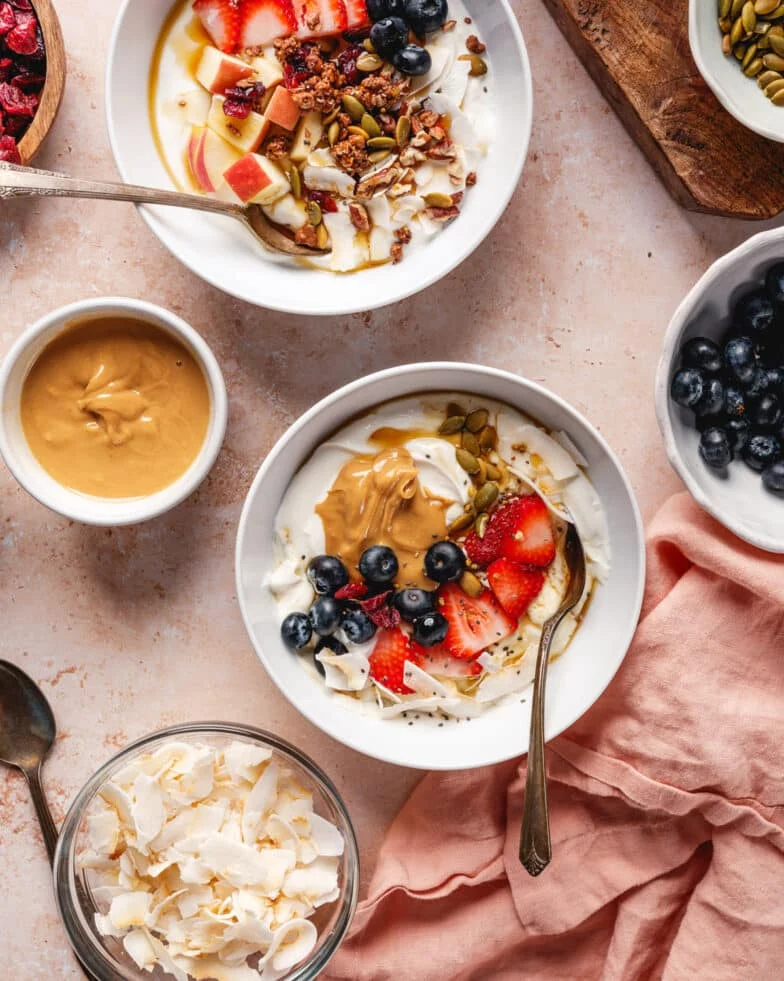
In practice, this often means something simple: a bowl of oats topped with fruit and a few walnuts, or whole grain toast with a thin layer of olive oil and a side of yogurt. It’s not about assembling every category into one elaborate meal — most mornings, two or three of these building blocks together are enough to fit the pattern without requiring much preparation.
Why the Combination Matters More Than Any Single Food
What distinguishes this approach from simply “eating healthy” in a general sense is the consistency of the combination — grains, fruit, dairy, and healthy fat showing up together regularly, rather than any one food being treated as uniquely powerful. It’s a pattern built on repetition and balance rather than any single “superfood” doing the heavy lifting.
Frequently Asked Questions
What is a typical Mediterranean breakfast?
It usually includes a whole grain, some fruit, a dairy source like yogurt or cheese, and a healthy fat such as olive oil or nuts, combined in whatever simple way fits the morning.
Is a Mediterranean diet breakfast just yogurt and granola?
That’s one common version, but not the only one. Toast with olive oil, oatmeal with fruit, or an egg dish with vegetables all fit the same pattern just as well.
Can Mediterranean diet breakfast be quick?
Yes — many versions require little more than assembling a few ingredients, like yogurt with fruit and nuts, rather than cooking a full dish.
Does it have to include olive oil every morning?
Not necessarily. Olive oil is a common fat source in this pattern, but nuts or seeds can fill a similar role on mornings when olive oil isn’t part of the meal.