Search for sourdough bread calories, and you’ll run into a strange problem: every source seems to give a different number. Some claim sourdough is noticeably lower in calories than regular bread. Others say the two are nearly identical. A few even claim sourdough runs slightly higher. None of them are necessarily wrong — they’re just measuring different things.
This article is for general information only and isn’t intended as medical or dietary advice. If you’re managing diabetes or another condition that requires close blood sugar monitoring, it’s worth speaking with a doctor or registered dietitian about how bread fits into your specific diet.
Why the Numbers Don’t Agree
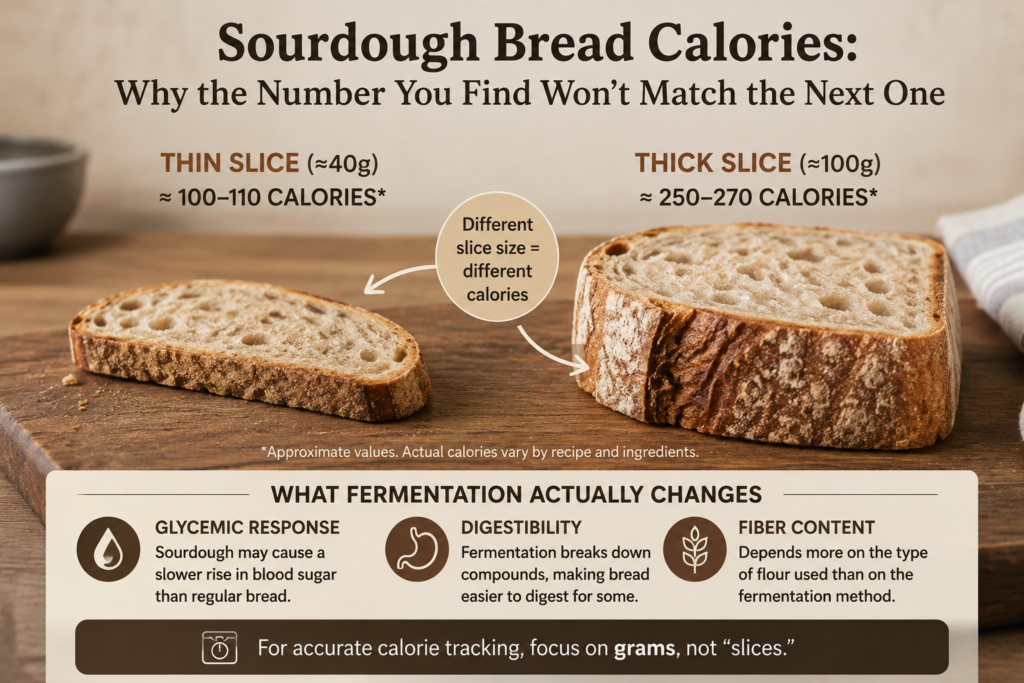
The biggest reason for the disagreement isn’t the bread itself — it’s the slice. A “slice” of sourdough can weigh anywhere from around 35 grams to well over 100 grams, depending on the loaf, the bakery, and how thick it’s cut. A thin slice and a thick artisan-cut slice from the same loaf can differ in calories by two or three times over. Comparing “a slice of sourdough” to “a slice of white bread” without accounting for weight is comparing two different amounts of food, not two different types of bread.
When you look at calorie content per gram rather than per slice, sourdough and most other wheat-based breads land in a fairly similar range. The fermentation process that makes sourdough distinct doesn’t dramatically strip out calories — flour is still flour, whether it’s leavened with commercial yeast or a wild sourdough starter.
What Fermentation Actually Changes
If calories aren’t the main story, what is? The slow fermentation process used in sourdough does appear to affect a few things that matter more than raw calorie count:
Glycemic Response
Sourdough fermentation tends to produce a slower rise in blood sugar compared to bread made with commercial yeast, which is generally considered a meaningful difference for people managing blood sugar levels.
Digestibility
The bacteria and wild yeast involved in sourdough fermentation help break down some of the gluten structure and reduce compounds like phytic acid, which can make minerals in the flour easier for your body to absorb and the bread itself somewhat easier to digest for some people.
Fiber Content
Fiber content varies more by the type of flour used (whole wheat versus white, for example) than by fermentation method, so a whole wheat sourdough will generally offer more fiber than a white sourdough, regardless of how it was leavened.
So Is Sourdough “Better” for Weight Management?
Not because of a meaningful calorie difference — the fermentation process itself doesn’t reliably make bread lower in calories. Where sourdough may offer a practical edge is through its effect on blood sugar and digestion, which can influence how satisfied you feel after eating it. That’s a different kind of benefit than “fewer calories per slice,” and it’s worth understanding the distinction rather than assuming one automatically means the other.
A Practical Way to Think About Portions
Since slice weight varies so much between brands and bakeries, checking the packaging (for store-bought loaves) or estimating by weight rather than by “slice count” gives a more reliable sense of what you’re actually eating, regardless of whether it’s sourdough or any other bread type.
Frequently Asked Questions
Does sourdough bread have fewer calories than regular bread?
Not reliably. Per gram, sourdough and regular wheat bread tend to be similar in calories. Any difference you see in a specific comparison is usually driven by slice size rather than the fermentation process itself.
Why do different sources give different sourdough calorie counts?
Mainly because slice weight varies significantly between brands, bakeries, and cutting styles. A number based on a 40-gram slice will look very different from one based on a 100-gram slice, even from the same type of bread.
Is sourdough healthier than regular bread?
It may offer some advantages related to blood sugar response and digestibility due to its fermentation process, but “healthier” isn’t the same as “lower calorie” — the two aren’t necessarily connected.
What actually makes sourdough different from regular bread?
The main difference is the leavening method — sourdough uses a wild yeast and bacteria starter instead of commercial yeast, which changes fermentation time and affects digestibility and glycemic response more than it affects calorie content.
Explore More
For more on how fermentation affects food more broadly, see our Food Safety and Quality Management category, or check out our guide on high fiber, low FODMAP foods for more on how different foods affect digestion. If you’re specifically watching your blood sugar response to different foods, our guide on fruit juices and diabetes covers the glycemic side of things from a different angle.