Vitamin D is one of the few nutrients that’s genuinely harder to get from a vegetarian diet, mostly because its richest natural sources are fatty fish and animal fat. That doesn’t mean vegetarians are stuck — it just means the food sources look a little different, and knowing which ones actually count makes a real difference.
This article is for general information only and isn’t intended as medical advice. If you suspect you have a vitamin D deficiency, it’s worth getting a blood test and speaking with a doctor before starting any supplement.
Why Vegetarians Often Run Low on Vitamin D
Most of the naturally vitamin D-rich foods — salmon, mackerel, cod liver oil — are animal-based, which leaves a gap for anyone who avoids them. On top of that, the body’s other main source, sunlight exposure on skin, isn’t a food source at all and depends heavily on geography, skin tone, season, and how much time is spent outdoors. This combination is why vitamin D commonly comes up as a gap area in vegetarian diets.
Food Sources That Genuinely Help
Fortified Plant Milks
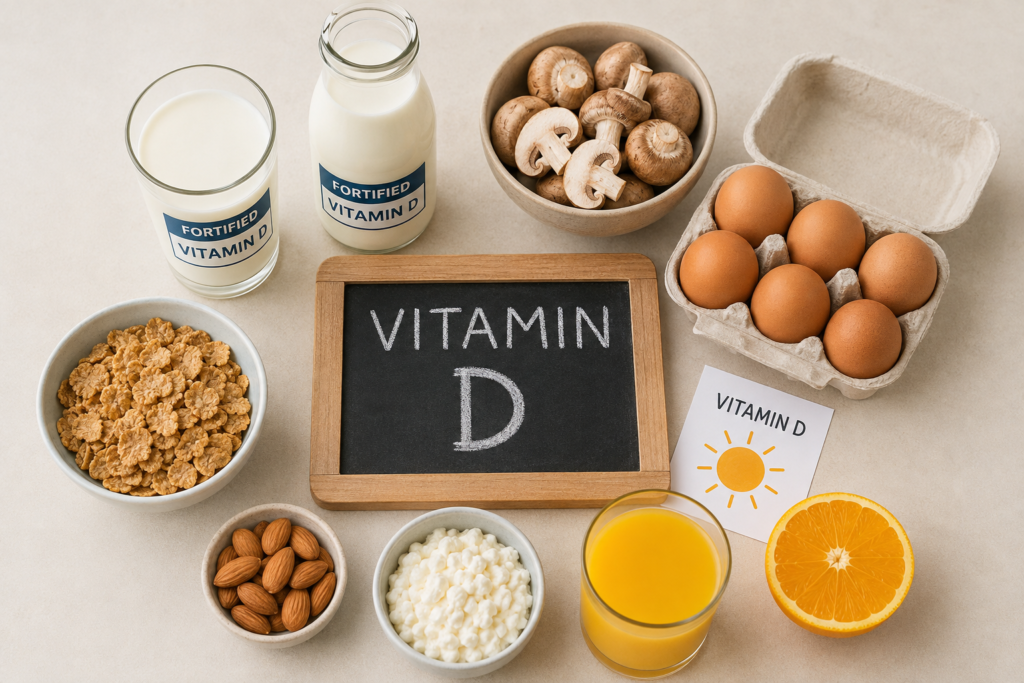
Many soy, almond, and oat milk brands add vitamin D during processing, since plant milks don’t naturally contain it. Checking the label matters here — fortification levels vary noticeably between brands.
Fortified Dairy Milk
In several countries, regular cow’s milk is fortified with vitamin D by regulation. For vegetarians who still consume dairy, this remains one of the more consistent sources — you can see how fortification works in general in our fortified milk overview.
Mushrooms Exposed to UV Light
Mushrooms are one of the only plant foods capable of producing vitamin D, but only certain varieties treated with UV light during growing actually contain meaningful amounts. Regular mushrooms grown in the dark contain very little.
Egg Yolks
For lacto-ovo vegetarians, egg yolks provide a modest but real source of vitamin D, though in smaller amounts compared to fatty fish.
Fortified Cereals and Orange Juice
Some breakfast cereals and orange juice brands are fortified with vitamin D specifically to help fill this gap. As with plant milk, the amount varies by brand, so checking the nutrition label is the only reliable way to know.
Where Diet Alone Tends to Fall Short
Even with all of the above included in a regular diet, vitamin D intake from food alone is often lower than what’s needed, particularly for people who get limited sun exposure. This is one of the few nutrients where many healthcare providers suggest checking your levels and discussing a supplement if food and sunlight aren’t covering the gap, especially in winter months or higher latitudes. For a broader look at how dairy fits into filling nutrition gaps like this one, our dairy food group guide covers the full picture.
Frequently Asked Questions
Can vegetarians get enough vitamin D from food alone?
It’s possible but often difficult, since the richest natural sources are animal-based. Fortified foods help close the gap, but many vegetarians still fall short without some sun exposure or a supplement.
Do vegans have it harder than vegetarians for vitamin D?
Generally yes, since vegans also exclude fortified dairy and eggs, leaving fortified plant milk, UV-exposed mushrooms, and fortified cereals as the main food-based options.
Is sunlight a reliable substitute for food sources?
It can contribute meaningfully, but factors like skin tone, sunscreen use, geographic latitude, and season all affect how much vitamin D the body actually produces from sun exposure, making it inconsistent on its own.
Which vegetarian food has the most vitamin D?
UV-exposed mushrooms and fortified plant or dairy milk tend to offer the most meaningful amounts among common vegetarian foods, though this depends heavily on the specific brand or product.
Explore More
For more on building a well-rounded vegetarian diet, browse our Dairy category and Fruits and Vegetables category, or head back to the Foodinfomatic homepage for more nutrition guides.