
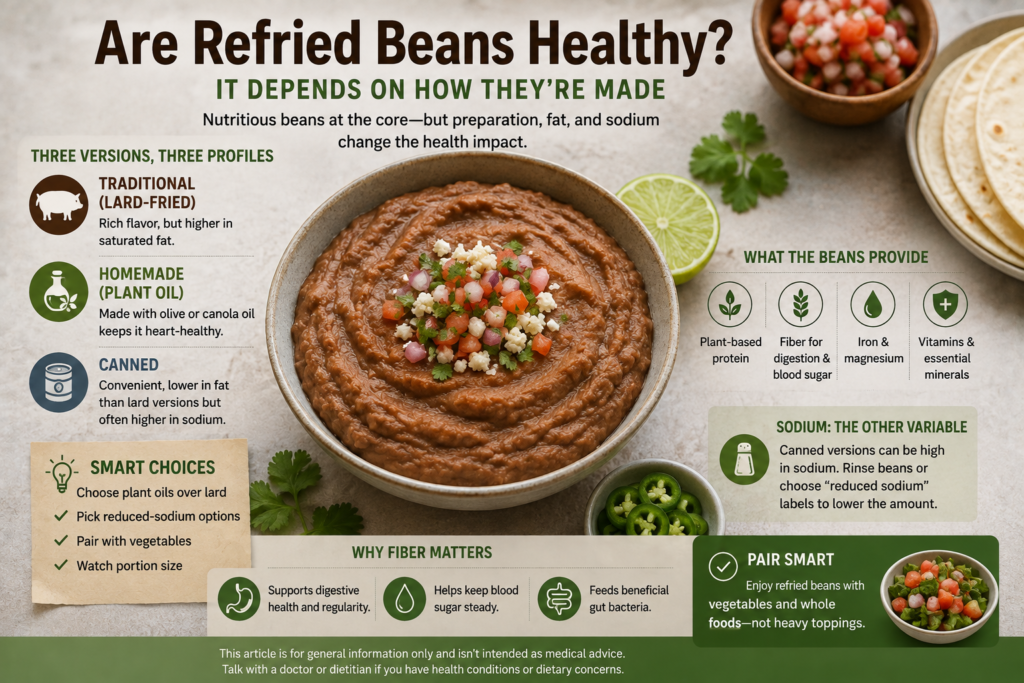
The word “refried” makes a lot of people assume this dish cancels out the nutritional value of beans altogether. It doesn’t — but the way refried beans are prepared genuinely changes their nutritional profile more than almost any other factor, which is worth understanding before writing them off or embracing them without question.
This article is for general information only and isn’t intended as medical advice. If you’re managing heart disease, high blood pressure, or diabetes, it’s worth discussing how beans and sodium fit into your specific diet with a doctor or dietitian.
Three Very Different Versions of the Same Dish
Traditional refried beans, made the way many restaurants and older recipes prepare them, typically use lard as the frying fat, which adds a meaningful amount of saturated fat to the dish. Homemade versions made with olive or canola oil shift that balance considerably, keeping much of the bean’s original nutritional profile intact. Canned, store-bought versions sit somewhere in between — often lower in added fat than the traditional lard-based version, but frequently higher in sodium unless you choose a reduced-sodium option.
What the Beans Themselves Bring
Regardless of preparation, the base ingredient — usually pinto or black beans — contributes plant-based protein, fiber, iron, magnesium, and a range of other minerals. This is the nutritional foundation that doesn’t change much between versions; what changes is what gets added during preparation.
Fiber’s Role Here
The fiber in beans is generally considered supportive of digestive health and steady blood sugar response, since it slows how quickly carbohydrates are absorbed. It also acts as a food source for beneficial gut bacteria. That said, beans are also known for being relatively high in fermentable carbohydrates, which is worth knowing if you’re managing digestive sensitivity — a different consideration from the lower-FODMAP vegetables covered in our high fiber, low FODMAP foods guide.
Sodium Is the Other Variable Worth Watching
Canned refried beans, in particular, can carry a substantial amount of sodium per serving. Rinsing canned beans before use, or checking for a “reduced sodium” label, are both practical ways to bring that number down without losing the fiber and protein content.
A Practical Way to Choose
If you’re buying canned, comparing sodium content across brands is more useful than assuming they’re all similar. If you’re cooking at home, swapping lard for a plant-based oil is the single change that shifts the nutritional profile the most. Pairing refried beans with vegetables rather than heavier toppings like sour cream also stretches the meal without adding much in the way of calories.
Common Questions
Are refried beans bad for you because of the frying process?
Not inherently — the fat used during preparation matters more than the frying process itself. Beans made with plant oil and reasonable sodium levels can fit into a balanced diet without much concern.
Do canned refried beans have the same nutrition as homemade?
Generally similar in protein and fiber, but canned versions often run higher in sodium unless a reduced-sodium option is chosen.
Are refried beans good for blood sugar management?
Their fiber and protein content can support steadier blood sugar response compared to lower-fiber carbohydrate sources, though portion size and what they’re paired with still matter.
What’s the healthiest way to prepare refried beans at home?
Using a plant-based oil instead of lard, going light on added salt, and pairing the dish with vegetables tends to produce the most balanced version.
Beans of all kinds show up throughout a produce-forward diet — our Fruits and Vegetables category has more on how legumes and vegetables fit together in everyday meals.