
Cut into a mango too early, and you get a mouthful of sourness that ruins the fruit’s reputation unfairly. Cut in too late, and it’s stringy, overly soft, or starting to ferment. Timing, as with most fruit, comes down to a few checks rather than one obvious sign.
Squeeze Gently, Not Hard
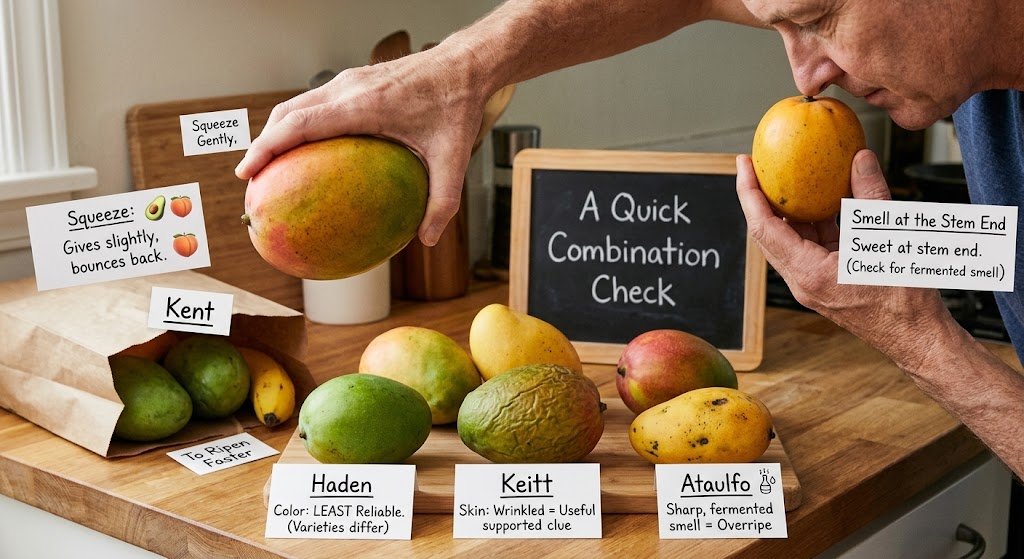
A ripe mango gives slightly under gentle pressure, similar to a ripe avocado or peach, without feeling mushy or leaving a dent that doesn’t bounce back. A rock-hard mango needs more time; one that feels notably soft all over is likely past its best.
Smell at the Stem End
This is often the most reliable single check. A ripe mango gives off a sweet, slightly fruity smell right at the stem end. No smell at all generally means it needs more time; a sharp, fermented, or alcohol-like smell means it’s overripe.
Colour Is the Least Reliable Clue
This surprises a lot of people. Mango varieties ripen into very different colours — some turn mostly yellow, others stay mostly green with a slight blush even when fully ripe. Relying on colour alone, rather than squeeze and smell, is one of the more common mistakes when buying mangoes.
What the Skin Texture Tells You
Ripe mango skin often develops small wrinkles or a slightly looser texture compared to the tight, smooth skin of an unripe one. This isn’t present in every variety, but when it is, it’s a useful supporting clue alongside the squeeze test.
If You Need It to Ripen Faster
Placing an unripe mango in a paper bag at room temperature, ideally with a banana, speeds up ripening by trapping the natural gas both fruits release. Most mangoes ripen this way within one to three days, depending on how firm they started out.
Once It’s Ripe, What Next?
A ripe mango left at room temperature will continue softening, so refrigeration is worth considering if you’re not planning to eat it within a day or two. Cold storage slows the process without stopping it entirely.
A Quick Combination Check
| Check | Ripe Mango | Not Yet Ripe |
|---|---|---|
| Squeeze | Gives slightly, bounces back | Firm, no give |
| Smell | Sweet at stem end | Little to no smell |
| Skin | Sometimes slightly wrinkled | Tight, smooth |
Mangoes reward a bit of patience more than most fruit — a day or two of waiting, guided by smell more than colour, usually makes the difference between a disappointing bite and the one everyone remembers the mango season for.
Also Worth Reading
See our broader guide on how to choose fresh fruits and vegetables at the market.