A quick rinse under the tap feels like enough, and for dust and surface dirt, it often is. Pesticide residue is a different matter — it tends to cling more stubbornly, which is why a slightly more deliberate washing approach makes a real difference.
This article shares general information only and is not medical advice. Washing reduces residue but doesn’t guarantee complete removal; follow any local food safety guidance relevant to your area.
Plain Water Still Does Most of the Work
Running vegetables under cool water while rubbing the surface gently removes a meaningful portion of surface residue, dirt, and bacteria. For many vegetables, this alone — done thoroughly rather than a quick splash — covers most of what’s needed.
The Baking Soda Soak
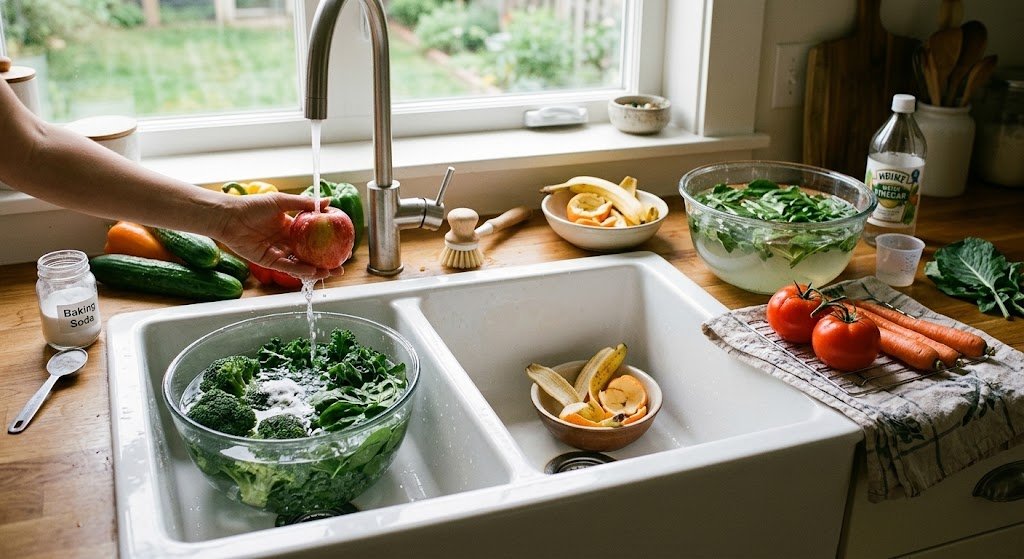
Some research has suggested that a short soak in water mixed with a small amount of baking soda may help reduce certain pesticide residues more effectively than water alone, particularly on produce with textured or waxy skin. A few minutes of soaking, followed by a thorough rinse, is the general approach.
Vinegar Rinse
A diluted vinegar-and-water soak is another commonly used method, generally based on vinegar’s mild acidity helping to loosen residue from the surface. A ratio of roughly one part vinegar to three parts water, with a short soak, is a commonly suggested starting point.
Produce With Edible Skin
- Apples, cucumbers, and similar items benefit from a more thorough scrub, since residue can sit directly on the skin you’re about to eat.
- A soft brush, used gently, can reach into small surface irregularities that fingers alone might miss.
Produce You Peel Anyway
For items like bananas or oranges, where the skin is removed before eating, a basic rinse before cutting is generally sufficient, mainly to avoid transferring any surface residue onto the edible part via the knife.
Leafy Vegetables Need a Different Approach
Leafy greens trap dirt and residue between layers more than solid produce does. Separating leaves and rinsing each individually, or soaking the whole bunch briefly before a final rinse, tends to be more effective than running water over an intact bunch.
What Doesn’t Help Much
Soap or dish detergent is generally not recommended for washing produce, since it isn’t designed for consumption and can leave its own residue behind, potentially doing more harm than the pesticide residue it was meant to remove.
Drying Matters Too
Pat or air-dry produce after washing rather than leaving it wet in storage, since excess moisture can speed up spoilage, somewhat undoing the benefit of washing in the first place.
No washing method removes everything, and that’s a reasonable expectation to hold rather than an alarming one — a thorough rinse, with baking soda or vinegar when it’s convenient, covers the practical middle ground most households are looking for.
Related Reading
For more on the organic question specifically, see our guide on the difference between organic and regular vegetables.