
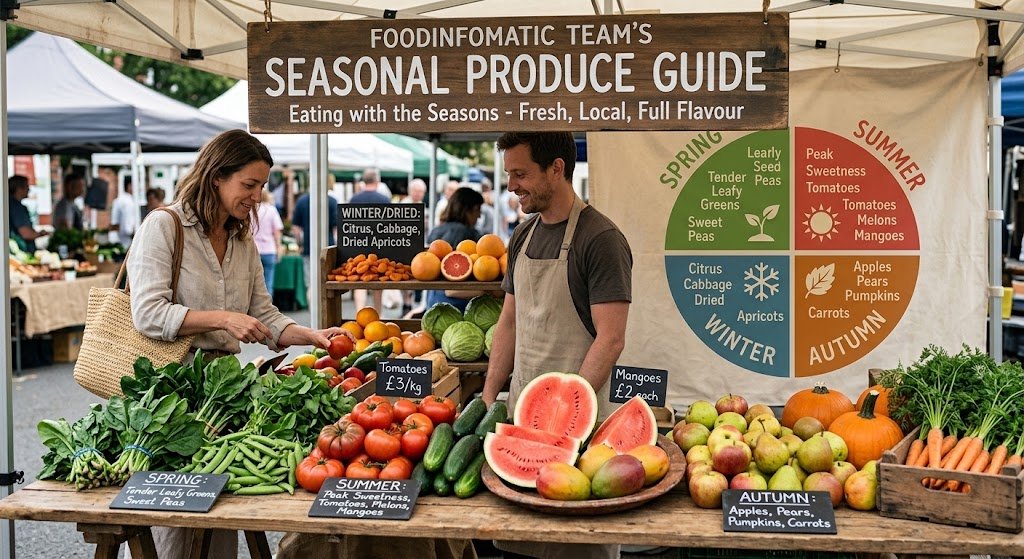
A tomato in December and a tomato in June are rarely the same fruit in anything but name. Produce grown and sold in its natural season tends to taste better, cost less, and often travels a shorter distance to reach the shelf. This guide breaks down roughly what to expect through the year.
Why Seasonality Actually Matters
Fruits and vegetables picked at peak ripeness during their natural growing season generally develop fuller flavour and more consistent texture than those grown out of season in controlled conditions or shipped from far away. Price is often the more immediately noticeable difference, since in-season produce is typically more abundant and therefore cheaper.
Spring
- Spinach and other leafy greens, at their most tender early in the season
- Peas, often sweetest when picked young
- Strawberries, generally starting to appear toward the later part of spring
Summer
- Watermelon and other melons, at their peak sweetness
- Mangoes, widely considered at their best during peak summer months
- Tomatoes and cucumbers, generally most flavourful during warmer growing conditions
Autumn
- Apples and pears, often harvested through this period
- Pumpkin and other squash varieties
- Root vegetables like carrots, which some say develop better sweetness after a light autumn chill
Winter
- Citrus fruits, including oranges and grapefruit, generally at their best
- Cabbage and other cold-hardy vegetables
- Dried fruits, such as apricots, often become a more practical substitute when fresh seasonal variety narrows — our guide on dried apricot nutrition and health benefits covers this in more detail.
A Note on Regional Variation
Exact seasons shift depending on climate and region, so this guide reflects general patterns rather than a fixed calendar that applies everywhere identically. A local market vendor is often the most accurate, up-to-date source for what’s genuinely in season nearby right now.
How to Use This Practically
Rather than memorizing exact dates, it’s usually enough to notice what’s abundant and reasonably priced at your usual market — that’s typically a solid sign something is in season, regardless of what a calendar might say.
Eating with the seasons isn’t a strict rule worth stressing over, but it’s a reasonably simple habit that tends to improve both flavour and cost with very little extra effort.
Related Guide
Pair this with our guide on how to choose fresh fruits and vegetables at the market for picking the best of whatever’s in season.