Knowing that lentils “have protein” doesn’t help much when trying to plan an actual day of meals — the more useful question is roughly how much, and how it stacks up.
This article is for general informational purposes and isn’t medical advice.
Exact numbers vary by brand, preparation, and serving size, so the figures below are rough estimates meant for everyday planning, not precise tracking.
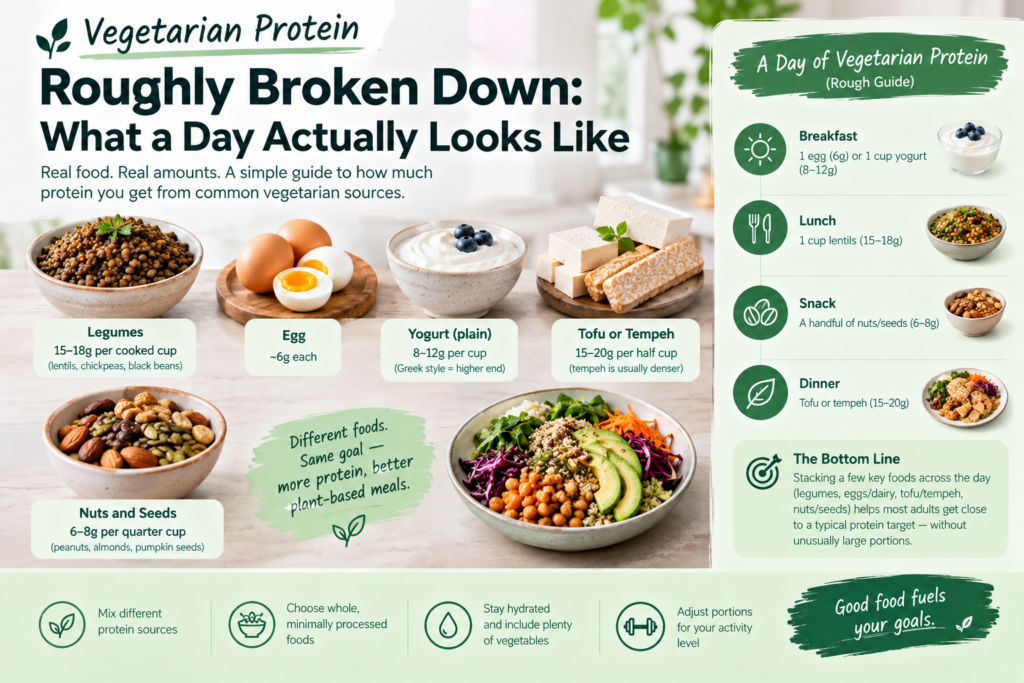
Legumes: Roughly 15-18g Per Cooked Cup
A cooked cup of lentils, chickpeas, or black beans generally lands somewhere in that range, which makes them one of the more efficient options per calorie. They also tend to be the cheapest source by weight, which is part of why they show up so often in vegetarian cooking across different cuisines. Buying them dried rather than canned usually stretches the cost further, though canned versions save time and still count toward the same total.
An Egg or a Cup of Yogurt: Roughly 6-12g Each
A single egg provides around 6g, while a cup of plain yogurt or milk is closer to 8-12g depending on the type. These aren’t huge amounts individually, but they add up quickly across breakfast and snacks without much effort. Greek-style yogurt tends to sit toward the higher end of that range, since some of the whey is strained out during processing, concentrating the protein that remains.
Tofu or Tempeh: Roughly 15- 20 g per half cup
Tempeh in particular tends to be denser in protein than tofu, partly because it’s made from whole fermented soybeans rather than a pressed curd. A half cup of tempeh alone can cover close to a third of an average adult’s daily protein target. Firm or extra-firm tofu generally has more protein per serving than softer varieties, simply because more water has been pressed out of it.
Nuts and Seeds: Roughly 6- 8 g per quarter cup
Peanuts, almonds, and pumpkin seeds land in a similar range, though they’re more calorie-dense, so they work better as an addition to a meal than the main protein source on their own. Roasting or soaking doesn’t meaningfully change the protein content, so the choice mostly comes down to taste and how they’re being used in a dish.
Putting a Rough Day Together
Stacking a cup of lentils, an egg or a cup of yogurt, and a small handful of nuts across a day gets most adults reasonably close to a typical protein target without needing to eat unusually large portions of any single food. Our piece on French beans looks at a specific legume worth rotating into that mix for variety.
Common Questions
Does cooking method change how much protein a food provides?
Not significantly — protein content stays fairly stable through most cooking, unlike some vitamins that break down with heat.
Is it harder to hit protein targets on a fully vegan diet compared to a vegetarian one?
It takes a bit more planning without eggs or dairy in the mix, but legumes, tofu, and seitan can cover the gap without much difficulty.
Do active people or athletes need a very different approach on a vegetarian diet?
Generally, just more total volume from the same food groups, rather than a completely different set of foods.
Is peanut butter a meaningful protein source or mostly just fat and calories?
It contributes a reasonable amount of protein per serving, though it’s calorie-dense, so it works better as a supplement to other sources than a primary one — our guide on whether peanut butter is good to eat daily covers that balance in more detail.