
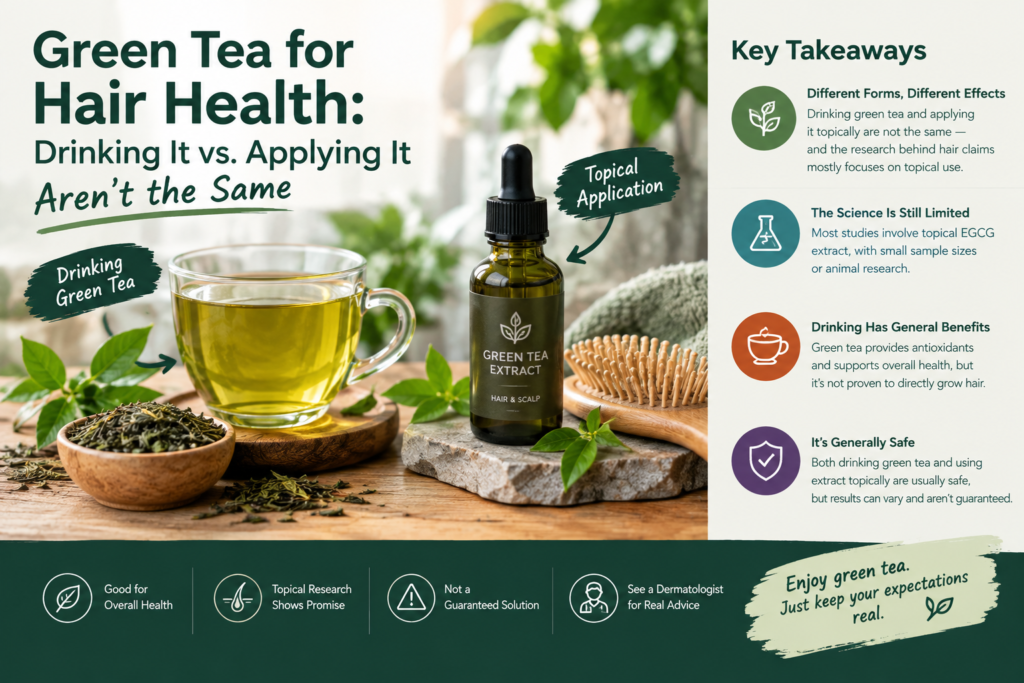
A lot of green tea for hair health content blurs together two very different things: drinking green tea and applying green tea extract directly to the scalp. Most of the research behind the hair-growth claims comes from the second category, not the first, and that distinction matters more than most articles let on.
This article is for general information only and isn’t intended as medical advice. Green tea, whether consumed or applied topically, isn’t a licensed treatment for hair loss. If you’re experiencing significant hair thinning or loss, a dermatologist can properly evaluate the underlying cause.
What’s Actually Been Studied — and It’s Mostly Topical
The compound behind most green tea hair claims is EGCG, an antioxidant compound found across many plant-based foods and beverages. The studies generating the most excitement involve applying EGCG extract directly to the scalp, not drinking tea. One frequently cited study involved just three participants. Another study showing hair regrowth was conducted in mice, not people. A separate small study involving ten participants using a supplement showed promising results, but a study of that size is a starting point for further research, not a confirmed outcome.
What Drinking Green Tea Realistically Offers
Green tea consumed as a beverage does provide antioxidants that support general health, and staying well-hydrated and getting adequate nutrients does matter for hair in a broad, indirect sense. But there’s a meaningful gap between “green tea has antioxidants that are generally good for you” and “drinking green tea will grow your hair back.” The concentrated topical extracts used in research studies deliver a very different, much higher dose directly to the scalp than what passes through your digestive system after a cup of tea.
Why the Mechanism Sounds More Convincing Than It Is
The proposed explanation involves EGCG potentially affecting hormone pathways related to hair loss and reducing inflammation around hair follicles. This is a biologically plausible idea worth researching further, but “plausible mechanism” and “proven human outcome” are different things, and the current evidence sits closer to the plausible-mechanism stage.
Is There Any Harm in Trying It?
Green tea, consumed in reasonable amounts, is generally considered safe for most healthy adults. Using green tea extract topically carries a low risk of side effects for most people, though anyone with sensitive skin or a scalp condition should introduce it cautiously. The bigger risk isn’t safety; it’s expecting a dramatic result that current evidence doesn’t support.
A Reasonable Way to Approach This
If you enjoy green tea, there’s no reason to stop drinking it, and it fits reasonably into a diet that also supports skin and overall health — something covered more broadly in our Health Tips category. Just don’t expect it to function as a hair-loss treatment on its own, and if hair loss is a genuine concern, it’s worth getting an actual diagnosis rather than relying on tea.
Common Questions
Does drinking green tea actually help with hair growth?
There’s no solid evidence that drinking green tea directly promotes hair growth. Most of the research involves topical application of concentrated extract, which is a different exposure than what you get from a cup of tea.
Is topical green tea extract more effective than drinking it for hair?
Based on current research, topical application delivers a more concentrated dose directly to the scalp, which is why most of the (still limited) supportive studies use this method rather than oral consumption.
How many cups of green tea are considered safe to drink daily?
Most healthy adults can safely have several cups a day, though individual caffeine sensitivity varies, and it’s worth checking with a doctor if you have a specific health condition.
Should I use green tea products instead of seeing a dermatologist for hair loss?
No. Significant or sudden hair loss deserves a proper evaluation, since it can have several different underlying causes that green tea won’t address.