Most advice about gum health splits into two separate conversations — what to eat more of, and what to eat less of — and rarely puts them side by side. Diet isn’t a replacement for brushing, flossing, and regular dental checkups, but it plays a genuine supporting role in how resilient your gum tissue is over time.
This article is for general information only and isn’t intended as dental or medical advice. Diet may support gum health, but it doesn’t prevent or treat gum disease on its own. If you notice bleeding, swelling, or persistent gum pain, see a dentist.
Nutrients That Support Gum Tissue
Vitamin C
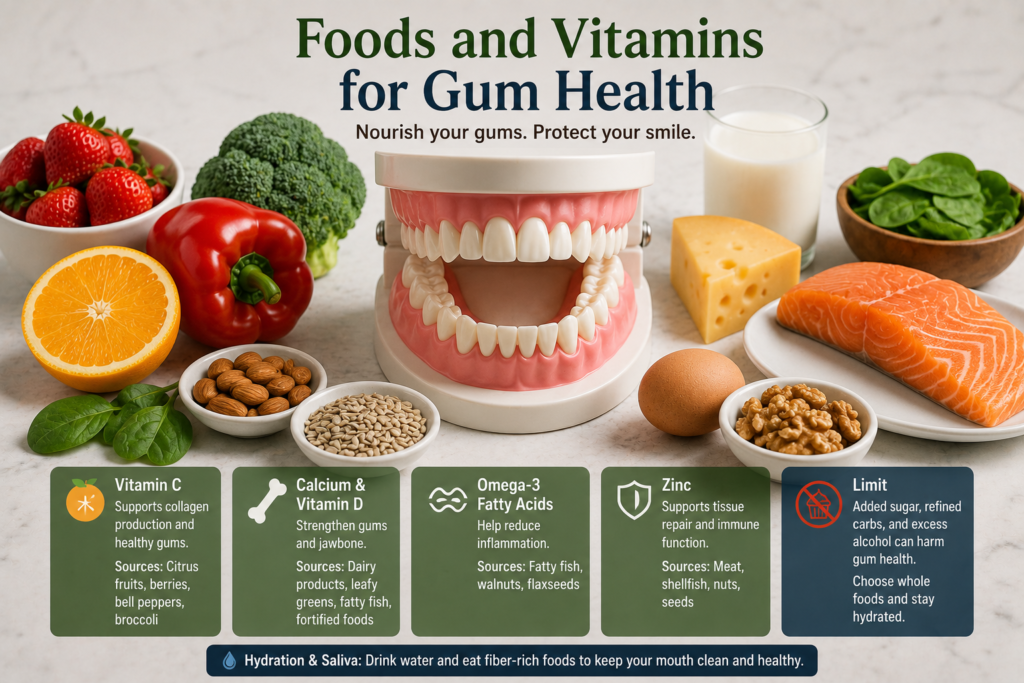
Vitamin C plays a direct role in collagen production, and collagen is what gives gum tissue its structure and strength. Citrus fruits, bell peppers, strawberries, and broccoli are reliable sources. Low vitamin C intake is associated with weaker gum tissue and a higher likelihood of bleeding gums.
Calcium and Vitamin D
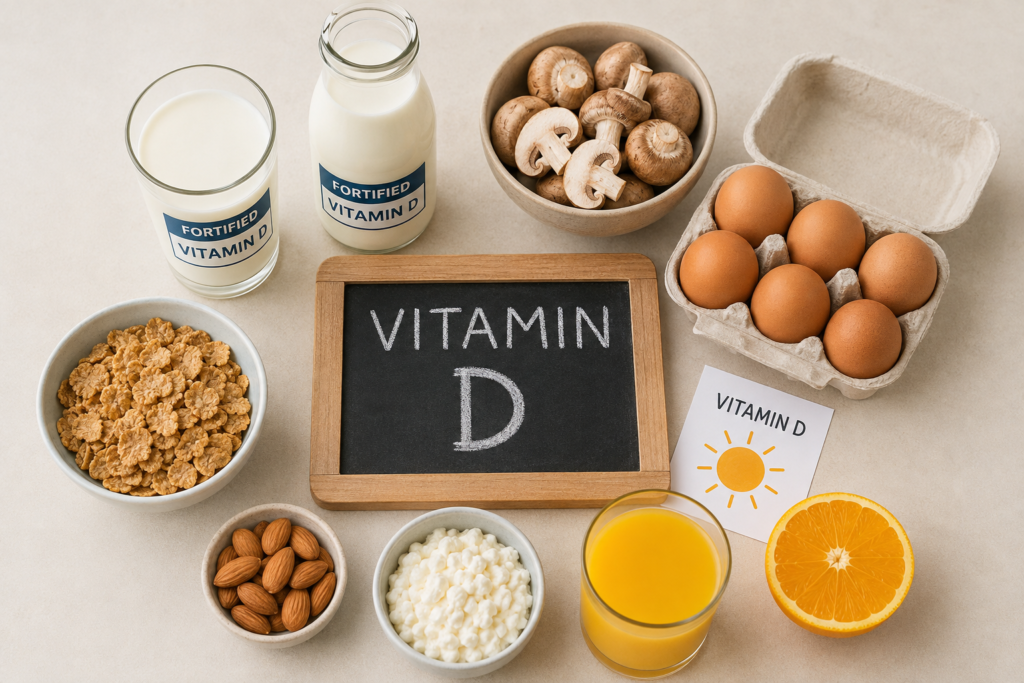
These two work together — calcium supports the jawbone that holds teeth and gums in place, while vitamin D helps the body absorb that calcium effectively. Dairy products, leafy greens, and fortified foods cover calcium, while vitamin D comes from fatty fish, egg yolks, and fortified foods, which we cover in more depth in our guide to vitamin D food sources.
Omega-3 Fatty Acids
Found in fatty fish, walnuts, and flaxseed, omega-3s are generally associated with lower inflammation throughout the body, including in gum tissue.
Zinc
Zinc supports tissue repair and immune function, both relevant to how gums recover from everyday irritation. Meat, shellfish, nuts, and seeds are common sources.
What Works Against Gum Health
Just as some nutrients support gum tissue, some dietary patterns work against it. Frequent added sugar feeds the bacteria responsible for plaque buildup, which is one of the more consistent findings in oral health research. Refined carbohydrates like white bread and pastries behave similarly in the mouth, breaking down quickly into forms that bacteria use easily.
Diets low in fiber-rich fruits and vegetables also reduce saliva production during eating, and saliva plays a genuine role in rinsing away food particles and neutralizing acid. Excessive alcohol has a similar drying effect, which can leave gum tissue more exposed to irritation.
Why Chewing Itself Matters
Firm, fibrous foods like raw carrots, apples, and celery require more chewing, which increases saliva flow and provides a mild mechanical cleaning action on teeth and gums. This isn’t a substitute for brushing, but it’s a small, genuine benefit worth knowing about.
Bringing It Together
A pattern built around vitamin-C-rich produce, calcium and vitamin D sources, and moderate sugar intake covers most of what current nutrition guidance points to for gum-supportive eating. None of this replaces professional dental care, but it’s a reasonable addition to it.
Questions Worth Asking
Can diet alone prevent gum disease?
No. Diet is a supporting factor alongside proper brushing, flossing, and regular dental visits, not a replacement for any of them.
Which vitamin deficiency most commonly affects gums?
Vitamin C deficiency is the most well-documented, historically linked to bleeding and weakened gum tissue, though a balanced overall diet matters more than any single nutrient in isolation.
Does calcium from food work as well as supplements for gum health?
Food sources are generally considered the more reliable route, since they come paired with other nutrients that support absorption, though supplements can help fill specific gaps under a doctor’s guidance.
Are there other food-based ways to support tooth and gum mineral content?
Some people look into calcium sources beyond dairy and produce — our piece on eggshell powder covers one less conventional option worth understanding, including its risks.