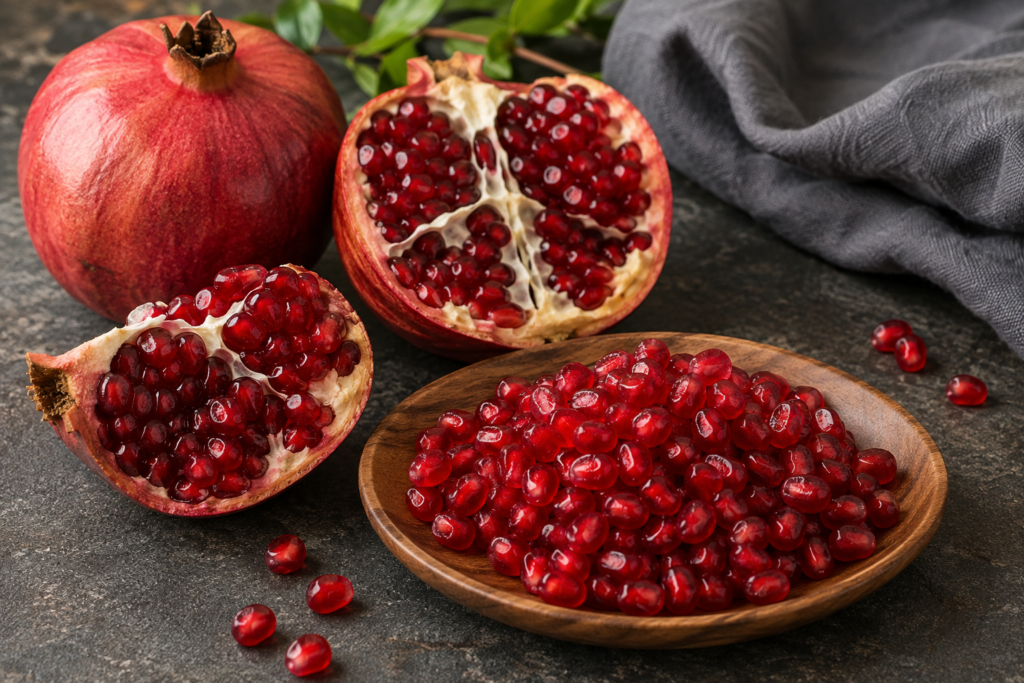
The tough outer shell of a pomegranate hides one of the more confusing fruits to eat properly. Inside are hundreds of small seeds, each wrapped in a juicy red aril, and many people aren’t sure whether to eat the seed itself or just the juicy part around it. The short answer: the whole aril, seed included, is edible.
This article is for general information only and isn’t medical advice. If you have a known fruit allergy, speak with a doctor before trying a new food.
What You’re Actually Eating
Each aril consists of two parts: the juicy, sweet-tart red flesh, and a small, firm seed at the centre. Both are edible together. Some people prefer to chew and swallow the seed along with the flesh, while others spit the seed out and only eat the surrounding juice sac. Neither approach is wrong — it’s a matter of texture preference rather than safety.
Are the Seeds Actually Good for You?
Yes, and they’re not just along for the ride. Pomegranate seeds contribute a meaningful amount of fiber, which is largely lost if the seeds are spat out. The arils overall are also a well-known source of antioxidant compounds called polyphenols, which have been studied for their role in supporting general health, though this is an area still being actively researched rather than a settled, guaranteed benefit.
Is There Any Reason to Avoid Them?
For most people, no. Fruit allergies are uncommon but not unheard of, and pomegranate is one of the fruits occasionally associated with allergic reactions in sensitive individuals. If you’re trying pomegranate for the first time and have a history of fruit allergies, it’s worth being cautious and introducing it gradually rather than eating a large amount straight away.
How to Actually Deseed One Without a Mess
Cutting into a pomegranate carelessly is how most people end up with juice stains everywhere. A cleaner method:
- Score around the middle of the fruit with a knife, cutting through the skin only, not deep into the arils.
- Pull the two halves apart gently by hand.
- Submerge each half in a bowl of water, then use your fingers to loosen the arils from the white pith while underwater.
- The arils sink to the bottom while the pith floats, making them easy to separate and drain.
Ways to Use Them Beyond Eating Them Plain
Pomegranate arils work well scattered over salads, stirred into yoghurt, or added to grain bowls for a burst of tartness and colour. They can also be blended into juice, though whole arils retain more of the fiber that gets lost when the fruit is juiced.
Common Questions
Do you need to spit out pomegranate seeds?
No, the seeds are edible and safe to swallow along with the juicy flesh surrounding them.
What happens if you eat a lot of pomegranate seeds?
For most people, nothing beyond normal digestion. The fiber content can occasionally cause mild digestive discomfort in very large amounts, similar to overeating any high-fiber food.
Is pomegranate juice as good as eating the whole fruit?
Not entirely. Juicing removes much of the fiber found in the seeds themselves, so eating the whole aril generally provides more of the fruit’s overall nutritional value.
Can children eat pomegranate seeds?
Generally yes, though very young children should be supervised, as with any small, chewy food that could pose a choking risk if not chewed properly.
Antioxidant-rich fruits like this one often come up in broader conversations about diet quality. Our Fruits and Vegetables section has more everyday fruit guides worth exploring.