
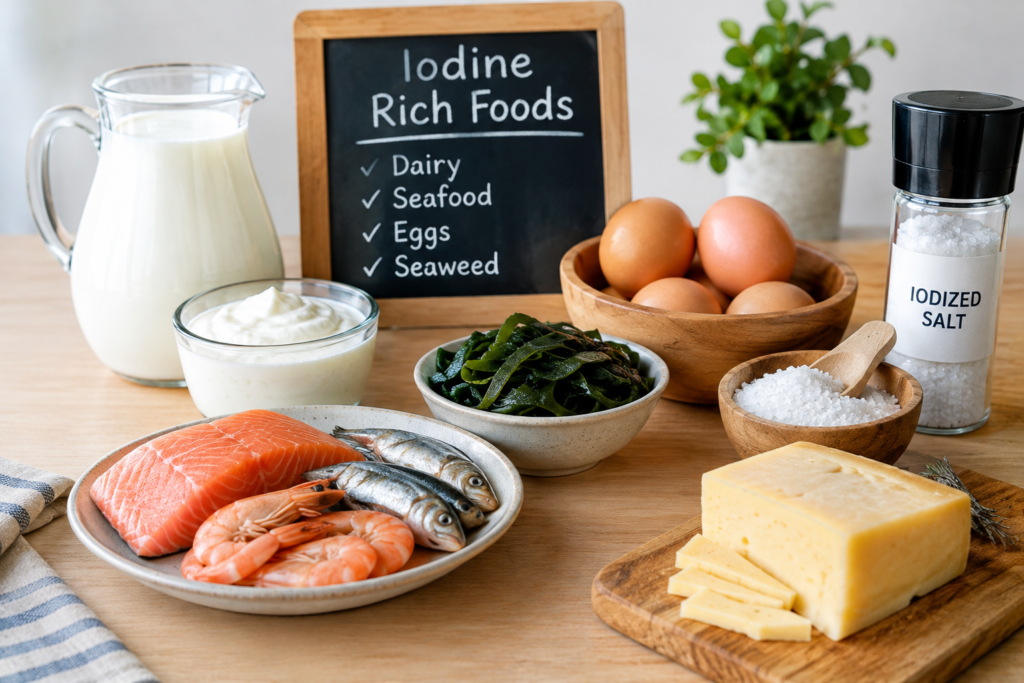
Iodine deficiency was largely considered a solved problem once iodized salt became standard decades ago — but shifting eating habits have quietly reopened the gap for some people.
This article is for general informational purposes and isn’t medical advice regarding thyroid conditions. Iodine intake can support normal thyroid function, but it doesn’t cure or treat any diagnosed thyroid disorder — that requires a doctor’s evaluation and treatment.
The thyroid gland uses iodine to produce hormones that regulate metabolism, and it’s one of the few minerals the body can’t substitute with anything else. Because the body doesn’t store large reserves of it, fairly consistent intake over time matters more than occasional high-iodine meals.
Why the Gap Reopened
Iodized salt became the default fix decades ago, but the rise of low-sodium diets, sea salt, and specialty salts — most of which aren’t iodized — has quietly reduced how much iodine many people get from salt without anyone noticing the shift. Processed and restaurant foods, which make up a growing share of many diets, also tend to use non-iodized salt in production, further reducing incidental intake that people used to get without thinking about it.
Everyday Food Sources Beyond Salt
Dairy products are a genuinely significant source, partly because of iodine-based sanitizers used in dairy processing — our piece on cheddar cheese touches on some of the nutritional range dairy provides beyond just calcium. Seaweed, seafood, and eggs are other reliable sources, with seaweed varieties like kelp containing especially high amounts — sometimes high enough that eating it daily isn’t advisable without guidance.
Who Tends to Be at Higher Risk
People who use only non-iodized salt, follow a strict low-sodium diet, avoid dairy, or eat little seafood are more likely to fall short than the general population. Pregnant and breastfeeding women also have higher iodine needs, since the mineral is essential for a baby’s early brain development.
Signs Worth Paying Attention To
Fatigue, unexplained weight changes, and a visibly enlarged thyroid (goiter) are commonly associated with iodine-related thyroid issues, though these symptoms overlap with many other conditions and aren’t a reliable way to self-diagnose. A blood test ordered by a doctor is the only reliable way to actually confirm thyroid function, rather than guessing from symptoms alone.
A Simple Everyday Approach
Using iodized salt when cooking at home, including dairy or seafood a few times a week, and occasionally adding seaweed (like in miso soup or sushi) covers iodine needs for most people without requiring supplements. Reading labels on packaged foods for “iodized salt” versus plain “salt” is a small habit that can make a meaningful difference over time.
Common Questions
Does sea salt provide iodine the way regular table salt does?
Generally not — most sea salt and specialty salts aren’t fortified with iodine, unlike standard iodized table salt.
Can eating too much iodine cause thyroid problems too?
Yes, in some cases — both too little and too much iodine can affect thyroid function, which is part of why diagnosed thyroid conditions should be managed with a doctor rather than self-adjusted through diet alone.
Is plant-based milk a reliable iodine source like dairy milk?
Not usually — most plant-based milks aren’t naturally rich in iodine and often aren’t fortified with it either, so checking the label is worth doing.
If someone has a diagnosed thyroid condition, is adjusting iodine intake enough?
No — diagnosed thyroid conditions need medical management, and iodine intake should be discussed with a doctor rather than adjusted independently through diet.