Despite the name, buttermilk isn’t full of butter — traditional buttermilk is actually one of the leaner dairy drinks, and the name comes from an old byproduct, not the fat content.
This article is for general informational purposes and isn’t medical advice. Traditional buttermilk (chaas) is distinct from kefir; our comparison of kefir and yogurt covers a different pair of fermented dairy drinks with their own culture types.
Traditional buttermilk, commonly known as chaas in South Asian cooking, was originally the liquid left behind after churning cream into butter — hence the name, even though what’s sold today is usually made differently. The confusion is understandable, since almost every other “milk” product on a shelf is richer than plain milk, not lighter.
How It’s Actually Made Today
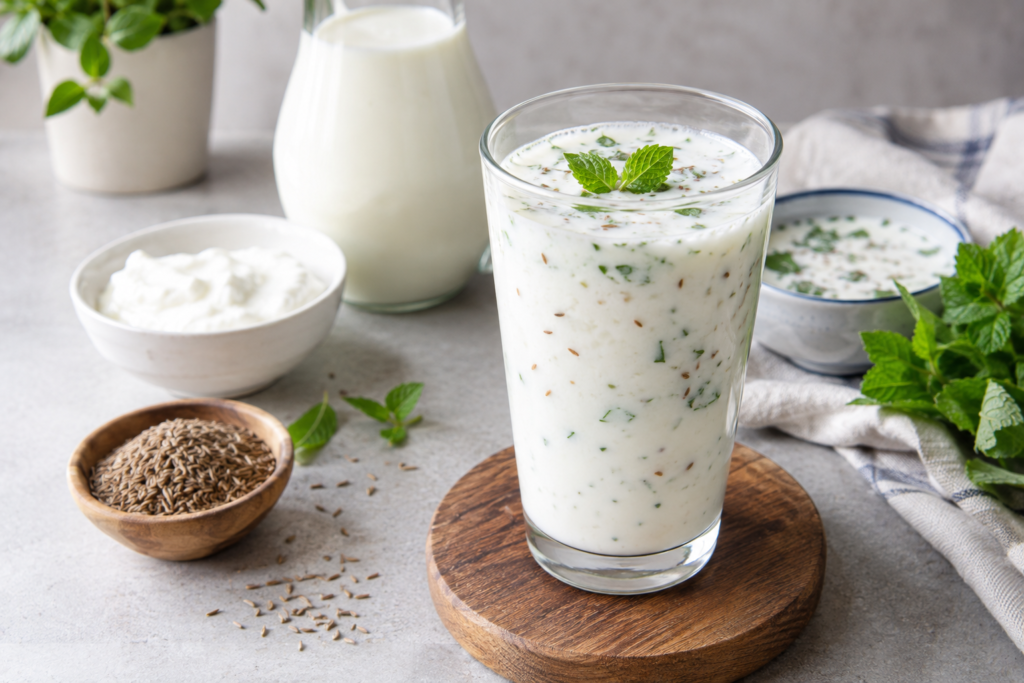
Most modern buttermilk, including chaas, is made by diluting yogurt with water and sometimes adding salt, cumin, or mint, rather than as a true butter byproduct. What’s left after butter-churning is naturally low in fat — which is exactly the opposite of what the name suggests to most people. Commercially produced “cultured buttermilk,” common in Western grocery stores, is made a third way — by adding specific bacterial cultures to low-fat milk, giving it a thicker texture and tangier flavor than homemade chaas.
Why It’s Considered Good for Digestion
Because it’s yogurt-based, buttermilk carries some of the same live cultures associated with fermented dairy, along with being lighter and more diluted, which some people find easier to digest after a heavy meal than plain yogurt or milk. In many South Asian households, a glass of spiced buttermilk is served specifically at the end of a rich or oily meal for this reason, rather than as a standalone drink.
Hydration and Electrolytes
The added water and salt make buttermilk a reasonably effective hydration drink, particularly in hot climates, since it replaces both fluid and some electrolytes lost through sweat. This is part of why it’s traditionally associated with summer meals in warmer regions, served chilled rather than at room temperature.
Where It Fits Nutritionally
Compared to whole milk, traditional buttermilk is generally lower in fat and calories, while still carrying a meaningful amount of protein and calcium from the underlying yogurt or milk base. Because it’s diluted with water, portion for portion it’s less calorie-dense than most other dairy drinks, which is worth knowing for anyone tracking overall calorie intake without wanting to give up dairy entirely.
A Simple Way to Use It
A glass of spiced buttermilk after a heavy or spicy meal is a common traditional pairing, and it works well as a lighter alternative to soda or sweetened drinks with lunch. It also holds up reasonably well as a marinade base for meat or paneer, since its acidity works similarly to yogurt in tenderizing without needing a separate ingredient.
Common Questions
Is buttermilk the same thing as kefir?
No — kefir uses a specific culture of bacteria and yeast and has a tangier, slightly fizzy quality, while traditional buttermilk is typically a diluted, salted yogurt-based drink.
Does buttermilk contain probiotics like yogurt does?
Often yes, if made from live-culture yogurt, though store-bought versions vary — checking the label for “live cultures” is the most reliable way to confirm.
Is buttermilk suitable for someone watching their fat intake?
Generally yes — it’s typically one of the lower-fat dairy options, especially compared to whole milk or cream-based drinks.
Can buttermilk replace regular milk in recipes?
In many recipes, yes, particularly baking, where its acidity can react with baking soda — though it’s not a direct one-to-one nutritional substitute for plain milk.