Walk down any grocery aisle, and there’s milk that needs refrigeration right next to milk that doesn’t — both are safe to drink, but they’re processed quite differently to get there.
This article is for general informational purposes and isn’t medical advice. It covers heat-treatment methods specifically; our guide on milk standardisation covers a separate process — adjusting fat content — that’s unrelated to how milk is heat-treated.
Both UHT and standard pasteurization use heat to kill harmful bacteria, but the temperature and duration differ enough to change how the final product behaves.
The Temperature Difference
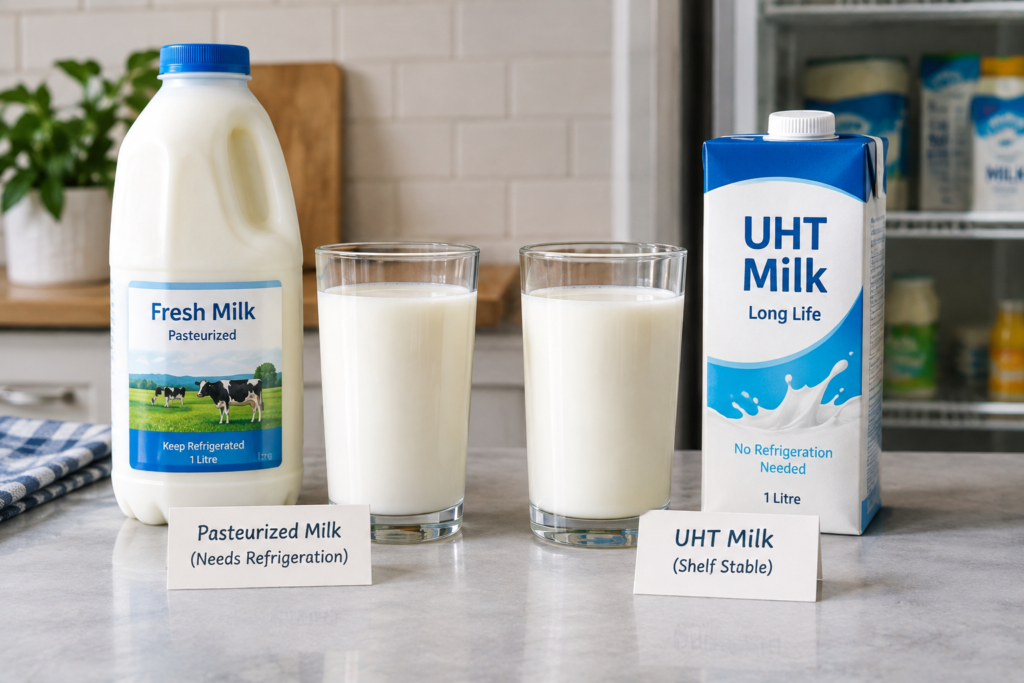
Standard pasteurization heats milk to around 72°C for about 15 seconds, while UHT (ultra-high temperature) processing heats it to roughly 135-150°C for just a few seconds. The much higher UHT temperature kills a broader range of bacteria and spores, which is what allows it to sit unrefrigerated.
Shelf Life
Pasteurized milk generally lasts one to two weeks refrigerated. UHT milk, sealed in an aseptic carton, can last several months unopened at room temperature — though once opened, it needs refrigeration and should be used within a similar window to regular milk.
Taste and Texture
UHT milk often has a slightly different, sometimes described as “cooked,” flavor compared to pasteurized milk, a result of the higher heat causing more pronounced changes to milk proteins and sugars. Most people adjust to it quickly, though the difference is noticeable in a side-by-side taste test.
Nutrient Impact
Both processes cause some nutrient loss compared to raw milk, primarily to heat-sensitive vitamins like B12 and some B vitamins. The difference between pasteurized and UHT in this regard is generally modest rather than dramatic — protein and calcium content remain largely stable through either process.
Which One Makes Sense for a Given Situation
UHT milk is practical for stocking up, travel, or areas without reliable refrigeration, while pasteurized milk tends to be preferred where fresh taste matters more and refrigeration isn’t a constraint.
Common Questions
Is UHT milk less nutritious than pasteurized milk?
Only marginally — the nutrient difference between the two is generally small enough that it doesn’t meaningfully change milk’s overall nutritional value.
Can UHT milk be used the same way as regular milk in cooking?
Yes, generally — it behaves similarly in most recipes, though some people notice a slight taste difference in things like plain drinking milk more than in cooked dishes.
Why does UHT milk need a carton instead of a regular bottle?
The aseptic carton is specially designed to block light and air, which is what allows UHT milk to stay shelf-stable without refrigeration until opened.
Does UHT milk contain preservatives?
No — its shelf stability comes from the heat treatment and sterile packaging, not added preservatives.