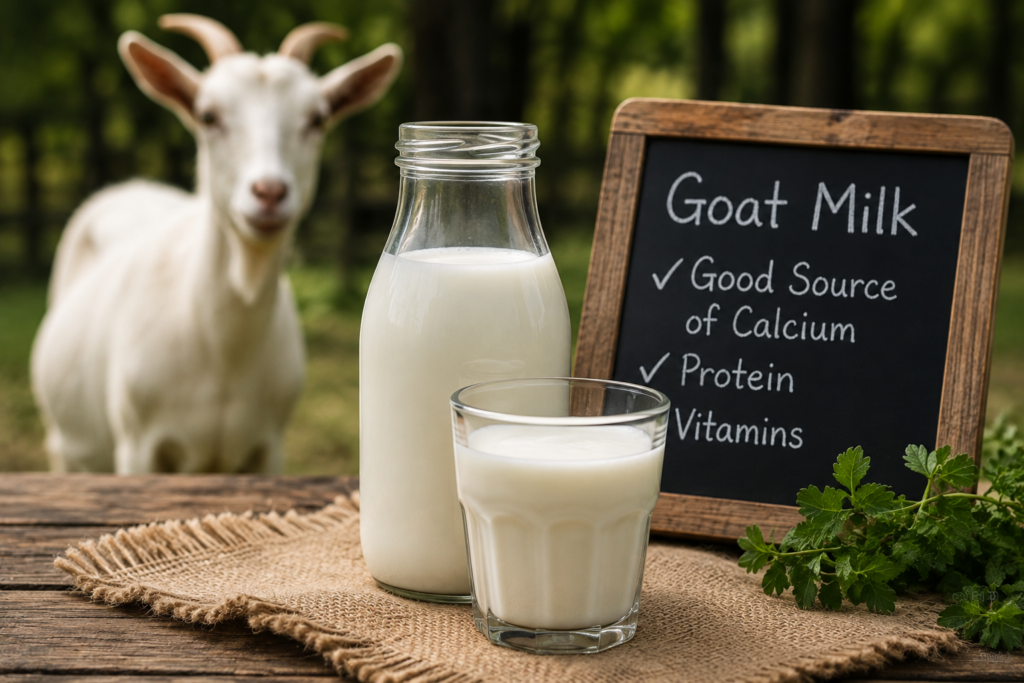
Is goat milk good for health? The short answer is yes, broadly — but one of the most repeated claims about it is actually a myth. Goat milk still contains lactose. It’s often marketed as a lactose-free or lactose-intolerance-friendly option, and while some people do find it gentler on digestion, it is not a lactose-free product, and anyone with a genuine lactose intolerance should treat it with the same caution as cow’s milk.
This article is for general information only and isn’t intended as medical advice. If you have a diagnosed milk allergy, lactose intolerance, or another condition affecting dairy digestion, it’s worth speaking with a doctor before switching milk types.
The Lactose Myth, Explained
Goat milk typically contains a slightly lower amount of lactose than cow milk, and its fat globules are smaller, which can make it feel easier to digest for some people. But “slightly less” and “easier to digest for some” are very different from “lactose-free.” People with a genuine lactose intolerance can still react to goat milk, just as they would to cow milk, so it shouldn’t be treated as a guaranteed workaround.
Where Goat Milk Genuinely Differs From Cow Milk
Some of the real, more consistent differences include a distinct protein structure — goat milk contains a different ratio of casein types than cow milk, which is part of why some people who react to cow milk protein tolerate goat milk better. Our breakdown of casein and whey types goes deeper into what that protein difference actually means. Goat milk also tends to run slightly higher in certain minerals, including calcium and potassium, though exact amounts vary by brand and processing method rather than following one fixed number.
Is Goat Milk Good for Health for Everyone?
Not necessarily more than cow milk for most people — it’s a genuinely nutritious option, but not a universal upgrade. It tends to be more expensive and less widely available, and its taste is noticeably different, which matters for whether people actually stick with it long term. For people managing a cow milk protein sensitivity specifically, it’s a reasonable alternative worth discussing with a doctor. For general nutrition, cow milk and goat milk both cover similar ground.
What About the More Dramatic Health Claims?
Some sources link goat milk to specific outcomes like improved skin or reduced disease risk based on its vitamin A content. These claims go further than the current evidence supports. Vitamin A does play a genuine role in skin and immune health generally, but that’s a property of the nutrient, not a guarantee tied specifically to drinking goat milk.
Common Questions
Is goat milk good for health compared to cow milk?
Both are nutritious in similar ways. Goat milk offers a slightly different protein and mineral profile, which may suit certain sensitivities, but it isn’t clearly superior overall. If you’re curious how this kind of comparison plays out with other dairy products, we broke down a similar question in Greek yogurt versus regular yogurt.
Can people with lactose intolerance drink goat milk safely?
Not reliably. Goat milk still contains lactose, just somewhat less than cow’s milk, so it isn’t a safe substitute for someone with a genuine lactose intolerance.
Why do some people tolerate goat milk better than cow milk?
This is usually related to its different protein structure and smaller fat globules rather than its lactose content, which is why it can help with certain protein sensitivities but not lactose intolerance itself.
Is goat milk worth the higher price?
That depends on individual needs. If you have a cow milk protein sensitivity or simply prefer the taste, it may be worth it. For general nutrition alone, cow milk typically offers similar value at a lower cost. Whichever you land on, the rest of our Dairy category has more comparisons like this one worth a look.