Most cheeses spend weeks or months developing flavor through aging — paneer skips that step entirely, and it’s made fresh within minutes of curdling the milk.
This article is for general informational purposes and isn’t medical advice.
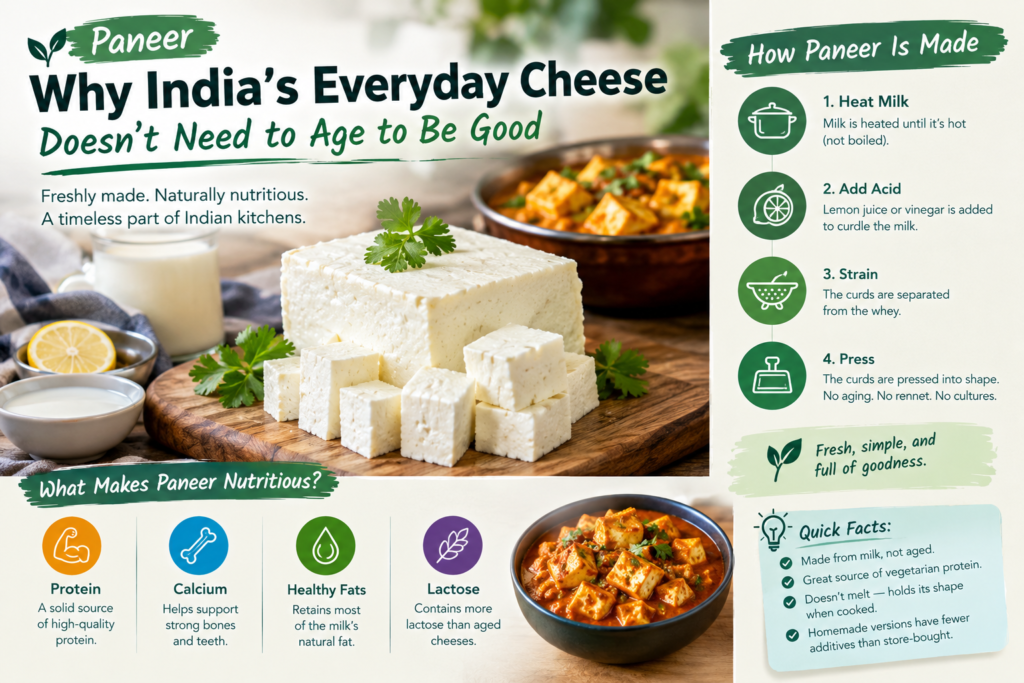
Paneer is made by curdling hot milk with an acid — usually lemon juice or vinegar — then straining and pressing the curds. No rennet, no aging, no bacterial culture required, which is part of why it tastes mild rather than sharp.
Where the Nutrition Actually Comes From
Because paneer retains most of the milk’s fat and protein during the straining process, it ends up as a genuinely solid source of both — a typical serving carries a meaningful protein load without needing any fermentation or aging to develop it. It’s also a reasonable calcium source, since the mineral stays with the curds rather than draining off with the whey.
How It Compares to Aged Cheeses
Aged cheeses like cheddar develop stronger flavor and, in some cases, lower lactose content over time as bacterial cultures break it down — our piece on cheddar cheese covers that aging process in more detail. Paneer, being unaged, retains more of milk’s original lactose, so it’s generally not a good fit for someone managing lactose intolerance.
A Practical Vegetarian Protein Source
Because it’s made from whole or partially skimmed milk and holds its shape well when cooked, paneer works in savory dishes the way tofu or cottage cheese might in other cuisines — as a protein source that doesn’t fall apart when pan-fried or simmered in a curry. Our guide on vegetarian protein sources covers other everyday options worth rotating alongside it.
Store-Bought vs Homemade
Homemade paneer generally has a shorter ingredient list — just milk and an acid — while store-bought versions sometimes include stabilizers or preservatives to extend shelf life. Checking the label is a reasonable habit if avoiding additives matters.
A Simple Way to Use It
Cubing and lightly pan-searing paneer before adding it to a dish (rather than adding it raw) firms up the texture and helps it hold together better in curries or stir-fries.
Common Questions
Is paneer healthier than regular cheese?
Not inherently healthier or worse — it’s simply less processed and unaged, which changes the nutritional profile (more lactose, less concentrated flavor) rather than making it categorically better.
Can paneer be eaten by people with lactose intolerance?
Generally not ideal, since it retains more lactose than aged cheeses — tolerance varies by individual, so small amounts may or may not cause issues.
Does paneer melt like other cheeses?
No — paneer holds its shape when heated rather than melting, which is why it’s cooked as solid cubes rather than used as a melting cheese.
Is low-fat paneer nutritionally similar to regular paneer?
It’s lower in fat and calories but also somewhat lower in fat-soluble vitamins, since those are carried in the milk fat that’s reduced.